The Ouya – SHIPPING!
Posted by Rampant Coyote on March 29, 2013
I’m excited for this console. I want mine NOW. I’m a little concerned to hear about the controller issue, though I guess it was too much to hope for that it’d be perfect right out of the chute. It’ll be kinda dumb if the ‘best’ controller for the Ouya turns out to be an XBox or Logitech controller… I’ll still hope that the latency issue is something that can be resolved with software.
The Kickstarter Darling Comes Home: Hands On with the Ouya
UPDATE: Penny Arcade’s First Look at the Finished Ouya System
The idea of a console being about the size of the controller is cool, but not entirely new to me – after all, I’ve been playing old Atari games on consoles built into a form factor of an Atari-era joystick.
After all the hoopla surrounding this little Kickstarter uber-project, the reality will be interesting. Nobody is expecting this little console to be a toe-to-toe contender in the next-gen console wars. In fact, I am not sure anybody is entirely sure what the market for this box is supposed to be at all. And if it doesn’t set the world on fire, will former supporters brand it a “dud?” Will it inhibit future low-budget console makers from entering the market?
It’s a weird time for consoles. The rumblings I keep hearing are that the mighty consoles are struggling. Now, some of this can be attributed to the usual end-of-lifecycle blahs that come in every generation of consoles, and it will vanish on the pile of forgotten doomsday predictions when the new “big” consoles hit the market with the usual industry-shattering BOOM. And at that time, we may all be saying “Ouya? What Ouya?”
The flip side isn’t that spectacular for the Ouya, either. Once upon a time – even just a few years ago – this could have been a pretty industry-shaking event. A super-cheap console emphasizing indies and (perhaps) retro-gaming? WOW! All-digital distribution? All titles with “free-to-play” modes? Okay, sign me up!
But now we have indies on the consoles. And perhaps, with the next-gen consoles and their concerns about a failing business model (and the fairly spectacular rise of indie gaming from obscurity to… well, something less obscure), might the indies be treated as something better than third-class citizens on the new big-name consoles? Will it be just as easy (or just as hard) to bring Frayed Knights 2 onto the newest XBox and the PS4 as on the Ouya?
If I knew the answers, I’d probably be rich.
Instead, I’m just looking forward to goofing around on a strange game new console.
Filed Under: Game Announcements - Comments: 2 Comments to Read
Namco Releases the Year’s Best Video Game Ad
Posted by Rampant Coyote on
Just IMHO…
Filed Under: Game Announcements - Comments: 6 Comments to Read
Frayed Knights 2: How do you spell that spell?
Posted by Rampant Coyote on March 28, 2013
 A while ago I talked about doing something kinda weird for Frayed Knights 2 – Random spell generation. (And note – the picture to the right is FK1. The special effects in FK2 are currently minimal and not very photogenic).
It got mixed in, across several permutations, with a completely revised initiative system. Which doesn’t really count as an initiative system anymore – it’s a totally different interface for taking actions. It was inspired a little by collectable trading card games. Not that I’m turning an RPG into a CCG, but when a single player is playing a group of characters I started envisioning it a little bit more like choosing an action out of a “hand” of options.
There’s still a lot under construction, but the initial prognosis is… promising. Very promising. No doubt there’s a lot of work to do on the balancing front, but so far, given relatively few rules, it’s looking good.
One aspect of making the spells was to make them sound over-the-top, a little like spells from old-school Dungeons & Dragons, Tunnels & Trolls, or the original release of Hackmaster. I think I succeeded. Here are some of my favorites:
“Baba Yaga’s Unbelievable Armor Intensification”
“Primordial Magic Defense Impairment of Ariel”
“Underwhelming Revival”
“Fangal’s Cryptic Magic Defense Bonus”
“Arkan’s Introductory Magic Defense Failure”
“Sufficient Vim”
“Cleansing of Apuleius”
“Penelope’s Occult Boon”
“Oakfather’s Empowerment”
“Wimpy Spellwipe”
“Wussy Crawl”
“Worthy Armor Restriction”
“Brutus’s Explosive Core Punishment”
“Zalem’s Unfathomable Spiky Devastation”
I’ll tell ya – I want to use Zalem’s Unfathomable Spiky Devastation just based on the name. (For the record, it’s a Sorcerer spell that does piercing damage to a single target). Sadly, the random tables are pretty large, so the chances I’ll ever see that spell again are almost non-existent. To be honest, I learned quite a few new words as I was putting together the tables. I’d never even heard the word, “caliginous” before (and it still fails my spell-checker). Pretty cool stuff, really. I learned a lot of new words reading Gary Gygax’s text back when I was a kid, too.
Although if I decide to localize for other languages, I’ve got some serious challenges in hand.
Of course, amusing-but-plausible spell names are only a tiny part of the equation. Most of the magic of the magic system, so to speak, comes from the formulas that make it work, and how they work with the rest of the system. Now, as far as balancing is concerned, we won’t know “for sure” until we’re deep into testing. But since it’s all based on what worked and was (reasonably) balanced in FK1, I think we’re going to at least start out in the same ballpark.
Since the action system has been completely redone from the ground up, there are a few things that may need addressing. For example, in FK1, all “Mass” spells (which affected an entire group) required the use of a spellstone. They were just too powerful without that limiting factor, even with a high endurance cost. Now, although they currently still have a spellstone cost, mass / group spells also require a higher action tier, which slows down their use. Will that be enough to balance them all by itself? I’m not sure.
In FK1, I had never-exercised code that also handled ‘rank’ area effects – a spell that could effect all enemies within a single rank (distance). All two of them, max, as it turns out. But as the list of spells started getting out of control, I realized there was just not enough room for it, so no spells took advantage of it. But now it’s entirely possible to generate all kinds of potential spells, and let players mix and match their “optimum loadout” for whatever situations they can expect. In addition to “rank” based area effect, there are more: “Penetrating” area effects that actually affect creatures behind your target. Then there’s “explosive,” which might be the most challenging one to balance. It’s sort of a lower-strength “Mass” spell effect: The primary target gets hit with the full effect, and all other members of the target’s group get hit with reduced versions of the effects. Then there are “self-only” spells. These spells can’t be targeted and only affect the caster… but they are more powerful than normal.
A spell can have up to three effects of various kinds. Effects are broken into offensive and defensive types, and all effects must be of the same type. So you can’t have a spell that simultaneously damages opponents and increases your party’s speed. So far, that seems to be a restriction that is workable.
I’ve also gotten rid of some damage types. Disease, sonic, water-based, and a few other lesser- or never-used (in FK1) damage types have gone away. Disease is now represented by status conditions. That still leaves plenty of damage types – edged, piercing, priestly, fire, frost, shocking, poison, etc.
I’ve also limited spell enhancements to only three levels, instead of five as in the first game. I figure, with all these gazillions of potential spells out there, there’s no need to press one into higher-level service for a long time. And with that in mind, I also changed the rules somewhat about what the spell enhancements really do. I figure that if you are gonna dump spellstones into enhancing a spell’s power, it should be really over-the-top. Previously, in FK1, if the enhancement took the spell over your normal “spellcasting level”, you could not cast it with that enhancement. In FK2, that restriction has been lifted… In fact, the primary use of spell enhancements is to “overcharge” a spell to something normally beyond your power to apply. In addition to increasing the spell’s effective power level, enhancements also increase the ‘magical attack’ rating – making them less likely to miss. So enhancements are really there when you absolutely, postively have to kill it this round!
As I previously discussed – the dynamically generated spells are mixed in with standard and “common” spells. Common spells are always there, automatically in the spellbook for casters of a certain level and proficiency (and the right feats). These are bread-and-butter spells of a particular casting field. Fireballs for wizards, heals for divine clerics. Then there are also “Standard” spells, spells which are not automatically available, but are still “fixed” and guaranteed to be available somewhere in the game. Many of these will have unique special effects, and will often be “overpowered” compared to the common and dynamically generated spells. This is where things like “Power Word: Defenestrate” live.
It’s certainly different. But as the system has taken form, I’m growing more confident this will all work.
Filed Under: Frayed Knights - Comments: 9 Comments to Read
Deep Exploration: 32 Ideas for making exploration more interesting in CRPGs
Posted by Rampant Coyote on March 27, 2013
In computer RPGs, there are a number of gameplay “loops” or cycles that all interact with each other. A nice blend of cycles keeps the game varied and interesting. You’ve got the combat cycles – nice, repeating elements that (hopefully!) stay varied enough between different enemies and growing player character power and varying resources that it’s never a complete repetition. And of course, the character growth and loot cycles. And bits of exposition (not really a cycle) to keep the context changing.
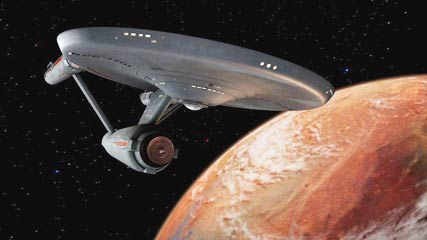 For me, exploration is a major element of CRPGs. The whole Star Trek opening monologue captures the spirit of adventure for me. Sure, there may be swashbuckling or grim battles to fight and fantastic loot to be acquired, and of course expertise to be gained – but those are all secondary, or at least co-equal, to the feeling of exploration for me. Even if the entire game takes place within the well-trodden streets of a city, where I’m boldly going where many-a-person has gone before, I want find secrets, surprises, and wonder around every corner. Maybe that’s a projection of my optimism for the real world into games, but that’s how I am.
Of course, those efforts must be rewarded. If you play a (well-designed) RPG in the style of 16-bit JRPGs, you’ll often find that almost every extended “dead-end” path terminates with a chest with a treasure in it. It may not make much sense from a realism perspective, but as a game mechanic, it rewards thorough exploration. This also extends the game (from a development perspective), as this kind of “content” is pretty easy to generate, and causes the player not only to consume this “cheap” content. It also slows the play down as the player actively hunts for these kinds of rewards, making the game longer. Overdo it, and it becomes boring “filler.” But done right, it’s fun stuff that rewards careful, exploration-based gameplay.
But there should be a lot more than that. More to do than just wander down side paths, and more to the rewards than just chests with a bonus potion.
The trick in CRPGs is that this kind of content gets EXPENSIVE. That’s a big part of the reason this genre of game is known to be a budget-breaker. And no, before you say it, purely dynamic content is not the answer. Maybe part of the answer (it certainly makes for interesting rewards, as Diablo-style games easily attest), but certainly not the whole answer. ‘Cuz basically, once you’ve gotten a feel for the formulas at work, exploring dynamically generated environments has only slightly more excitement than hunting down prime numbers in math.
 I just thought I’d break down a bunch of ideas – most of which have appeared in some CRPGs in the past (especially if you include Frayed Knights – I experimented with a few of ideas for that) – for both the different ways you can explore content – adding extra dimensions to the exploration gameplay cycle, and for the kinds of rewards that can be obtained for doing so.
Adding depth to the exploration mechanic can be a little perilous. It’s not hard for things to get bogged down this way, particularly if it involves returning to previously-explored areas (backtracking) in a large game-world with slow navigation, or if the system is too plodding and methodical. (Yeah, I know, I’m working on improving that with FK2 searches). These should be recurring mechanics in the game – not only does that economize on content & code creation (you don’t want to spend so much time on a one-off effect, do you?), but it also then provides a “skill” for the player (not the character) to learn and master – recognizing and acting on these opportunities. Here are a handful of ideas:
Here are some ideas for layers / depth / interaction to the exploration mechanic, or in many cases to create obstacles or puzzles to free navigation. Some are pretty common, others – not so much:
Sixteen ways to use the exploration mechanic:
#1 – Movement – you go somewhere and something happens.
#2 – Interaction – you must click on something to explore what it does / says
#3 – Hidden interaction. Like #2 but it’s not obvious – like a secret door, or a sword tucked away in the corner. Care must be taken to make sure these aren’t TOO hidden, or the game becomes a “hunt the pixel” exercise.
#4 – Use a skill or ability or a tool (item) in a particular spot to reveal a secret – for example, Mario ducking on pipes to discover the ones with “secrets” in Super Mario Brothers
#5 – Using a skill or ability or a tool (item) in a particular spot to reach an otherwise unattainable location.
#6 – Illusionary obstacles – like an illusionary wall or a hidden bridge across a chasm.
#7 – Destroyable obstacles. Particularly ones that can’t be destroyed by chopping at it with a hand weapon.
#8 – Sequences of actions done in a particular spot – these are usually either explained to the player or strongly hinted at.
#9 – Luring a computer-controlled entity (example: NPC, enemy, or a trap effect) to unlock the environment in a way the player cannot by himself.
#10 – The world / information / rewards change with time – perhaps as the game progresses, with the seasons, or just time of day. Silent villagers during the day are talkative at night, moongates shift position and destination based on phases of the moon, etc. Or as a really weird idea, what if the player could experience “flashbacks” in various locations to what happened at an earlier time as they learn more about the world?
#11 – New ability reveals all-new information / objects / alternate versions of the world. Maybe a dog added to the party can “see” smells that were previously invisible, or the player character can “phase shift” into a shadowy unpopulated alternate dimension version of the same world.
#12 – Proximity Clues – the player is not given the exact location of what they are looking for, but may explore with hints revealing either the approximate location (maybe an area to be searched), or as in Frayed Knights, updates as to whether you are getting “warmer” or “colder” as you search.
#13 – Need special equipment or vehicle to pass – perhaps scuba gear to explore an underwater area, or a magic carpet to fly over an impassible mountain range. This differs from #5 in that it’s not a specific action done in a particular location, but rather the possession (or equipping) of the item allows access to all terrain of of this kind.
#14 – A physical or mental puzzle is required to explore deeper. Dungeon Master style games – like the recent Legend of Grimrock – are full of these.
#15 -Counters. While it’s very “gamey,” having a running counter of the number of undiscovered secrets (possibly broken down by type) can help motivate players and also let them know when to quit digging around every nook and cranny. Ideally, these would be explained through some kind of mechanic that makes sense within the context of the world, but even a totally external mechanic is often better than nothing, depending upon the style of game.
#16 – Mood / Reputation / Faction / Alignment / Progress shifts – the world (or at least the willingness of people to talk about it and give you access to areas and information) changes based on cumulative shifts instigated by the player. Perhaps as you gain the trust of certain villagers, they become more forthcoming with key bits of information. Or efforts to repair flooding throughout the city and direct the flow of water unblocks or reveals new paths.
Okay, that’s sixteen ideas ideas for making exploring an environment more interesting. Not all are great, and that’s really just scratching the surface. Hopefully, for RPG designers out there (especially the aspiring / beginning ones), those will at least start you thinking.
Now here are sixteen ideas for rewards for exploration:
 #1 – Exploration is its own reward. Sometimes – and this is very occasionally, and really depends on the game – just seeing something cool is good enough. Like an “easter egg.”
#2 – Loot. Yeah. This is done a lot. As this is frequently optional, this is usually one of the more expendable / cumulative resources rather than a major permanent item.
#3 – Story Rewards. Doling out a little extra optional exposition might not thrill all players, but the RPG players tend to be the kind that enjoy this kind of thing.
#4 – Clues / Hints to more locations to explore or ways to circumvent their challenges. Yes, this reward for exploration encourages… MORE exploration.
#5 – New environments. The classic Super Mario Brothers “Secret World” reward. These are obviously expensive for developers to make, but the promise of a few of these scattered throughout the world can make exploration REALLY exciting.
#6 – A bonus quest
#7 – A potential new NPC companion
#8 – An experience point award. Minor, but cool.
#9 – A challenging optional puzzle or combat encounter (with its own reward).
#10 – A location that can recharge player resources – like a fountain that restores health or magic points, or a merchant.
#11 – A hint, strategy, or action that can be taken to make an upcoming “boss” encounter easier. This is, IMO, a far more exciting way of rewarding careful players than simply making their brute-force abilities more potent (with more potions, XP for the treadmill, etc.). I did this a few times in Frayed Knights: The Skull of S’makh – Daon… you could bypass the a big chunk of the dungeon and go straight to the boss, or you could explore and deprive the boss of power or reinforcements.
#12 – A piece of a bigger reward or puzzle gets exposed.
#13 – Reputation / Vanity award – because of what you have explored or done, other characters react to you differently based on the news. This can either be a one-time specific reward, or add towards a cumulative “reputation” score.
#14 – Customization options – this provides no actual gameplay reward, but gives the player the addition of new visuals, sounds, or whatnot to make their character unique.
#15 – Cumulative Story Progression – maybe you need to achieve a certain number or percentage of exploration-based goals to progress a story or quest. Beware – done poorly, this can lead to a boring “Kill ten rats” type of goal.
#16 – Unlocking of certain other obstacles. A tried and true variation.
Again, there are probably an infinite number of permutations, alternatives, and combinations of these ideas that can help make a more interesting RPG that relies upon more than simply beating the snot out of bad guys.
Filed Under: Design - Comments: 8 Comments to Read
Do customers, developers, and press HAVE to be at each other’s throats?
Posted by Rampant Coyote on March 26, 2013
So are gamers, game developers, and the gaming press really becoming increasingly hostile towards each other? This article suggests as much:
Entitled Gamers, Corrupt Press, and Greedy Publishers
My original comment when dozens of game developers and press-types began sharing this article was, “Thank goodness I’m an indie… I haven’t seen much of this.”
And it’s true. Over the last several years, I have been paying less attention to the mainstream press. I mean, thank goodness for Rock Paper Shotgun and The Escapist for helping heal the hole left in my heart by Computer Gaming World.
I don’t get it. I mean, yeah, I understand the reasons, and I see them in action when I’m paying attention. And I can also see how it can become a vicious cycle. That kind of hostility can cause all camps into even more of a bunker-like mentality. As they hunker down with more anonymity, less mutual discussion, and less transparency, it can exacerbate the problems. We’re simultaneously too familiar with each other and yet not familiar enough to have a mutual respect. Or something.
But I still don’t understand the mentality. I mean, this is the games industry, right? All about fun? It should be a happy place!
In part, I think it may be because the gaming “industry” has grown so large and there’s so much money involve. Back when gaming was still largely a hobby. When I first started subscribing to Computer Gaming World – back when I was a student and had trouble paying the subscription cost, not to mention new games – the gaming “industry” felt like it was hitting its stride, emerging from the shaky widespread hobby status of the 1980s into an actual industry. I remember the big discovery that the games business was finally bigger than Hollywood (if you constrained measurements to things like Box Office and video sales).
The thing was – we were all on the same side. Game developers were making games for gamers, and the press was a cheerleader for the hobby if not for individual games. News cycles were slower, games distribution channels weren’t so saturated, and it was okay to wait a few weeks for the reviews to come in before picking up a game. And gamers – well, they didn’t actually have much of a voice, other than letters to the editor and to the publishers, or by becoming game developers themselves (but who in their right mind would do that?!?!). It was too much work to be a troll. And I think there was more of a recognition of the limitations of games and game developers. And really, games and the underlying technology were so primitive that I think gamers knew there were limitations to their expectations. Finding a bug was more of a source of amusement than a source of nerdrage (unless it really screwed up your saved game, in which case full hulk-out mode was still an option).
If things are getting much worse, as an indie, if I’m not paying attention, it’s easy for me to ignore it. Instead, as an indie, I get to “enjoy” the downside of those more “civil” times – tiny budgets, obscurity, etc. And all I can do is try to be optimistic and model the kinds of behavior I wish others would also exhibit. And yeah, this probably dooms me to a career of (relative) obscurity. And it doesn’t stop me from launching into an occasional tirade. But there are a few things I think we could do better:
Publishers – respect your customers. Don’t treat them as wallets with legs. Don’t throw so much B.S. around with your hype and excuses that you begin to believe it yourselves. The more impenetrable you seem, the louder people are going to shout in hopes that someone behind your walls might hear. And those will drown out the moderate voices.
Press – respect your audience. While I certainly understand your need to strike the iron at the hottest and the dot your site with linkbait articles, focus on the service you provide to your audience, not just on how you can get the most number of eyeballs to your ads. I’m really glad that Rock Paper Shotgun and The Escapist have done well, because those sites tend to model what I’d like to see in gaming journalism better, and it seems like much of the industry has taken notice and has started to follow suit. At least things seem better now than they were five years ago, when it was getting increasingly difficult to tell the difference between a fanboy’s rants and a ‘professional’ article.
Gamers – depending on how thin-skinned they are, one negative comment has around five to twenty times the weight of a positive one to a developer. The end result of too much negativity (and out-and-out trolls) is that the ones you most desperately want to listen to you will begin to tune you out completely out of pure necessity. The Internet gives you a bigger voice than ever, so use it to provide as much positive and constructive feedback as possible, and do your best to police the trolls (and, for that matter, the useless fanboys) as possible. Shame the hyperbole, praise the efforts to keep things down to earth and constructive. And try to remember to comment when you are pleased with things as much as when you are pissed off about something, because most of the time the people who are motivated to write are the ones who are angry about something. Help provide balance.
Developers – it can be hard to provide transparency when you are desperately meeting deadlines and bound by publishing contract restrictions and wary of undermining marketing efforts by admitting that maybe your upcoming project really isn’t the biggest thing since the invention of the light bulb. But do what you can. While there’s a certain percentage of the population that are real-life griefers, I believe that when your average (grown-up) gamer sees the effort that real human beings are making on products, they tend to be more empathetic and understanding.
Respect. And keeping it real. That’s really what it comes down to.
Filed Under: Biz, Mainstream Games - Comments: 3 Comments to Read
The Richard Garriott Matt Chat
Posted by Rampant Coyote on March 25, 2013
Matt interviews Richard “Lord British” on Matt Chat! Don’t tell me you haven’t been wanting this one forever, even if some recent controversy may have dampened your enthusiasm! My only regret is that it is so heavily focused on his upcoming project that it doesn’t follow the usual format of chronologically revisiting interesting points along his career.
Matt gets some great questions in, and Garriott generally provides some pretty solid answers. I like his answer to one of my own questions (around the 36 mark) about dealing with publishers. That was a good bit of insight. And I guess he can be forgiven for not getting Matt’s running joke about rats. 🙂 Yeesh, Matt and his rat obsession… (Note the shirt he’s wearing!)
Anyway, kudos to both Barton and Garriott for this interview.
(And as always, Matt devotes a ton of free time to these, so tips are appreciated).
Filed Under: Interviews - Comments: 4 Comments to Read
Might! Magic! X! Legacy!
Posted by Rampant Coyote on March 22, 2013
It’s ALIVE!!!!!
Okay. This fills me with happy. I guess they looked at what all of us indies were doing, and said, “Holy cow! Maybe there’s still gold in them dar hills!” Actually, I’m pretty sure that’s exactly the gist of what they said. Now, to be fair, I doubt that Frayed Knights: The Skull of S’makh-Daon even appeared on their radar. But I’ll still think of myself as being one of the trend-setters. 🙂 But I’m sure what’s happening with Legend of Grimrock, Wasteland 2, and Project Eternity really DID influence their decision.
My guess? It’s not really a “AAA” game. It’s not got that kind of top-shelf budget (in the eight-figure range in U.S. dollars) that a publisher would put into a Call of Duty or Tomb Raider. But it’s still a big project. We’ll know more this weekend, as it is being presented at PAX East.
What this really means to me is a confirmation of the crap I was saying on Monday – “Old School” is back, baby. Which kinda makes the term irrelevant, since it soon won’t be so “old” anymore. I don’t expect it to replace the newer styles of games at all. With games like Mass Effect and Skyrim and Diablo III making money hand over fist, those aren’t going away either. We’re just (“just?”) experiencing another renaissance of RPGs.
I can’t get over how awesome this is.
Okay – now, this does have one itsy bitsy potentially negative impact. It means that after all my efforts as an indie to make the kinds of games the big publishers have ignored, I’ll now be competing far more ‘head-to-head’ than I ever anticipated. I mean, this is a dusting-off of one the classics that inspired Frayed Knights in the first place. How do I compete with that?
Amusingly enough, I’m the opposite of worried. I think it’s awesome. Yeah, production-value wise, there’s no way I can go head-to-head on production values. Even if their budget is “only” a couple of million dollars, that’s astronomically more than my shoestring budget. But as all of you who have played the first game can attest – Frayed Knights is a totally different game than those that inspired it. I’m already stepping up my game on the sequels, and so while I may not be able to be quite as pretty, I’m pretty sure I can take ’em on the gameplay front.
But I really don’t expect it to be an either / or thing. I think as “competition” goes, as long as I don’t release FK2 within two weeks of this game, it’s actually going to be beneficial. All this really does is validate the market and hopefully bring more attention to this style of game. I feel it can only help my sales.
In other words:
BRING IT ON!
Filed Under: Game Announcements - Comments: 13 Comments to Read
Concerning Garriott, Game Designers, and Corporate Overlords
Posted by Rampant Coyote on March 21, 2013
Richard Garriott de Cayeaux offered a couple of controversial “zingers” (as he himself described them) in a recent interview with PC Gamer. The quote that caused the fuss was, “But other than a few exceptions, like Chris Roberts, I’ve met virtually no one in our industry who I think is close to as good a game designer as I am. I’m not saying that because I think I’m so brilliant. What I’m saying is, I think most game designers really just suck, and I think there’s a reason why.”
The reason, he went on to explain, was that game designers typically have no other skills. The ones with artistic skills become artists. The ones with programming skills become programmers. The ones who can’t do anything else but still want to make games become testers and /or designers. To exaggerate things a little further, he added “And every designer that I work with—all throughout life—I think, frankly, is lazy.”
Now, tempering his comments, he was explaining how everyone he hired except designers was better than he was. Artists, composers, even (now) programmers. And you know, I can see that. It’s also something that can be pretty subjective to measure. (UPDATE: He’s also released an article to clarify his comments – you can read the PDF clarification here.)
The thing that honked me off was the, “virtually no one in our industry who I think is close to as good a game designer as I am.” That really went overboard, and my initial reaction was not good. Dude, I love your older games and stuff, and I was quick to throw some gambling money towards your Kickstarter, and I’ve read Shay Addam’s book about you and the creation of the first Ultimas like six times, and I credit you with being perhaps the single greatest influence on my career in game development. But when I ask what you’ve done for me lately, I have to go back about twenty years. I’m willing to cut you some slack because you’ve had corporate overlords exerting control over you since then. Shroud of the Avatar is your chance to prove yourself. Please be awesome.
But let’s get back to that Corporate Overlord thing in a minute.
Now, Ultima Online was arguably a big success story, it’s just that the reality of it never appealed to me as much as the idea of it when it was in development. I’m happy to argue that the uneven track record by this guy who was such an inspiration to me can be blamed on his lack of creative control. The corporate overlords made demands, and he had to work within an imposed framework (schedule, style, etc.) that might have been detrimental to good game design. I’m completely on board with this, ‘cuz I’ve seen it. All the time. Because guess what EVERY OTHER NON-INDIE GAME DESIGNER IN THE INDUSTRY HAS TO DEAL WITH? That’s right – lack of creative control. Corporate Overlords dictating the details. Even the ones you personally hired…
So no, it’s not really laziness. It’s disempowerment.
When I first started in the games biz, I was hired as a programmer. I really wanted to be a designer. Because like every game fan who has never actually designed a commercial, released game before, I thought I was a really awesome designer. I had a lot to learn just to discover how much there was to learn! My company, Singletrac, was new to making games, and didn’t really understand the role of a game designer, either. So we also put them up on a pedestal, at least initially. As they probably should be.
Then we discovered that the rest of the industry didn’t treat designers that way. And that what I, and most non-developers, assumed a designer was supposed to do was… well, not wrong, but certainly not conforming to reality. Over time, I discovered the reasons why. I remember attending a great lecture At GDC one year by a designer who’d worked at LucasArts and Microprose. He explained how a large part of a game designer’s job was a glorified spreadsheet maintainer. A mercenary. (In fact, I think the lecture was entitled, “The Game Designer as a Mercenary.”)
As it turns out, as time and game development processes have changed, even that was probably elevated.
See, game design IS hard. But since it’s not a technical skill like programming or art, you can fake it on the cheap. That’s what ends up happening. Modern game designers aren’t usually paid to “push the needle.” Oh, lip service may be paid to that, and they may bear that responsibility when the game is in danger of being canceled, but they aren’t really given the authority to back that up. Publishers today play it safe, particularly when AAA-level budgets are in question, and they have teams of specialist designers who are paid to work long hours attending meetings and sit in their cubicles churning out scenarios and defining features that I once heard described as “checkbox innovation” – you know, checking off the list of features on the back of the box. A designer who goes out on a limb to try and change things is probably going to find himself out of a job. Good luck finding a new one when your degree is in “game design.” That’s a specialist skillset, and the industry is happy to abuse that fact.
And yeah, Garriott is probably right. A lot of these guys and girls aren’t necessarily the best game designers in the world. They may not even be better than the programmer or artist the next cubicle over. Instead, they are the low-cost provider of game design services. Which, in the video games factory model, is how they are supposed to function.
And before you get too incensed at how the AAA industry undervalues game designers, look at your own purchasing habits. How many sequels to best-selling franchises do you own? The market doesn’t tend to reward the innovators. Yes, occasionally the universe rewards the Notches of the world, but as a rule, these big publishers that I refer to as “corporate overlords” got to be big and powerful by executing exactly on the strategy the market tends to reward — playing it safe with game design, and throwing the money at production values instead. The Michael Bays of the gaming industry continue to earn top dollar making more, bigger explosions, while the innovators struggle to get noticed.
It sucks. But it’s the way it is.
I’ve known several professional (non-indie) game designers, and while many could be described as “foot soldiers for the games industry” as Chris Crawford once suggested, there are many that are passionate about games and would dearly love to “move the needle” on game design and long to do something cool with the medium. Some adapt, and do their professional best to meet the demands of the corporate overlords. I admire them for what they do, even if it may not be the role they originally envisioned for themselves as a “game designer.”
But several them eventually graduate from the mainstream industry and become indies…
Filed Under: Biz, Design, Indie Evangelism - Comments: 22 Comments to Read
Utah Indie Night, March 2013
Posted by Rampant Coyote on March 20, 2013
Tonight’s Utah Indie Night was pretty awesome, in spite of… well, me not really playing any games.
First off, Adam Ames of True PC Gaming spoke to us about dealing with “the other side.” His side. The press. He’s been doing this for about twelve years, at several different websites and now as editor-in-chief of True PC Gaming for the last two, and while he couldn’t speak for all game journalists and gaming website / magazine editors, he had twenty-five minutes of pretty dense, valuable information for both new and veteran indies.
I took copious notes, but I am not sure if he’s going to be offering the presentation himself online or not, so I’ll just summarize. Here were a few of his major points:
#1 – Be professional in your communications. This means make it concise, use proper grammar and spelling, and treat it as a professional business. If you don’t take it seriously, and write like you are just some kid making games in his parents’ basement, they won’t take you seriously. He says he honestly tries to read every email that he’s sent, but he gets a TON of email, and a ton of press releases, and if one is just too painful to read… he might not.
#2 – Be enthusiastic. This is marketing. You need to market to whomever is reading your press release, which means you need to get them emotionally invested and ready to commit to action in that one or two minutes you have their attention. This means you need to be confident and enthusiastic about the product, tell a good story, include screenshots (you’d be surprised by the number of indies who fail to do this!), include a link to a demo AND, if possible, a link to a review copy IN THE EMAIL. If they need to send another email to you and lose a day in communication waiting for a response for more info, things may get forgotten.
#3 – Don’t be intimidated. It doesn’t matter how big they are, or how many hits their websites get, or how famous they are in the gaming circles – nor does it matter how insignificant you, the indie developer, are. After all, you actually make games… all they can do is talk about other people’s games. That’s really cool. But we all put our pants on one leg at a time (except for those of us who wear kilts or skirts, I guess…). Be respectful, and expect the same treatment.
#4 – Be confident and persistent. Nobody can prevent you from being a success but yourself. People will mock you, people will tell you that you can’t do it, and that’s just the nature of the business and the Internet. But ultimately, tell yourself – why CAN’T you make the next Minecraft? Why can’t the next big indie success story be yours? Keep at it, and don’t listen to the naysayers. Failures may happen, but they are never permanent unless you quit.
Okay, after that, we broke off to play games. Well, in theory.
I did see the recently-released (on iPhone, which I don’t have) Bullet Train Hell. What’s funny is I thought this game was release-worthy months ago. I’m kinda surprised it’s only now been released. But seriously – it’s polished and awesome. If you have an iPhone, pick this one up. It’ll be out for the Ouya soon, and I am snagging it as a day one purchase. And I’m not even much of a puzzle-platform game kinda guy. But besides it being a local indie’s game, it’s really fun, clever, cool, polished, and challenging.
Another really awesome-looking game was not a video game at all – but a collectable-card-game merged with a tactical war game. Entitled War Command, it started life as a playable paper prototype for a CCG-style game for handhelds and other platforms. But after some success at a local board game convention, they’ve been convinced to make it a physical product as well.
This is cool. I hope it succeeds.
By request, I also showed Frayed Knights: The Skull of S’makh-Daon at the tail end of the night.
I missed most of the other games. I will call my excuse “networking.” Yeah. That’s my story and I’m sticking to it. I talked with a lot of people. And I left energized.
One thing about the smartphone / tablet revolution and the changing face of indie gaming is that it is turning out a lot of veterans of the indie gaming scene in a hurry. My games are too big, and I move too slow, to keep up on what’s going in this business. I’m finding that the opportunity to talk with others helps me keep a finger on the pulse of things. I love chatting with other indies, finding out what they are doing, what tools they are using, what experiences they are having making and releasing their games, and so on.
I’m really glad we get to do this.
Filed Under: Utah Indie Game Night - Comments: Comments are off for this article
Frayed Knights 2 Update: Items Get To Play Roles, Too
Posted by Rampant Coyote on March 19, 2013
 A lot of the effort with the Frayed Knights sequel has gone into items. I’ve talked about them before. In Frayed Knights 1, I went super-generic: Every item type could potentially do (almost) everything. You could click on your helmet to launch a fireball, consume a potion to cast any (non-targeted) spell, etc. While it’s cool that I *could* do that, like Ian Malcom says in Jurassic Park, I probably didn’t consider too carefully as to whether or not I should do that. In the end, not only did I barely use the capabilities of the system, but the lack of consistency and clear definitions may have confused players. And it certainly didn’t make my job of making the user interface any easier.
In Frayed Knights 2, items have a more clearly defined role, which I admit is a little more boringly traditional, but they are far more manageable and consistent. This offers only a small advantage in coding (probably more so come testing time), but it’s a big benefit to players. While it’s cool to be able to click on your boots to teleport somewhere, it also makes things confusing, cumbersome, and easy to miss. So I had to weigh the advantages of making everything do everything, and making things fall into more predictable roles. This time, I decided to err on the side of predictability and easy (or easier) categorization.
Items that you equip in particular slots may only have passive effects – those abilities that are either always in effect, or trigger when you take an appropriate action (like attacking with a magical sword). Only certain kinds of items (potions, wands, bombs, etc.) have actively triggered effects. Wands are multi-use, but require specific classes (or feats) to use them. Bombs can be used by anybody, but they are expended when used. Scrolls can only be used to cast spells directly – spellbooks are used to learn new spells. Etc.
That last one – I forget who suggested it to me – but it really helped solved some balance problems I was facing with the price of scrolls. When scrolls are used to cast a spell, and are destroyed by use, they really should be very cheap. Cheaper than bombs with an equivalent effect, as the bombs can be used by anyone, whereas the scrolls require a class or appropriate feats to use. But if scrolls could be used to learn spells (a D&D-ism that followed from a ‘realistic’ line of thinking – if you can cast spells from a scroll, why can’t you use a scroll to learn the spell as well?), that’s a far more powerful ability, and should cost more, right?
Potions have only a few specific uses. While technically, in FK1 they could pretty much do anything, in practice there were only a handful of different potion types. In FK2, I’ve broken all potions into a number of different, straightforward effects, and strength levels. I’ve done the same for bombs (and their single-target counterparts, shots).
Taking some cues from where I am (currently) going with spells, I’ve added the ability to generate dynamic items, as well. For some things, like potions, this is trivially simple (balancing the loot drop is the only issue). In FK1, I included a combination of randomized loot and fixed items, but the randomized loot had to come from tables of pre-generated items. In FK2, I am doing the same, but the randomized items can be truly dynamic. While this can introduce some scary monsters in terms of game balance (I’m doing my best), it’s being done in such a way that I don’t foresee any colossal problems. Since this isn’t a Diablo-style game with an emphasis on equipment acquisition, it’s not really going to be a significant part of the game.
But it should be interesting and fun. And that’s what it’s all about.
Filed Under: Frayed Knights - Comments: 7 Comments to Read
RPGs: Is Old-School the New School?
Posted by Rampant Coyote on March 18, 2013
As I’ve said before, the term “old-school RPG” is becoming decreasingly useful. Not that I dislike it – it still brings a smile when I see it in the descriptor of an RPG. The assumption is that people are being inspired by the right games – whatever games those are. But it meant they are pulling from the rich history of the genre, and not – as the big studios are wont to do – imitating the action-game-with-RPG-trappings that sold the most copies last year.
But I’m almost to the point of regretting referring to Frayed Knights as “old-school.” I mean, at the time I started working on it and talking about it, the term hadn’t become trite and overused. Or maybe it was, and I just hadn’t noticed it yet. But now that the indie revolution has effectively won, I’m seeing lots of games on handhelds and Desura describing themselves as “old-school RPG” which seems to mean little more than, “Please excuse the primitive-looking graphics.”
I’m pretty good at that part. Sure, your graphics look like they belong in a (mainstream) game from 10 or 20 years ago? No problem. Your interface is a little clumsy? I don’t think that’s necessary, but I’m willing to put up with that.
What I’m really looking for in an “old-school” experience is something that makes me feel like I did playing my favorite classic RPGs. I know that’s a tall order, because you can’t just bottle nostalgia. And I don’t want a simple repeat of what’s come before — I still play those old games, and I’m in no mood for a pale imitation. And everybody’s favorites – and what pieces encapsulate that experience in their minds – are different.
And frankly, I’ve played a few lackluster indie RPGs lately that have borne that little marketing description now, and it’s not necessarily a badge of awesomeness or anything.
What I’ve really wanted is something I feel we’re coming close to accomplishing – reclaiming our birthright, our heritage, our roots. “Old School” RPGs took us back to an era that was full of fresh ideas, classic gameplay, and an experience that didn’t feel ‘dumbed down.’ It brought us the 16-bit JPRGs that could have been, the dungeon-crawlers that should have been, and reminded us that turn-based combat could still be a hell of a lot of fun. With some of the great games and series that have been released already, plus some high-profile (for indie) games that should be released in the next 24 months, I think that the return to “old school” might have been sufficient that it will transform into “new” school.
Maybe I’m being hopelessly optimistic – I do that a lot . But if nothing else, it should shake up expectations. A modern RPG can be a hell of a lot of things. At that point, hopefully there won’t be a need to ‘prove’ old-school credentials anymore. And from there, RPG developers will feel more free to experiment and play with the medium and genre, to play with the formulas and strike out in new completely new directions. Because that’s the way it should have been, and ought to be.
Lest we forget … part of the “bust” of western-style PC RPGs in the mid-90s came because of exactly the situation we complain about today… too many games all trying too hard to imitate the most recent best-sellers, bringing very little to the table in terms of quality or innovation. The market became saturated with sameness. While that is certainly a danger in the indie RPG world (particularly among the RPG Maker titles), as of this moment in time I’m pretty impressed with the health and variety I see in the genre. I hope the trend continues.
Welcome to the new school of RPGs.
Have fun.
Filed Under: Design, Indie Evangelism, Retro - Comments: 6 Comments to Read
Telepath Tactics off to a Fresh (Kick) Start
Posted by Rampant Coyote on March 15, 2013
Craig Stern of Sinister Design has re-launched the Kickstarter campaign for his upcoming fantasy RPG, Telepath Tactics. As you may recall, I interviewed him during the last campaign. The new and improved campaign has a more modest goal (hopefully he’ll actually blow past his original goal), TONS of funding reward levels, and is two-thirds of the way there in only the first 24 hours. The funding will mainly pay for content.
Anyway, here’s Craig’s Kickstarter page and a video, pitch, and details:
Telepath Tactics: A Strategy RPG Kickstarter
Filed Under: Game Announcements - Comments: Read the First Comment
The SimCity Deception
Posted by Rampant Coyote on March 14, 2013
I’m a developer. I recognize the impact of software piracy all too well. Stating it as simply as possible: Software piracy remains a serious problem for game developers, which also makes it indirectly a serious problem for gamers, too.
Now that is out of the way. But I want it noted that I sympathize with the developers on this point. As piracy continues to clobber profitability, developers and publishers naturally turn to sometimes desperate measures to try and limit its impact. I understand the urge.
But I am not one who believes that the ends justify the means. In my opinion, the means are just as destructive to the hobby as piracy ever was.
My first taste of just how publishers were shooting themselves in the foot was the day I ended up downloading a hack to bypass the copy protection for Wing Commander. I’d wanted to play it again, but couldn’t find the documentation, and it had been so long since I’d played that I’d forgotten the doc-lookup answers. After installing the hack and realizing just how much more convenient the hack made playing the game, I came to the realization: The pirates were actually playing a superior product than the one the honest consumers were stuck with.
I’m talking about what is commonly getting referred to as “always online DRM.” Jealous of the profits from massively multiplayer online games and the buzz around ‘cloud computing’, publishers have started taking the approach of making ALL games have an online component. That way they can have the advantages of a server-based game even for what may be a primarily solo experience, tying every game to a unique user account that must be active and used by only a single user at a time. And it gives them the opportunity to take advantage of social networking and some of those other hot buzzwords while they are at it!
What this REALLY does is the following:
1. It treats the game as a service when it is to the publisher’s advantage for it to be a service.
2. It treats the game as a product when it is to the publisher’s advantage for it to be a product.
3 It screws the consumer over quietly, in a way that they won’t notice until long after their money is spent. Then, when it’s no longer convenient for the publisher, they stop supporting the game. In the old days, that simply meant that there were no more updates, and what you got was what you got. Now, it means the game becomes unplayable. Forever.
Points 1-3 are all about screwing over the gamer.
Now, the publisher is completely within their rights to create whatever steaming pile of “service/product” they are capable of squeezing out, and trying to foist that upon the consumer. Just as it is the consumer’s right to tell the publisher they can shove that “service/product” right back up where it came from. I’m just making a statement here because I don’t want to see the gaming community start accepting this as the “new normal.”
The latest example is EA’s SimCity, a game which already had some pretty serious problems even without the servers being completely incapable of handling the loads forced upon them – a problem which had been long predicted by pretty much everybody BUT EA. Legions of gamers complained that they could not play the game they’d just shelled out big bucks for, and it’s launch week was a disaster.
In response to requests to enable an offline mode – a feature that would have saved the launch in the first place, the Maxis (EA) general manager claimed it was just not possible – online play was just too heavily woven into the fundamental architecture of the game. She claimed, “With the way that the game works, we offload a significant amount of the calculations to our servers so that the computations are off the local PCs and are moved into the cloud. It wouldn’t be possible to make the game offline without a significant amount of engineering work by our team.”
Oh, well. There IS that. Then I guess it was really stupid of them to slack off on the load testing and underfund the server farm, then, huh?
Except it is appearing more and more than the statement is – well, there’s no other way to put this – a lie. Whether said general manager knew it was a lie, or it was simply one she passed on out of ignorance, we won’t know.
First, a Maxis insider blew the whistle anonymously to journalists that the game was quite playable offline.
Then people ran tests, discovering the game could run for several minutes even after their Internet connection was switched off. So whatever online component there was, it was a rare event.
Now a third-party modder has created a hack that allows the game to play offline just fine – in fact, better, as you can go outside the very restricted borders of the unmodded game. There is one major problem – no saving or loading – but depending on how that is handled, this could be an issue that is solved before the weekend is over.
Which means that anybody who wanted to pirate SimCity and grab this mod (once the saved game issue is fixed) and doesn’t give a crap about the online / regional features will once again have a superior product to the one the honest consumers are stuck with!
EA is banking that gamers will be short on memory and long on forgiveness, or just plain not give a crap.
I, personally, hope gamers will not let this sort of garbage become the new normal, will vote with their wallets, and make publishers realize that the only way to win in the long term is to play fair with their customers.
Considering EA is a gazillion times richer and more successful than me, I suspect EA’s going to win this one.
Now, I’m not saying that making a game that is fundamentally tied to an online experience and not playable offline is necessarily a bad thing. I’ve MADE those kinds of games, and may do so again. And I’ve played a few MMOs in my time… but many of those MMOs no longer exist, and their boxes and installation discs sit in my “gaming closet” as mute testaments that out of all the money I spent on them, I now have nothing to show for it but some old screenshots and some memories. Which may be enough – I don’t have any real regrets – but I’m also a lot more hesitant to jump into future games that are only limited-time services.
And I really am not keen on publishers redefining what it means to ‘own’ a game in such a twisty way that it deceives customers and ultimately hurts their experiences, and hurts gaming as a whole as a result.
So I guess that’s really the point of my rant. If you are okay with this trend, by all means, enjoy these games! A lot of people worked really hard to make this experience for you. But do so consciously, and do what you can to alert other gamers of the pros, cons, and repercussions. There are far too many games out there to play which are free of these kinds of deliberate crippling that are quite worthy of being played and enjoyed just as much. Your money will determine the course of gaming.
As always, have fun!
Filed Under: Biz, Geek Life - Comments: 13 Comments to Read
How Do I Know When My Game Is Finished?
Posted by Rampant Coyote on March 13, 2013
I saw this question on a forum recently: “As a ‘lone wolf’ developer, how do I know when my game is finished and ready for release?”
Snarky answer:
It’ll be ready approximately three to six months after you are completely sick of it.
Real Answer:
This question probably reveals more about you and your process (or lack thereof) than you’d probably like to reveal. But it does expose some serious concerns and issues. It really is a pretty serious question, and while there’s no easy answer, it’s something that depends on you and your intended market.
First of all, game development – particularly on the indie side of the fence – remains an artistic process. Yeah, screw the whole “are games art?” controversy – it’s an artistic process. Even the science and craftsmanship of coding and engineering… it’s all towards an artistic goal. And hey, you’d better believe there’s science and math behind music composition and many other forms of artistic endeavor. But I digress. Anyway, the point is – it’s a creative and artistic endeavor, which means the developers get emotionally invested it. And we invest our ego into it as well. No game is ever perfect (it’s never been done, never will be done), so it’s impossible to release anything that we are 100% satisfied with.
So at what point do we make the cut-off? At what point do we acknowledge that if “best is the enemy of good”, we must accept the imperfections and send our baby out into the wild to be criticized with great venom and rape analogies by basement-dwellers the world over?
The scientifically accurate answer, with a standard deviation of +/- 0.5%, is:
It depends.
It depends on what kind of game you were building. What was your initial design? Did you hit your design goals? Does it “feel” like a complete game? Did you know what you were building from the get go? If you didn’t know where you were going, then you’ll never know when you get there.
It depends on testing. Have you had other people play the game on whatever variations there may be of the release platform you can get ahold of and play with the intent to break it? How about with the intent to “explore?” Are the actual bugs reported becoming fewer, more esoteric, harder to replicate, and less game-destroying? Then you are getting close.
It depends upon audience. Who is going to be -playing the game, and what are their expectations? Are you fulfilling them?
It depends on polish. This is a really tough one to handle, especially as you run into your own limitations as a developer (particularly budgetary limitations). And it can be hard to judge as a solo developer, because you are a so close to the project. This depends on testers, and especially “fresh faces” of new players who can experience your game for the first time. And, as Braid developer Jonathan Blow maintains, part of what’s great about indie games is the lack of total polish – the sincerity of the sometimes rough edges.
It depends on economic realities. Yes, we rake the games over the coals that were obviously released in an unfinished state in a desperate attempt to bring in some revenue – usually because the game went over schedule, over budget, and the truth is that most studios don’t have a huge buffer in the bank to cover those kinds of surprises. But excepting that kind of extreme, there’s a certain point where a game developer has to ask himself, “Will making these changes increase my sales enough to justify their expense?” At a certain point, the answer is “no.” And at a certain point, the opportunity costs for projects you are delaying to finish the current game are too high.
And then there’s a personal commitment to quality. Does the game meet the developer’s own standards? This can be a hard question to answer, as a perfectionist will literally never release a game, because it will never be “good enough.” Each game you release will build your reputation – good or bad – as a developer, and a poor reputation may damage your long-term prospects.
Finally, it depends on marketing preparations and market conditions. Sadly, indie games are also hit-driven, and long-term sales are often dependent upon hitting “critical mass” the first few days of release. Have you done everything you reasonably can to ensure a smooth, well-publicized release? Are there similar, competing games’ release dates (it’s bad for both games if you both release the same day, or even the same week). Sometimes the exact time-frame of release will really depend on the market, not on you.
So basically, when all of these factors all start to converge – and they often won’t do so all at once – then you know that the end is nigh, and the game is close to completion. Wrap it up.
Filed Under: Game Development, Production - Comments: 3 Comments to Read
Frayed Knights Development: Stuck in a Dungeon
Posted by Rampant Coyote on March 12, 2013
I’ve been staring at the same dungeon walls for months now. I began to feel as if I were trapped in a literal dungeon.
The dungeon in question is a test case area in Frayed Knights 2 that has lots of little interactive objects already set and ready for testing. It’s sort of like a child’s activity center, specifically for development and testing. As a developer, it’s a very handy place. But I’ve been using it (and nothing else) for a LOOOONG time now. I’ve been feeling a little stir crazy.
Real life has conspired against me for the last six months. As many of you know, I’m still a part-time game developer. I don’t make enough as an indie to come close to replacing my day job’s income. And, most of the time, the day job (making simulators) still leaves plenty of time for game development. But since the release of Frayed Knights: The Skull of S’makh-Daon, the workload has been extra-heavy. I’ve been on the road to Thailand, France, and Georgia on major projects, or working the long hours at the home office to get those projects done.
The impact on home life and game development, especially over the last six months, has been far from insignificant. Fortunately, slow progress is not zero progress – most nights I managed to get at least a token effort put into the game. And during some stretches of time off, like Christmas and Thanksgiving, I made some lovely progress in just having a solid block of uninterrupted time to work on the game. But the rest of the time, it’s been a slow slog, making progress inch by inch. It’s a level of effort that I call “tinkering” rather than development. Unless you are making a very simple game, tinkering will not get it done.
This can be pretty demoralizing. Like I said, I’m still working on some basic functionality that should have been done months ago, but it takes me all month to get something done that should take only a week (or less). Fortunately, a couple of halfway decent weeks with actual time to put into things have done wonders. It’s amazing how, after long stretches of slow progress, sudden sprints can feel like breakthroughs of epic proportions. I’m hoping this is a trend that can continue.
New UI, New Platforms
The new user interface has really changed the feel of the game. I think it has made combat far more interesting, as I’d hoped. If nothing else, it acts as a mental break to stop it from being just “attack, attack, attack” even in the case of easy combats. Maybe when it becomes a lot more familiar, it’ll be easier to go into mental autopilot in combat, but for now it really does seem to make the combat more thoughtful.
One of the challenges I’m facing now is working out details for making the interface work on tablets and the Ouya as well as on computers. I don’t want to neuter the PC experience for the sake of tablet compatibility, but I want to avoid making life too hard on myself as I work on the non-PC-based versions. To that end, I’m working on an approach that is one part happy medium and one part flexible – it won’t port straight across, but the changes to the non-PC versions shouldn’t have to be very extensive.
As to the alternative versions, here’s the plan: I intend to release versions for Windows, Mac, and Linux simultaneously (or as near to simultaneously as I can get). They will be the ‘launch platforms.’ I’m dead-set on making Mac and Linux equal platforms for the release: I want to migrate away from being Windows-centric, and I do not have any kind of faith that Windows will be the dominant platform for future PCs.
Release for Android tablets, Ouya, and iPad should follow not too far behind, but this will be my first time releasing on those platforms, so it may take a little extra time for each release.
And if the above section about how real life laid the smack down on me in terms of development doesn’t give you a clue: no, I don’t have a planned release date yet. But I do have a hell of a lot of vacation time accrued… 🙂
Filed Under: Frayed Knights - Comments: 9 Comments to Read
The Paradox Virus
Posted by Rampant Coyote on March 11, 2013
Every once in a while I find that my subconscious is still every bit as creative and clever as I wish my conscious mind would be. From thermal-sensor-resistant cowboy zombies to this, I occasionally get these very clever dreams that I wish I could do something with.
In this case, it was a Doctor Who dream. Which is a little weird, as I haven’t watched the show while it’s been on hiatus (but it is about the only show I regularly watch). However, the Doctor was only a secondary character. ‘Cuz it was my dream, and while I apparently took on different roles, it was still about me. And the Silence.
And if the Doctor Who writers choose to borrow this idea, I’d love a public tip o’ the beanie this way, but no financial compensation is required. Yes, I’m sure the BBC will be calling me any moment…
 For those who don’t watch the show, the Silence is one of those marvelous creepy creations that I love about it. The silence are some monsters dressed in wrinkled suits who are apparently quite common – especially here on Earth – and have in fact guided the development of the human race forever. But we don’t know of them for a particularly handy bit of mind-affecting camouflage – once you look away from them, you immediately forget entirely about them. Even images or videos of them have this mind-fogging ability… so it’s apparently an involuntary reflex somehow coded into the minds of humanoids all over the universe, rather than an active power of the Silence.
So the larger first part of the dream had these guys actually as the Good Guys, apparently. Things in the distant future were going poorly for an entire civilization of these guys. They had some small level of time travel (and certainly time perception) ability themselves, and found somehow that they’d invoked some sort of paradox that was going to doom their entire civilization. Their own little corner of the time-space continuum was disintegrating due to this paradox, and they were frantic for help. They’d managed to establish a giant Quarantine to keep the time-based destruction at bay, but it merely slowed their ultimate dissolution.
So they call on the experts throughout time and space to save them. One of these experts was, of course, our favorite Tardis pilot, the Doctor. Ever concerned about the repercussions of the destructive paradox that will ultimately unmake them, they institute all kinds of protective barriers around those who answer their plea.
Except they learn too late that these mini-quarantines were ineffective. Slowly but surely, all those who came to help them are not only destroyed by the paradox, but anything they have touched in all of time and space (retroactively, in fact, throughout their history – which in the case of the Doctor is quite extensive) is likewise “infected” with this paradox virally, and is now suffering the same destruction – and without a Quarantine to limit or slow the damage to the universe. In short, those who came to help the peaceful Silence have accidentally spread the Paradox Virus to the entire universe, and it is going to be unmade. And the Doctor himself is eventually one of the more high-profile victims, as he and the Tardis are destroyed.
The Silence see one opportunity to avert this disaster – which was the second part (half?) of the dream. Fighting Paradox with paradox, they decide that while their own doom may be inevitable, they will not let the universe be destroyed for their sake. By going back throughout history and the universe itself and eradicating all trace of their own existence, they can ‘cure’ the universe of the Paradox forever, so that they will be the only ones subject to its destruction. To this end, they obtain the ability to make all beings forget their existence, and they wipe the slate clean.
Unfortunately, it’s not perfect, and certain beings – like the Doctor, prior to his rendering of assistance to the Silence, who stubbornly refuses to simply accept the holes in history and memory where the Silence has been. His continued meddling and effort to solve the mystery and ‘repair’ whatever damage is being done – not realizing the damage amounts to emergency surgery to save all of time and space – threatens to re-release the viral Paradox and undo all that the Silence has done to inoculate the universe. So the Silence end up forced to destroy the Doctor – or at least attempt to do so – to stop him.
Of course, my dream was full of a great amount of vivid detail, and vignettes that I’ve already partly forgotten even since writing this. But I thought the high concept was interesting enough to share. How would that be for a twist on the Scary Monster theme?
Filed Under: Geek Life - Comments: 7 Comments to Read
Copyright © 2026 Rampant Games | Privacy Policy
Powered by WordPress.
