The Must-Play Classics of PC Gaming
Posted by Rampant Coyote on February 21, 2014
Okay, Kotaku has a fun list – a relatively complete list of the greatest classics of PC gaming. There are some that leave me scratching my head (TRESPASSER? Seriously? Just to see how bad things can get?), and an embarrassingly high number of them that I have never played. The one rule was that it had to be at least 10 years old and stood the test of time.
Kotaku: A Complete List of the Classic PC Games You Must Play
Yeah. Who’s gonna actually play them all? While I may be inspired to add a few more games to my already overflowing GOG.COM account from this, there’s quite simply no way. I can’t even play all the classic RPGs to completion…
If I were to pull out my own top 25 “must play” games from this list… thinking about modern playability and so forth… which would I recommend?
The Rampant Coyote’s Top 25 Recommended Classic PC Games

- Ultima VII: The Black Gate (and, hey, let’s throw in Serpent Isle too…)
- Civilization II
- X-Com
- Grim Fandango
- Half Life (Half Life 2 just barely missed the cut…)
- Baldur’s Gate II (Let’s cheat and say the entire Infinity Engine game line – BG1 & 2, ID1 & 2, Planescape)
- Doom (Complete)
- Monkey Island (again, I’ll cheat and say… the SERIES)
- Might & Magic (I’d personally include pretty much the whole series, at least through 7 or 8)
- Thief I & II
- Wing Commander (I’d say the whole series, at least through WC 4)
- Age of Empires II: Age of Kings
- Ultima Underworld (both)
- Total Annihilation
- Star Wars: X-Wing (I’d include TIE Fighter, which seemed absent from the list)
- Rise of Nations
- Gabriel Knight (the whole series, but mainly 1)
- Lemmings
- Master of Orion II
- Zork
- Fallout
- The Elder Scrolls II: Daggerfall
- Heroes of Might & Magic III
- Diablo II
- Freespace 2
Wow. I’m more amazed by what was left off than what I put on there. Ask me again tomorrow, and I’ll probably change the order of the list, and new games would appear. Ask me in a different way, and I’ll change the games, too. This definitely reflects my bias – there are lots of RPGs, strategy games, and adventure games, but not so many non-FPS action games. But there are some real favorites that I’m not sure I could recommend today – like Frontier: Elite 2, which may be iffy on the playability side.
If I were to add six more “must play” classic games that didn’t show up on the big list, I’d could think of:
 1. Falcon series (esp. Falcon 4.0), although I guess the problem might be that the originals may not be easy to purchase. However, the “deluxe” cleaned up version is available: Falcon 4.0: Allied Force. This was basically a massive mod / patch / expansion that was released in 2005 (which breaks the rules), but it is still Falcon 4.0 (1998) under the hood. Just better.
2. IL-2 Sturmovik (2001) – I’d recommend the giant deluxe awesome IL-2 Sturmovik: 1946, which was actually released in 2006, but dang it’s still an awesome game. Lower the realism levels for a more arcade-like experience, and just jump into instant dogfights with an unbelievably rich number of WWII aircraft.
3. The Sims. I guess it can’t be purchased anymore, which disqualifies it?
4. Avernum 1-3 – I think these were (originally) released in 2003 and earlier.
5. Bejeweled. Seriously, they missed this? It came out in 2001, guys.
6. X: Beyond the Frontier (1999) , and X2: The Threat (2003). Again, seriously, they missed these games? They can be easily acquired digitally.
If you were to list PC classics from 2003 and earlier that people should play, which ones would you have on your list? What would be your top 5 or so?
Filed Under: Retro - Comments: 17 Comments to Read
Frayed Knights: Starting In the Middle
Posted by Rampant Coyote on February 20, 2014
 Here’s a cool thing about RPGs in general, which has been true since the first “white box” D&D books were released to the public: They are designed with built-in character progression that matches the player’s learning curve. At first level, or the early stages of the game, your character isn’t very powerful, and doesn’t have many options. If you played the “Fighting Man” in original D&D, most of the time your practical options consisted of moving somewhere and / or trying to hit something with your weapon. Later, you’d get some more interesting choices, like whether or not to drink a healing potion or which of your godlike weapons to use against which monster. Still, pretty straightforward stuff, but with the fun of role-playing a character, and the idea that you were still pretty open to try anything to be adjudicated by the Dungeon Master (the person running the game), it was pretty good.
It’s my understanding that the cleric and magic-user classes were intended for more advanced players, who had probably already mastered the limited choices of the “Fighting Man” (I’m glad they changed the name to “Fighter” in AD&D), and were ready to begin an all-new learning curve. The cleric was almost as good in a fight as the fighting-man, but additionally had spells to master, and some abilities to give the party a fighting chance against the horrendously powerful undead. Finally, for the expert player, the magic-user was a character with extremely limited fighting potential, an absolute wuss at lower levels, but with a far more potent array of magical power that they could master as they increased in power (and climbed up the learning curve).
Regardless, there you had it – a game that was designed to build on the player’s capabilities as he mastered the previous ones. That’s good game design right there. I don’t know if Arneson and Gygax consciously planned it that way, or that’s just how it evolved through play prior to their commercial release of the game. Probably the latter. Either way, I think the enduring success of role-playing games on computers and consoles over forty years has been due in part to this fundamental game design pattern.
 With my decision to released Frayed Knights as a trilogy where you can carry on your progress through all three games, I’ve gone and royally screwed that all up. Players jumping into Frayed Knights 2: The Khan of Wrath without having played the first game will be controlling well-developed characters.
Crap. I’m not the first. Not by a long shot (Hello, Wizardry 2 and 3!). Nor will I be the last. But it’s definitely a design problem. In FK2, I’m kinda working around this by starting with a flashback from earlier in Arianna’s career, which acts as a tutorial. It’s a little cheesy as a game design aid, but hopefully it will help. I fully expect (in fact, I fervently hope) that there will be a lot of players trying our Frayed Knights 2: The Khan of Wrath who have never played Frayed Knights: The Skull of S’makh-Daon, and I want to make the learning process go as smoothly as possible.
Another challenge to this process is that, way back when I made the decision to turn this into a trilogy, I hadn’t planned on changing engines, or making as many changes to the game system as I have. So now, the jump from FK1 to FK2 is not even going to be the smooth continuation that I had anticipated. I think almost all players who enjoyed FK1 will find the sequel to be a significant improvement over the original, but it’s still going to be a transition. So even experienced players won’t get the full advantage of having already made their way through the learning curve.
There’s another element alluded to in that last bit – the reasons things have had to change. While I had plans for the Frayed Knights game system to “work” all the way to somewhere past level 30, it was pretty fuzzy. Obviously, it’s only gone through fair testing through about level 13. But some of the rules I put in place in the first game didn’t scale too well. There were also not enough guidelines to help make sure things scaled reasonably well. I’ve not traditionally been a fan of purely linear level-scaling, but when you are talking about balancing out 35 levels instead of just 12, it’s really difficult to avoid. Whether it’s a level-based game like D&D, or a points or skill-based game, at some point things start getting weird. A very specialized character in a skills-based game can be phenomenally over-powered in some situations and useless in others, whereas an extremely “well-balanced” character might just be universally useless. Anyway, some changes have had to be made to the fundamental rules. I truly doubt I’m done changing them.
There is one tempting proposition that I’ve tried to resist for a long time, because it violates a promise I made to players with FK1 – to hit the reset button and start the party over at low level again. It also doesn’t make sense from a story perspective. I have what I think is an amusing revelation in FK3 as to why the Knights – who are supposed to be pretty experienced adventurers – start out at low level in FK1. But I wouldn’t want to do that to them twice!
 What I’d LIKE to do is to have my cake and eat it, too. Since so much is changing and a lot of character and item stats are going to be “re-scaled” anyway, it might not be too much of a stretch to “re-scale” things. I could divide the imported characters’ levels by 2, allow players to reallocate improvement points, and make the equipment from FK1 ‘scale back’ in relative power to their new level. The Axe of Fiery Microdoom is already going to be changed under the new system, so maybe under the new scale of epic awesomeness it’s not quite so epically awesome? I dunno, it’s kinda cheesy, but it’s an option. It’s not like numerical ratings are embedded into the narrative or anything. If I did this, I could include some quick-leveling “bunny-slope” adventures for new players to get them up to 5th or 6th level and move on from there.
I’m still mulling this over. If you Frayed Knights veterans or RPG design experts have some good ideas, I’m all ears. Things are definitely not set in stone, yet, and I really, really want this game to shine.
And if you haven’t checked out Frayed Knights yet or have any idea what I’m talking about – it’s right here. Free demo and everything:
Frayed Knights: The Skull of S’makh-Daon
Also, if you’d be so very kind to give the Steam Greenlight an upvote, I’d ‘preciate it…
Frayed Knights Greenlight Campaign
Filed Under: Frayed Knights - Comments: 11 Comments to Read
Eschalon Book III Released, Website Launch Pains Resolved
Posted by Rampant Coyote on February 19, 2014
 Thomas Riegsecker of Basilisk Games has been living through one of my own personal nightmares, it seems.
The long-anticipated Eschalon: Book III, the final chapter of the series that began with the first game’s release in 2007, launched on Valentine’s Day. This is a Good Thing. I’ve not played it yet, but I mean to rectify that as soon as I find myself with time to breathe (probably at the beginning of March). A big congratulations are in order, and I’m super-excited to finish playing the series!
Unfortunately, owing in part to the success of the series so far, the website fell down and went boom. For three days, it was dead, and efforts to migrate the server ran into further complications (maybe the three-day weekend played into that?). Having one’s website die when you launch your game is pretty much Murphy’s Law with grenade launcher and a personal grudge. I was watching Thomas’s tweets and facebook posts feeling some incredible sympathy pains.
Fortunately, it was also available on Steam and GOG.com. So it’s not as bad a disaster as the old days where the launch was primarily direct sales from the developer’s website. But still, as it is the place to go for game information, for direct sales (for those of us who still prefer to buy direct), forums, bug reporting, etc., it’s a suck.
And at least now things are working again, after several days of frustration. So there’s that. I hope this means that the game is selling like hotcakes. Assuming hotcakes really do sell extremely well, though if they did I might want to go into the hotcake selling business. It seems to do okay for IHOP. But look at me, I digress. Anyway – I wish Basilisk Games tons of success with this game, as with the other two. The first game came out while there was a dearth of western-style, turn-based, single-player RPGs. Things have improved significantly since then, for which we old-school fans have been extremely grateful. But I hope this series ends on a high note.
It sounds like, from a gameplay perspective, it’s certainly aimed in that direction. Eschalon Book III offers more interesting combat and enemy abilities, new spells, new items, graphical updates, and still holds to the old “pen-and-paper” RPG feel that has driven the series from the beginning. If you haven’t played the first two, I recommend them, but Thomas says that you will not need to have played (or completed) either game to fully enjoy Book III.
Eschalon: Book III from Basilisk Games
Filed Under: Game Announcements - Comments: Comments are off for this article
Legally Rewriting History to Screw the Little Guy
Posted by Rampant Coyote on February 18, 2014
This is a few days old, but I thought I’d share this little open letter from Albert Ransom. Just in case we’d forgotten who the real nasty douchebags of the games industry were…
Open letter to King.com who wants to cancel the registration of the CandySwipe trademark.
So if you didn’t get the complete picture from the tons of links before, King.com is trying to prevent anybody from doing to them what they did to dozens of others on their way to the “top.” And they are able to spend the money necessary to perform all kinds of legal jujitsu with their money to retroactively redefine the crap they are pulling to give themselves legal footing.
Now, I don’t know anything about Ransom or the emotional appeal he makes in the letter to the memory of his mother. But I stand by my previous assessment of king.com.
Evil.
Filed Under: Biz - Comments: Comments are off for this article
Meson Pie Review of Frayed Knights: The Skull of S’makh-Daon
Posted by Rampant Coyote on February 17, 2014
Those of you who follow me on Twitter or Facebook may have seen this one over the weekend. Meson Pie is doing a series called “Greenlighters” which highlights games which have been stuck in Steam Greenlight for a while. Guess who was featured?
The one thing that this video tells me, along with a few other sites that have just “discovered” Frayed Knights, is that I suck at marketing. Badly. I definitely need to work on that with the sequel.
On the plus side, FK has been slowly but steadily moving upwards in the rankings as new batches of games get greenlit, so I suppose that’s the right trajectory…
Filed Under: Frayed Knights - Comments: 5 Comments to Read
Game Dev Quote of the Week: Gratitude for Crappy Games Edition
Posted by Rampant Coyote on February 14, 2014
The following comes from the extremely awesome and talented (and quotable) Jeff Minter, creator of many, many games including Gridrunner, Tempest 2000, and Space Giraffe (shown below). It was printed in “Halcyon Days” (a source which I just discovered and will no doubt be drawing several quotes from in the future):
“Basically I was motivated by seeing “Asteroids” by Bug Byte on the Vic 20, by S. Munnery. That name is branded on my brain. It was so bad, I mean, unbelievably bad. You only had one spaceship, and the program would poke your ship on the screen, then randomly poke on the asteroids, and fully half the time it would poke a rock right on top of your ship before you even had a chance to move or fire, and it would be “Game Over” before it even started. When you fired, instead of individual bullets that actually moved, you just got this chain of full stops that stuck out of the end of your ship while the Vic made a sound like a vacuum cleaner. Shudder. They were charging seven quid for that pile of wank, and I thought, hell, I could do better than that, so I started work on what would eventually become “Andes Attack.” Originally Llamasoft was founded to sell that. After a brief period of misguided partnership with your archetypical dodgy geezer, my mum came into the partnership, we kicked him out, and Llamasoft proper came into being in 1982.
“I guess I have to thank S. Munnery for something, even if that game he wrote was execrable!”
We all have sources of inspiration. We often draw from those awesome games that we think of when we are asked why we love games. But sometimes it’s more from a motivating factor of seeing something bad, and realizing, “I can do better than that!”
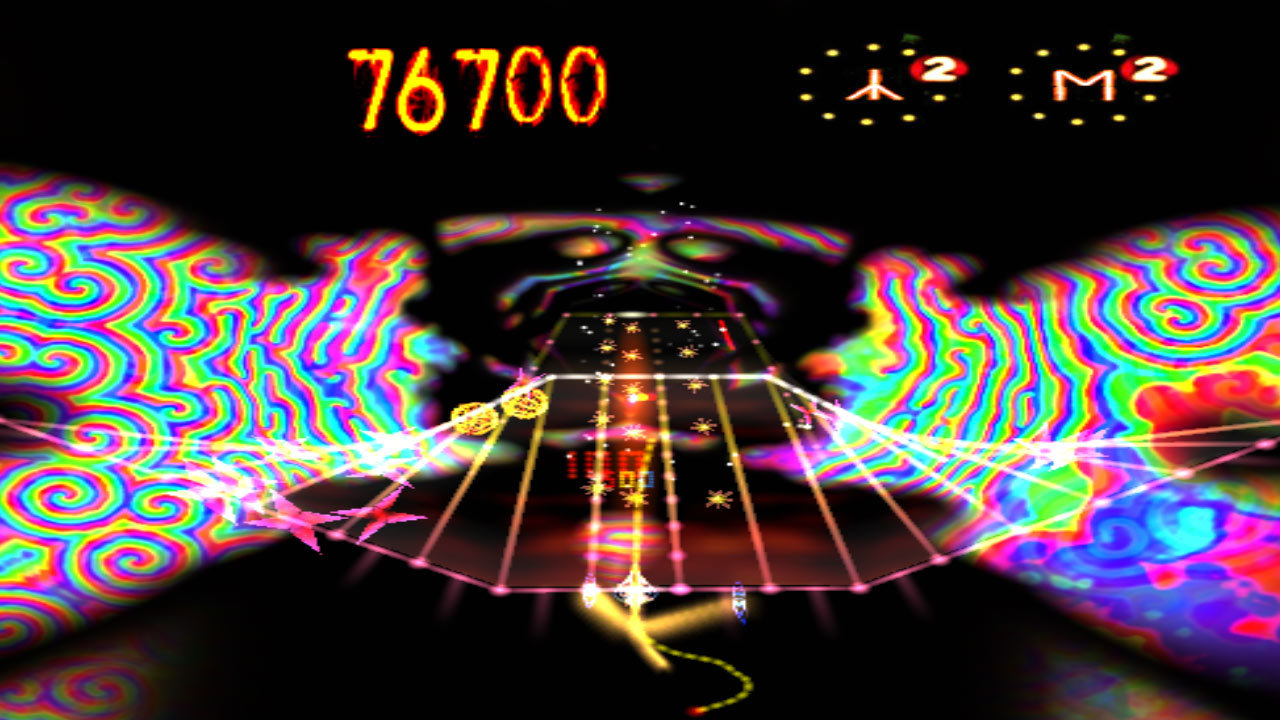 This was a lot easier in the old days. Nowadays, they can put a million dollars of lipstick on a pig, so that even a terrible game looks impressive enough that a pure newbie can’t imagine pulling it all off. And they can’t – not without having a team of artists, sound designers, programmers, etc. But back in the old days, when the games in the arcade and on the cartridges were largely created by one or two people, it was easier to imagine that with a little bit of learning and know-how, you could certainly do better.
But hey, we’re living in the age of indie now, when little games by solo developers and tiny teams are once again popular and abundant. And yes, as much as I evangelize indie gaming, the majority of them are still crap. But if nothing else, they can be examples of what not to do, and may provide the next generation of developers to take up the craft, because they tell themselves, “I can do better than that!”
Definitely read the whole interview. It’s awesome.
Filed Under: Quote of the Week - Comments: 6 Comments to Read
Indies: We Eat Cannibals
Posted by Rampant Coyote on February 13, 2014
 I really haven’t weighed in very much about the whole “Flappy Bird” flap. I never played it. My familiarity with the game came entirely from reading news about it over the last two weeks. Here’s what I learned, in the order that I’d obtained the kowledge, plus my thoughts, at the time, in parenthesis:
1. Flappy Bird was earning over $50,000 a day with purely ad-revenue based monetization. (Wow! Go … whatever game that is that I’d never heard of! Woot!)
2. Flappy Bird may have used bots to cheat the rankings after it had been languishing for months. (Boo! Hiss! If true, that’s cheating. But… how do you either prevent that, or avoid the appearance of evil?)
3. Flappy Bird was created in only three days by the creator. (Oh, hey, if that’s true, and if he didn’t cheat, good for him! But regardless of how he got up to the top of the rankings, it seems he tapped into something with a very simple game. That’s impressive.)
4. Flappy Bird ripped off Mario graphics from Nintendo! (“Bullcrap!” I said when I looked at the comparisons. Apparently even Nintendo agreed with my assessment. The offending major website has now apologized for making such a headline claim, admitted it was wrong, and changed the headline.)
5. Flappy Bird was taken off the market. (Suspicious? What would make someone walk away from $50k a day?)
6. All the Flappy Bird hate was because of RACISM! (WTF?!?!?)
7. The developer removed Flappy Bird because he thought it was too addictive and hurting people’s lives. (Ordinarily, I’d also call BS on this, but after seeing a bunch of his tweets from several weeks ago expressing so much concern that people were playing his game too much, I’m actually inclined to give him the benefit of the doubt here. A lot of it.)
All-in-all, I’m really not sure what to think, though I am somewhat disappointed in the “indie community” (whatever that means). From my perspective, the only possible wrongdoing was #2, and there wasn’t clear-cut evidence of this happening. We’ll probably never know. So if we assume he’s innocent, we’re left with a case where a young (I assume young, but I really know nothing about creator Dong Nguyen) game developer was buried in what I can only consider petty jealousy and nerd rage. And trolls and haters. All it took was a whiff of possible wrongdoing for that to become toxic.
It’s tough for game devs out there. Recently, Sophie Houlden tweeted that with all her efforts last year, she made an average of $6 per day as an indie game developer. As for me, I don’t think Frayed Knights: The Skull of S’makh-Daon will make $50,000 during it’s entire lifetime, and it took me years to make the game.
Them’s the breaks. That’s true of every industry, every field. Stephen King can ramble for an hour at a microphone and make a million bucks, while other writers have been at it for years and have to work a second job to pay the rent. Life ain’t fair, and I’m not exactly sure how you’d even define “fair.” Fairness can mean a lot of things, and some of those meanings are pretty incompatible with each other. No matter how hard we work at it, there’s always an element of luck. Just like D&D, sometimes someone is going to roll a nat-20 or a nat-1 which may throw expectations. That’s life.
Several years ago I adopted a philosophy that you cannot hate other people’s success if you wish to achieve it yourself. Otherwise, won’t you subconsciously avoid achieving what you hate? So I prefer to celebrate other people’s successes. Sure, I can’t say I am enlightened and spiritual enough to avoid feeling at least a reflexive twinge of jealousy (or at least frustration) once in a while.
We need to do better, as gamers and game developers. We can’t devour our own like this. Sure, I think Jeff Vogel is probably right, haters gonna hate and all that. But that doesn’t mean the adult voices can’t come out and denounce the trolls, add support, and try to be part of the ten supportive voices that it takes to offset the pain of a single hateful one. While the “top dogs” might be worthy of criticism, let’s not pile on to attack them just because they are on top.
Filed Under: Indie Evangelism - Comments: 6 Comments to Read
Game Development: Tool Add-Ons and Keeping Up-To-Date
Posted by Rampant Coyote on February 12, 2014
This isn’t really an update on Frayed Knights 2 status. I’m overdue to give you one, I know. This is more of a general-purpose post about game development, but of course my point of reference is Frayed Knights 2. It naturally looms large in my mind and consumes a good deal of my focus.
One big advantage of using Unity (and there are many) is that there are tons of third-party add-ons for the engine that can make the life of a game developer easier. Nowhere is this more apparent than NGUI. Unity’s built-in UI tools are pretty primitive, but NGUI is a relatively inexpensive add-on that provides an awesome UI library and tools to the Unity editor. While nothing is perfect, it’s pretty sweet. Now – I understand they are working on a whole new set of UI tools for the engine which may make NGUI obsolete soon, which is a whole ‘nother issue. But for now – NGUI is well worth the money and takes Unity to a new level of value as a game engine. And it’s not alone. For me, hitting the Unity Asset Store is a little like being a kid in candy store.
This is all wonderful stuff. But there are problems…
#1 – Compatibility of the add-ons with each other. This hasn’t proved much of a problem for me, but it is something I have to look out for, especially when dependencies come into play.
#2 – Updates for Unity. Unity changes. Sometimes this causes compatibility issues, normally in the form of warnings rather than errors as some functions get deprecated. Sometimes this requires massive code changes, and for a big project like Frayed Knights, an update to a .0 or .5 version of Unity might take a few hours to get things back up to snuff and working correctly. Sometimes the authors of the assets will update their stuff to keep pace with Unity, but not always. It may mean having to go in and change somebody else’s code. Or, if you wait long enough, the author may update it himself / herself. Which leads to another problem…
#3 – Updates to the add-ons. Sometimes the add-ons don’t update cleanly, and leave cruft in your directory which will cause compile warnings and errors. Weeding all that out can be a pain. Deleting the directories (assuming the asset installs in a clean, compartmentalized manner) and re-installing from scratch can work, but I’m finding it can also lead to other headaches as the editor goes a little crazy dealing with links that no longer work while you are transitioning. And then – as is the case for me transitioning to a newer version of NGUI – the add-on may change, deprecate functions, or completely modify how they do things, requiring a ton of rework.
It’s the ton of rework in #3 than I’m finding myself in right now, but for now I think it’s worth it.
Eventually – usually when I go beta – I stick a stake in the ground and say “This is the version I’m going with, no more changes.” Unless I really, really need the update, in which case it may necessitate a cascade of changes. That’s not a lot of fun when you are trying to make your game as stable as possible and lower your bug count, but sometimes the reward outweighs the risk.
I don’t want to oversell the problems – they are the right kinds of problems, IMO. They are the problems of using a living, popular, and thriving tool with strong third-party support. The advantages don’t come completely free.
If you are curious, some of the add-ons I am using (besides NGUI) include ProBuilder, ProGrids, “Shuriken Magic”, and a few content packs (which I gues Shuriken Magic counts as, although a lot of it is scripting and behaviors for particle effects). There are some others that I’ve picked up because they looked interesting or were temporarily useful (or they were on sale and looked like they could be used on another project) but may not make it in the final game. The Ultimate Rope Editor is one that I will probably find several uses for, but haven’t needed it yet in the game.
Filed Under: Game Development, Programming - Comments: 4 Comments to Read
Game Announcement: Subterranea
Posted by Rampant Coyote on February 11, 2014
Okay, I normally don’t like to report on games that are this early in development, but I make plenty of exceptions. In this case, it’s because creator John Mabbot… well, he asked. So here it is. The game is called Subterranea, and it’s another one of these games that, on paper anyway, sounds like it was custom-designed for my personal enjoyment.
Subterranea by Cloud Nine Games
First of all – it’s a party-based western-style RPG with turn-based combat. Those used to be an incredible rarity. Fortunately, indies have been stepping up to the plate.
Secondly – it’s incorporating the Open Gaming License for the ruleset. We saw this in Knights of the Chalice, and it worked pretty well in a turn-based game. In fact, Knights of the Chalice remains one of my favorite RPGs, period, occupying something of a similar tier as Pool of Radiance and its sequels in my heart, so hearing that another game is delving into that territory makes me happy.
In fact, John tells me that Pool of Radiance is a major inspiration for this game. He says, “I’ve always imagined that game, with the classic D&D turn-based tactical combat, exploration, political intrigue via the council and storytelling in an engine with modern graphics and physics.”
Okay. Do you think that’s a tease? Try this: “(I’m) looking to introduce PnP-type non-combat gameplay experiences, like feigning death, cutting rope bridges, physics-based traps that cause random chaos, heavier use of ‘exploration spells’, puzzles, etc.”
Elements like natural cover and positioning, physics-based puzzles and environmental challenges are planned. Expect rolling barrels, swinging rope-bridges (as seen in the video), and all other kinds of fun stuff.
Filed Under: Game Announcements - Comments: Comments are off for this article
Quick Take: Dungeon Fray
Posted by Rampant Coyote on February 10, 2014
 I am as much of a sucker for the big-name RPGs as anybody else. Yes, marketing works on me, too, go figure. But I still love to check out the unsung, relatively unknown little indie games. Sometimes they do a better job of scratching the itch. Sometimes not.
Dungeon Fray is one that I hadn’t heard of until it was bundled with Frayed Knights: The Skull of S’makh-Daon a few months ago. It’s a very quick-playing roguelike in the same vein as Desktop Dungeons. Now, I haven’t played Desktop Dungeons in a long time (since it was still in free, pre-beta stages), so I’m not sure how much the two have diverged – but core gameplay is pretty similar between the two.
In a nutshell, you have a dungeon that starts out mostly hidden with black squares that gradually gets revealed as you move. The dungeon is filled with monsters, treasures, and “orbs.” There are also locked treasure chests and blue orbs that have a highly rendom effect – including hurting your character half the time. Monsters of different kinds of have special abilities and resistances, and are clearly labeled with their level – which you compare against your own character’s level for an idea of their difficulty (and is how much experience points you’ll get for slaying them). Most of the time, you’ll be facing monsters higher level than yourself.
The monsters are stationary, until you attack them. Then they’ll follow you. By bumping into the monster, you automatically make a normal attack. You can also use any of nine spells to assist you, or drink potions to heal damage or remove debilitating states. Hitting and damaging a monster is somewhat random, especially if the enemy is much higher level than yourself, so there are no guarantees when you engage an enemy. Having some potions and spells in your inventory for a back-up plan against a more powerful enemy is key.
 Unlike Desktop Dungeons – but more like most roguelikes – you do not automatically heal as you move around or reveal new parts of the dungeon. You heal when you level up, when you touch a green orb, or drink a healing potion. There is also a wizard in each level who can grant you a favor – one of which is regeneration for the first three rounds of your next combat. Your character can be of one of three classes in the game – Fighter, Mage, and Rogue. All have different advantages and disadvantages, and each has three spells (of nine, total) which will work better for them than for the other classes.
Besides gaining levels, you can also improve your character through activating blue orbs (although that’s random and sometimes debilitating), or by purchasing upgrades with your gold. I really like this aspect of the game – it certainly makes loot-gathering a critical element of the game. Gold can be used to buy potions, spell uses, and upgrades to your character’s attack, defense, and hit points. Items have a fixed cost, but upgrades cost progressively more with each improvement.
Once you defeat all the monsters on a level, you can descend to the next level, and keep on going. I understand there’s an end to the levels where you can “win” (level 8?), but I’ve not gotten past level 4. Death is permanent, however you can earn achievements and perks with your characters which can then give an advantage to future characters.
And that’s pretty much the game. It’s not a phenomenal roleplaying experience or a super-deep roguelike or anything like that. It’s a straight up mechanical dungeon crawl where you manage risk, reward, and resources. Sometimes, that’s all I need for a “quick fix.” If you only have ten minutes to play, it might be just what you need. And if you manage to survive the dungeon that long, you can always quit and save.
Filed Under: Impressions - Comments: 2 Comments to Read
Game Dev Quote of the Week: Playing For Quarters Edition
Posted by Rampant Coyote on February 7, 2014
 I love digging out the old quotes about video games from the 80s and 90s. So much has changed, and so much seems quaint in retrospect, but the fundamental truths are usually still there once you strip out the technology and assumptions of the era. This one comes from the 1996 Computer Game Developers’ Conference (before it changed its name to GDC).
“The difference between home and coin-op games is simple, but it is critical to understand, because it overshadows everything else there is to say about this subject. It won’t really matter how many polygons your hardware can generate, how much (or little) blood you splash, how beautiful your cabinet packaging is, nor how much you spend on advertising– the bottom line always comes down to fun. (Coupled with proper tuning, of course.) In the home game world, many purchases are the result of advertising which leads the consumer to believe the game will be fun to play. In coin-op, where only extensive repeat play can justify the game’s existence, the appeal of the game must speak for itself. When a home game is sale is made, the customer hands over $50, whether or not s/he ends up enjoying the game. When a coin-op sale is made the customer puts up 50 cents. If s/he didn’t have fun, that’s all the money you are going to get from him / her. Operators will not, cannot, buy games which earn this poorly. And news on how games earn always gets around in this business.
“And what’s more, the customer must begin having fun immediately, without consulting any rules – sensing what to do intuitively. He cannot be made to feel intimidated or frustrated, and must want to pay to continue after playing for only 2 or 3 minutes. The challenge offered by the game must increase as the player’s skill increases, constantly balancing on the fine edge between frustrating him by killing him too quickly, and allowing him to live too long on a credit, which will reduce the game’s earning power. It is challenging, expensive, and extremely risky, but also potentially rewarding beyond measure to be a coin-op video game developer.” — Jeff S. Brown, CGDC, 1996
To be honest, I really don’t know Mr. Brown’s credentials. He seemed knowledgeable about the business, though. I don’t know if he realized just how badly the coin-op arcade game business was drying up (although he did mention how 7-Eleven had recently announced it would no longer have arcade machines in their stores).
But aside from being a snapshot of history, there are some pieces that are still very true – particularly in markets where the “race to the bottom” in terms of pricing has now become a wasteland of free games begging for small change once you play them. But even above that fray, there’s still a lot less emphasis on up-front purchases. I think this situation may have some parallels to the old coin-op industry, except you have an even tougher time getting noticed. The same may apply to those of us doing the traditional demo / full version model.
Even the whole “living too long on a credit” idea, sadly, has a parallel in the “pay to win” side of the game monetization fence. I think the arcade games handled it a bit more honestly, but that’s just me.
The key points I pulled out, though, may sometimes be difficult to apply to certain genres (like RPGs), but still entirely valid goals for a designer to pursue:
1. Players need to be able to play without reading instructions. (*sigh*)
2. Players need to start having fun immediately – at least by the time 2-3 minutes have elapsed
3. Prevent players from feeling frustrated or intimidated by the game.
4. Make a game that keeps a player entertained and challenged for every minute of play, so that if it *were* a coin-op, people wouldn’t ever want to quit pumping quarters into it. While it’s okay to have logical break-points where the player can save their game and come back tomorrow, designers should endeavor to keep the minute-by-minute gameplay fun, challenging, and varied.
Filed Under: Quote of the Week - Comments: 6 Comments to Read
Game Journalism and the Challenge of Early Releases
Posted by Rampant Coyote on February 6, 2014
When I complained about “Early Access” games a month ago – games that are released (and sold) to the public in an unfinished state, I neglected one of the critical aspects of gaming that it impacts.
What are game reviewers supposed to do about rating early access games?
The only thing I can figure, like the reviewer, is updating the review to match the development of the game. But who has time for this? Especially if it wasn’t fun on initial release. There are gazillions of new games released every week, and they can all use reviews. I don’t want reviewers stuck re-reviewing the same game every two months.
In theory, I think early releases are a great thing. Customers may have to deal with software being less stable and mature, but in return get to help drive development, and (hopefully) get it at a discounted price. Win / win right? And the software gets treated – at least for a while – as “live” development, constantly being improved. I’m used to regular updates of Windows, Unity, Blender, and other software. That’s a decent way for software to work, right?
To be fair, I think that’s how many (if not most) game developers honestly think of it, too.
But in practice, too often this system gets abused. It’s an opportunity to crank up the old “release it broken, and patch it later” cycle to eleven. But now – a studio without much of a reputation to risk can collect half the revenue for a game up-front with only 25% of the work. All you need is some clever marketing, pretty pictures, and something a little cooler than a tech demo. (Oh, did I just describe the majority of Kickstarter game projects as well?) Maybe they even go into it with good intentions, but as the pre-order revenue dries up and they realize they aren’t going to make the kind of money they’d expected for this game, it becomes easier just to quietly taper off development, rename the studio, and move on to bigger and better things.
I think if we could solve the review problem, it would help. It would behoove studios to make sure that what they release is worthy of a good review. It would probably encourage studios to release a game only when it was far closer to completion, and has received some major polish efforts.
Some guidelines I’d like to suggest to reviewers:
1. Having “Early Access” reviews specially marked as “Work in Progress” (WIP) reviews might help – an obvious, impossible-to-miss visual indicator. This would at least clue in readers that there’s a difference – and risk – when comparing a commercially available work-in-progress to an actual “released” game. Obviously, both may undergo changes, but part of the rating / recommendation for the WIP would be based on its potential and promise, as opposed to what’s actually there. The former is a guess – the latter is far harder to deliver (and easier to criticize) and should count for more, if only by differentiation.
But really – an “early access” WIP games request a different set of standards than a finished game – always adding the caveat that it’s still in full development and may improve substantially over time. I think reviews need to acknowledge that, and make it very clear that they are operating under much softer standards than a full release.
2. While doing constant updates to a review for an early access / commercially available work-in-progress, minor updates – a “delta” to show how things are going – could be in order. If things seem to be really improving, maybe a “+” or “++” could be appended to the score. If things do not seem to be improving over time, a “-” could be appended – again, with potential comments. In my view, a game that hasn’t been updated (or only received a “token” update) in three months should earn an automatic “–” suffix. Exceptions may be granted , but it seems like a game that is still “in development” and ready enough to be sold to people should be able to have updates once a quarter.
3. Possibly provide two scores or recommendations for WIP games. One would be for the game as it stands at the time of the review, and the other would be the guess as to likely deliverable value. The first one would be more important, as it is what the player might be stuck with should the developer stop development and never produce another update (always a possibility).
My biggest concern overall is that we’re going to end up with a barren indie wasteland of incomplete games, and customers suspicious of indies who never finish their jobs.
On the flip side, I think developers who continually update and improve their products after their official “release” deserve plenty of praise. It’s easy to come down on them and say, “You should have fixed this before release,” but I think most of us are tech-savvy enough to understand that there’s no such thing as perfect software, and every release has its share of surprises – sometimes bad. But the ones that keep fixing and improving their software – for free – deserve praise.
Ultimately, I guess what I am calling for is sticky reputations for developers. A dev with a good rep deserves the benefit of the doubt with early releases, crowd-funding efforts, and so forth. A developer without any track record should be viewed with suspicion. And any developer who has screwed up in the past and not made a good faith effort to make things right by their customers should have a lot of repentance to do in order to escape their reputation. And really – game journalism is where these kinds of reputations (or lack thereof) can be applied.
Filed Under: Biz - Comments: 8 Comments to Read
Game Design: What Makes Exploration Fun?
Posted by Rampant Coyote on February 5, 2014
 I’m trying to come up with some kind of “unified field theory” about exploration in games (particularly, but not exclusively, for RPGs). Some games are really good at it – from the early days of Elite and Frontier, to the sandbox play of the Grand Theft Auto series, to Bethesda’s exploration-centric role-playing games.
particularly as it can be applied to randomized worlds. My basic premise is this:
1. Diablo had little exploration component. Or at least, what it had was so boring as to not be worth calling it that.
2. Minecraft does.
If you accept that, you can start looking at the differences between the worlds, which are both dynamically generated. What makes one far more interesting to “explore” than others? What makes other games, without dynamically generated terrain, interesting to explore?
I just think of some of my more fond moments exploring in other games.
Some thoughts:
1. Interactivity. If the world is largely “look but don’t touch,” I lose interest in a hurry. There needs to be more to exploration than just finding a path. Naturally, in Minecraft, almost everything can be interacted with – you gather it up, move it, reshape it, make stuff out of it. This is a reason I really didn’t warm up to Dear Esther like I thought I would. It felt more like looking at somebody else’s photographs. (That, and… there wasn’t much deviation allowed from the path. See point 4.)
2. Novelty / Discovery. Being able to discover stuff you’ve never quite seen before. This is tough in dynamic worlds, because eventually you’ve enough permutations that it fails to thrill. But finding new objects, or new configurations of old objects that could be interesting to interact with, keep things exciting. But this is a key bit – it’s all about discovery. It can’t be just more of the same, with doors on different wall.
 This is a point where dynamic content either really needs to be supplemented with handcrafted awesomeness for special occasions, or (as in the case of Minecraft) the world generator really needs to be up to the task of creating some really nifty combinations of elements to make something cool.
One of my favorite moments of exploration in a game was flying up the Grand Canyon in Falcon 3.0 and discovering a giant water faucet was the source of the river.
3. Reward or Purpose. There should be some benefit to exploration, even if it’s largely self-directed. In Minecraft, it’s fairly intrinsic. The world is your reward – you are master of all you survey, and it’s all ripe for your exploitation – or simply exploration. In Diablo-likes, unexplored territory is more likely to contain something of value, or a key object / enemy that you are seeking. Is that too fine of a point? Maybe.
Many people think exploration should be it’s own reward – a fully intrinsic benefit to the player. For me, it’s like the motivation of a character in a story. It may not be key, or all that important, but without a strong motivation the whole thing falls flat. I’m a little bit goal-directed as a player most times, so I want to know that at least sometimes I’ll be able to tell myself that I’ve benefited from time spent off the rails. Note that knowledge can be power – the purpose or reward doesn’t have to be an actual in-game “item” or experience point bump or anything like that, but simply an improved understanding of the game or the world, or discovery (there’s that word again!) of secrets.
4. Optionality. Is that even a word? In a nutshell – if you are forced to travel along this path in order to succeed in the game, it’s not exploration. It’s simply plowing through the world. The fun for me lies with knowing I’m going off the beaten path and exploring places that not every player will see.
 5. Safety. I don’t mean in-game safety – it’s always more fun if there’s the possibility of danger lurking behind every corner. I mean meta-game safety – that as a player, you don’t have to worry about “breaking the game” if you wander off and start doing your own thing. This isn’t a problem in most modern games, but especially with indies, it’s still something to occasionally be worried about. This is one reason I’m not a big proponent of eliminating manual saves from a game – they allow the player a safety net and some freedom to go nuts and explore.
As a final note, exploration doesn’t necessarily have to be of physical space and terrain. It could be any kind of experimentation. It could be about testing any kind of limits in the game rules or the game world. It could be about discovering what kind of amusing responses to weird commands might be built into an adventure game. It could be about trying to find the fastest possible path from point A to point B in a speed run. In my view, whenever a game encourages a player to ask a question that starts with the words, “What happens if I…?”, then the game is doing it right.
Filed Under: Design - Comments: 18 Comments to Read
“Millennium” RPG Sale & Series Greenlight Drive – Help Me Say, “I Told You So!”
Posted by Rampant Coyote on February 4, 2014
 “Indinera Falls”, the person in charge of Aldorlea Games, has made more commercial computer RPGs in his career than just about anybody. You can check out the self-published section of the website if you have doubts. Or this post. If there are people who have matched or exceeded this count, they are few in number. I only wish I could be as prolific. The quality of the games have definitely improved over time as well, as you’d expect.
These are very much in the vein of classic 16-bit console RPGs, which I know are not to everybody’s liking here. That’s okay. However, one of Aldorlea’s more popular series, Millennium, has finally come to a conclusion with episode 5, and is now in the midst of a Steam Greenlight drive.
So if you feel charitable (or interested in the games, especially), go upvote the series on Steam.
(Oh, and if you haven’t already… Frayed Knights is still awaiting your upvote as well…)
 I probably do more effort linking other people’s Steam Greenlight campaigns than my own, but I did want to mention the drive, both to help him out, and also for my own benefit. See, we made a deal. The upshot is that once his games are accepted on Steam, I get to mock him mercilessly. Like me, his games were turned down originally by Steam just before Greenlight. He’s doubtful his games will be greenlit regardless of placement. If he’s proven wrong, I get to to give him a big “I told you so.” Otherwise, he gets to mock me, instead. Since I’m sure I’m right, I’m enthusiastic about making sure he has that opportunity to be proven wrong. He’ll be crying all the way to the bank, I’m sure, but that’s just the kind of guy I am.
It’s getting up there to the top of the list for Greenlight, so it probably won’t take long if he gets a good push. Another month, maybe.
To further sweeten the pot, until the end of the week, the first game in the series is on sale at a 70% discount. This was for newsletter-subscribers to know about, but I have permission to let folks know about it here. It’s at 70% off for the next couple of days. To get the discount, you only need to go to the Millennium 1 page and click “buy now.” The discount will appear in your shopping cart. No special code word necessary. Secret discounts. That’s why you come to this blog, right? 🙂
Okay, maybe not. To be honest, I don’t know why you keep coming, but you do. Both Aldorlea and I figure we suck at this whole marketing / networking thing, and aren’t any good at playing the games that have been played to get games greenlit on Steam. Wrong kind of games, I guess. But maybe this could be worth the few extra votes to take him over the edge.
And then, who knows? Maybe Frayed Knights won’t be too long after? (Although like I said, I’m terrible at it, and still too focused on FK2…)
Filed Under: Deals - Comments: 3 Comments to Read
Free Game: Candy Defender Saga… or “Redacted”
Posted by Rampant Coyote on February 3, 2014
 This is a little project that started out as simply a little internal exercise for me to learn GameMaker Studio. I figured it would also count as my One Game a Month entry. When the whole Candy / Saga trademark thing hit, I figured I’d re-theme it and submit it for the CandyJam as well. Now, if I had more time (and skill), I wanted to have the background change gradually from a serene green landscape with candy forests on the horizon to a blasted wasteland. But… for a throw-away game, it was already getting to take up too much time. 🙂
As an exercise to learn GameMaker Studio, it succeeded quite well. While I am sure I don’t have a clue as to the more interesting details of bigger projects, I think I have the basics down. At some point in the near future, I may post little bits of my code from this game, but there are far better tutorials out there to learn how to use GameMaker.
 As a parody / commentary … well, I had fun with it. Every time you lose (and it’s an arcade-style game where you will always, eventually, lose), the lawyers send a Cease & Desist for some reason or another, causing the game to change it’s title or instructions to something (temporarily) non-objectionable. Eventually, half the words in the game have been replaced with generic words or [REDACTED]. I had a lot of fun with that part. That took almost as much time to develop as the actual arcade game, if you don’t include the time I spent making the sprites. The sprites were a lot of fun. The lawyers COULD just be pointing in the air, for all you know… but I think most people will see it the way I see it.
The best version of the game is a Windows download, which you can obtain from itch.io (which hosts the Candy Jam… and which incidentally looks like it might be an interesting cheap-and-dirty alternative to Kongregate which includes downloadable games…). This is a single executable, no installer… just download and run. Since the file is unlikely to see much circulation, virus scanners will probably whine that they’ve never heard of it before, which makes it scawy or something.
Candy Defender Saga… or “Redacted” – Downloadable Windows Version
You can also play the HTML 5 version, but it seems like this version has some broken sound effects. I guess Game Maker’s exporter isn’t 100% awesome yet. However, it’s cool that it could build both an executable for Windows and as a web-game. I guess if you are running on a non-windows, this will be the way to go:
Candy Defender Saga: HTML 5 Browser Version
There’s no mouse support – it’s all arrow keys and the space bar.
So… what’s your high score? Since the last version I built, mine is 4570, and I haven’t been able to beat level 5…
Have fun!
Filed Under: Free Games - Comments: 2 Comments to Read
Game Dev Quote of the Week: RPG Commerce Edition
Posted by Rampant Coyote on January 31, 2014
This week’s quote comes from Ernest Adam’s 2013 “Bad Game Designer, No Twinkie” column:
“The constant buying and selling in CRPGs harms their heroic quest feel, so the least you can do is make this more efficient so that the player doesn’t have to waste a lot of time on it. It’s not fun to have to click the sell button 100 times to get rid of 100 Vegetable Peelers of Unusual Bluntness looted from hapless kobolds. Stéphane Bessette suggested a set of qualities that a good loot-selling interface should have:
- Players need a way to be able to buy stuff back that they’ve sold by accident, at least within the context of the current transaction. The opportunity doesn’t need to last forever, just long enough to be able to correct clicking on the wrong thing.
- They need a way to lock items so they can’t sell them unintentionally.
- It’s nice to be able to get rid of low-level junk without having to schlep it all the way back to the surface. Torchlight offers this.
- Let players buy one item, a specific quantity of items, or a stack of items.
- It would be good to be able to sell quantities of identical items that don’t stack.”
A lot of the GD quotes of the week are pretty general-purpose, but this one’s pretty specific. It assumes a game with a large number of items — something common enough with modern mainstream western RPGs and MMORPGs, but not necessarily the case with many indie games with far more limited inventories.
I might one more suggestion that if an item is currently “locked” (manually, or because it is currently equipped and the game doesn’t allow you to sell equipped items), that it be possible to unlock them from within the loot-selling interface. It’s annoying to have to leave the merchant screen, make changes, and go back – which is a problem that often does plague smaller, indie-style RPGs. Just ‘cuz the old 16-bit console RPGs made you do it doesn’t make it right…
Filed Under: Quote of the Week - Comments: 8 Comments to Read
Copyright © 2026 Rampant Games | Privacy Policy
Powered by WordPress.
