Utah Indie Night, January 2015
Posted by Rampant Coyote on January 23, 2015
Indie Night this month was at my alma mater, Brigham Young University. It was cool to hit the ol’ stomping grounds again – I spent many, many hours at the James E. Talmage building getting my Computer Science degree. It seems smaller, now.
But mainly it was cool.
Anyway, the night was kicked off by Lyle Cox giving a talk on finding motivation as an indie… although it covered a variety of subjects concerning health and well-being. He talked about finding life balance, avoiding burnout, maintaining focus, controlling your environment, scheduling, maintaining perspective, self-improvement, and yes, motivation.
It was an idea-packed half-hour. I’m not too much into the touchy-feely side of things, but a lot of the talk made sense. Even the basics – getting enough exercise, and filling your brain with better “brain food”, and discovering a bit more about what motivates you and makes you tick – was valuable information to be reminded of.
After that there were the games, and networking. I got a chance to play the latest version of Eidolon Games’ Flame Warrior, which totally kicked my butt several different ways. It has changed a lot since last summer’s demo, with a very different interface. And it’s clearly more challenging.
Some other old favorites were there – Script Kiddies, Dub Wars, etc. But as usual, I took advantage of the opportunity to talk to other game devs and get a feel for how things were going among my fellow indies. Sadly, it’s pretty rough and crowded out there. But it was once again great to draw on their experiences and learn from them, swap ideas, and talk about things that fellow game developers all understand. It was, as always, equal parts educational and motivational.
Big thinks to Greg Squire of Monkey Time Games for organizing things, as always. And thanks to my fellow indies. I had a great time, and I think I really needed the chance to hang out with other game devs for a while and remind myself why I keep doing what I’m doing. We’re all passionate about games, for different reasons sometimes, but we’re passionate enough that it drives us to keep at it in spite of all the other things we could be doing with our time. (I noted that very few indies were caught up on current television shows…)
I’ll end with a couple of quotes from Lyle – one might have been him quoting someone else, but they go like this:
#1 – “You will never influence the world if you try to be like it.” Be unique. Find your own purpose and measure of success. Do something awesome. And:
#2 – “You probably suck at what you are doing right now. So work on self-improvement and keep working on becoming the expert in your craft.” (Probably misquoted, but that’t the gist).
Filed Under: Utah Indie Game Night - Comments: Comments are off for this article
Human Extinction Simulator
Posted by Rampant Coyote on January 22, 2015
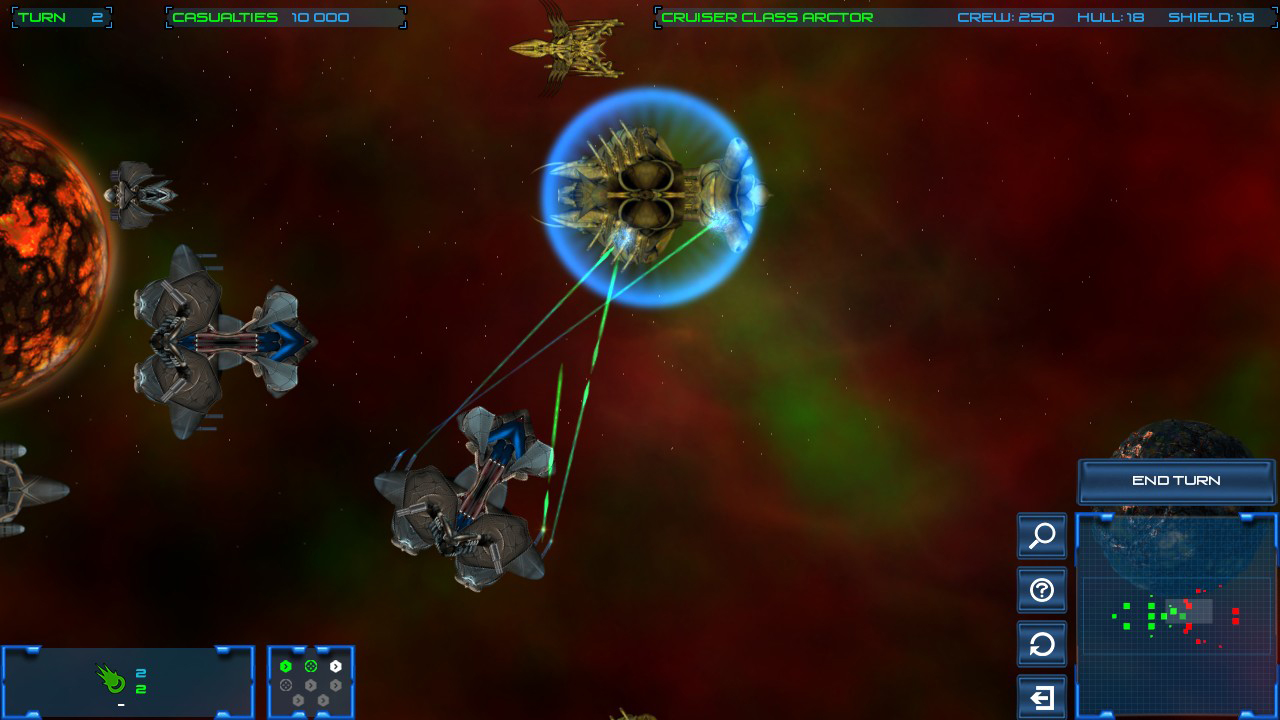 Human Extinction Simulator. As I’ve heard it, that was only a working title, until Dave Toulouse of Machine 22 came up with a better one. But the truth was… that was a pretty awesome title. So he kept it.
And it’s finally released.
Human Extinction Simulator is a turn-based tactics game of space fleet battles with a Chess-style flare, fully deterministic. Meaning – no random results. Again, like Chess.
Unlike Chess, you’ve got 30 different ship types instead of 7, each with different movements and weapon patterns. And 34 different scenarios to play through. Not a small game.
In the full disclosure department – yes, I’m friends with Dave. He’s a great guy, a fellow struggling indie, the maker of the way-more-fun-than-I-expected Bret Airborne, and I am just as personally excited for him as I am for the release of this game.
You can buy the game direct from Steam or… even better… buy it directly from Machine 22 and get a Steam key to go with it. The latter is clearly the better deal.
You can grab it here:
Human Extinction Simulator at Machine22
And you can watch the trailer to see if it’s your cup of tea:
Filed Under: Game Announcements - Comments: 4 Comments to Read
The Era of Enhanced Game Re-Releases
Posted by Rampant Coyote on January 21, 2015
 I remember in the “good old days” (which were neither that good nor that old…) how we’d wish that somebody would remake an old classic game with no changes except improved technology for modern (at the time) systems. Of course, nobody ever did that. If you got a “remake,” it was a complete reboot. There were a handful of exceptions, such as a version of Wing Commander 1-3 redone for Windows 95, or a spiffed-up version of X-Wing or TIE Fighter.
But now, in the middle of the twenty-teens, it’s a Thing. We just had a massive overhaul of the original Gabriel Knight: Sins of the Fathers released. The first two Monkey Island games got a very nice high-resolution makeover with the addition of voice-overs and commentaries not too long ago. Baldur’s Gate 1 and 2 have gotten “enhanced editions” that run much better on modern systems and higher resolutions, and have some added content of somewhat reasonable quality, and Icewind Dale 1 just had a similar update. I can frequently be found playing the new Rise of Nations Extended Edition, which is exactly the same as the original game and its expansion which I already own, but with some minor graphical improvements and Steam integration – and built-in functionality for live streaming of a game via Twitch TV. We’re getting lots of “HD” games enhanced for modern screen resolutions and mobile platforms, tiny machines that are far more powerful than the original platforms the games were intended.
I’m already dreading my loss of productivity I know I’ll experience when Heroes of Might & Magic III: HD releases for Android in a few days.
On the indie front (although a lot of these remakes / modern enhanced re-releases are being done by smaller, indie studios), Spiderweb Software is on its second “remake” of the Avernum / Exile series. I haven’t played the newest updates, but from the sounds of it they are quite a bit more than a graphics upgrade.
So here’s the question: That’s what I remember asking for all those years ago. “Just give me <Game X> with modern graphics, no other changes!” And now that’s what we’re being given. Is this a good thing? I lament how Hollywood has gotten itself stuck in a rut of sequels and reboots – how it’s becoming a creative wasteland in that respect. Are games going the same direction? Is it a problem at all?
I dunno. I’m getting what I asked for, so that’s nice. I’ve enjoyed the remakes I’ve played, even if I am replaying almost exactly the same game I played several years ago (then again, whenever I play a “new” FPS, I often feel the same…) I don’t see them limiting the flow of brand-new titles. At least not yet. And I felt my daughter got to enjoy the full impact and awesomeness of the Monkey Island games just fine.
I guess I could worry that we’re taking a step back in gameplay – losing 15+ years of experience in making better games – but let’s get real, here. While I won’t quite all rose-colored-glasses and say that games were all better prior to 2000, but I will certainly say that things haven’t universally improved in that time.
So what’s your take? Are we enhancing the past and providing classics in new packaging that can finally be considered timeless, or are we exposing how creatively bankrupt we’ve become as an industry with these enhanced editions?
Filed Under: Biz, Retro - Comments: 7 Comments to Read
The Indie Gold Rush: Ending with a Bang or a Whimper?
Posted by Rampant Coyote on January 20, 2015
There have been a few articles recently about the demise of the small indie game developer. Jeff Wofford’s “The Rise and Fall of the Lone Game Developer” probably made the most rounds last week, but “How Do You Make Money Making Games Again?” is another excellent post on the subject. At Gamasutra.com, Kris Graft notes in “As the Game Market Floods, Publishers are Back in Style” that in the most recent developer surveys, there’s been a very notable drop in self-published titles this last year.
This is all stuff I have talked about before. And I’m hardly the only one. The bubble pops in slow motion.
I noted last week that many of the “best” indie RPGs last year were made by moderately-sized “big indie” studios, often those that have worked with publishers in the past. I worry about the little indie studios (which would include me) getting crowded out, even as much as I’m impressed by these higher-budget offerings that have made a larger-scale effort to bypass traditional publishers.
It’s a quandary. The market is deluged with games, and as Woffword says, on some platforms (like mobile) it’s so crowded that you can’t give your game away. Even on PC, bundle deals and steep discounts rule the market. There’s a race to the bottom on price, which is driving the creation of very small, short games. But the popular buzzword of the day is “sustainability,” and this sort of trend is not sustainable.
I can’t pretend I’m an expert. I’m a part-timer, though I have been somewhat “involved” in the whole indie thing for a while. While in some ways it’s tempting to despair in my discovery of all of the unanticipated consequences of the indie revolution, and there’s no doubt it makes things rough, I think I can also provide a few glimmers of hope.
First of all – this isn’t the second time of the “fall” of the lone (or small-team) game developer. I’m not sure how many times it has happened, but I saw it happen in the shareware space in the early 90s, and in the casual space around 2004 – 2005. In being involved with the “indie community” for so many years I have often seen posts about how the best time to be an indie was… two or three years ago. It’s the same story, every time. There’s some new way or niche for the tiny developer to actually get their games to their audience and make enough money doing it to make it worthwhile. Once word gets out, there’s a pile-on. The channel / niche gets crowded, and then only the top-tier games actually make any profit at all. So then the race gets on to improve quality to better the chances of becoming one of the top 5% that makes 95% of the money. This means bigger budgets, bigger teams, and more vicious competition. The little guy gets squeezed out, again and again.
We’ve seen this happen several times, at different levels. I have no reason to believe it won’t happen again. Opportunities come and go, and if you are quick enough to cash in while the getting is good, you can do pretty well for a while. This industry is cyclical.
Secondly, even in the darkest days of the giant studios with deep pockets ruling the marketplace, exceptions have always existed. Some little guys manage to keep cranking out the titles and make consistent money so they can afford to keep doing what they do. Long after the gold rush ends, some settlers remain. Some do quite well.
Thirdly – well, the nice thing about the post-gold-rush era is that the folks who stick around are the ones who have a real reason to do so, beyond a simple desire to line their pockets. While I’m not seeing much of that in certain game genres (particularly the ones that are harder to create), a lot of the crap out there – especially for IOS – reek of by-the-numbers cash grab. Not that their employees might not love making games for a living (remember, that was exactly what Notch was doing in the years before Minecraft, during the height of the web-game popularity). Sadly, not all of the companies that fail to survive extinction will be the ones deserving a quiet death, but many of the ones that will disappear will the riff-raff heading for the exits to pursue the next Big Thing, or the ones that were never serious about it in the first place. That leaves slightly more breathing room for the dedicated few several many.
So yeah – maybe I don’t have the unbridled optimism about the indie world that I once did. It’s definitely frustrating. But I don’t see the end of the world, either. Indies will still be here. Honestly, I think the really cheap prices will stay with us, too, although maybe not quite to the give-away levels they are at now. Things will stabilize. And yeah, I think there’ll be room for the low-budget indie to thrive, too. But it won’t be so “easy” (as if it were ever easy). At least not until the Next Big Thing hits.
Filed Under: Biz, Indie Evangelism - Comments: 2 Comments to Read
Frayed Knights: Spell-Checking
Posted by Rampant Coyote on January 19, 2015
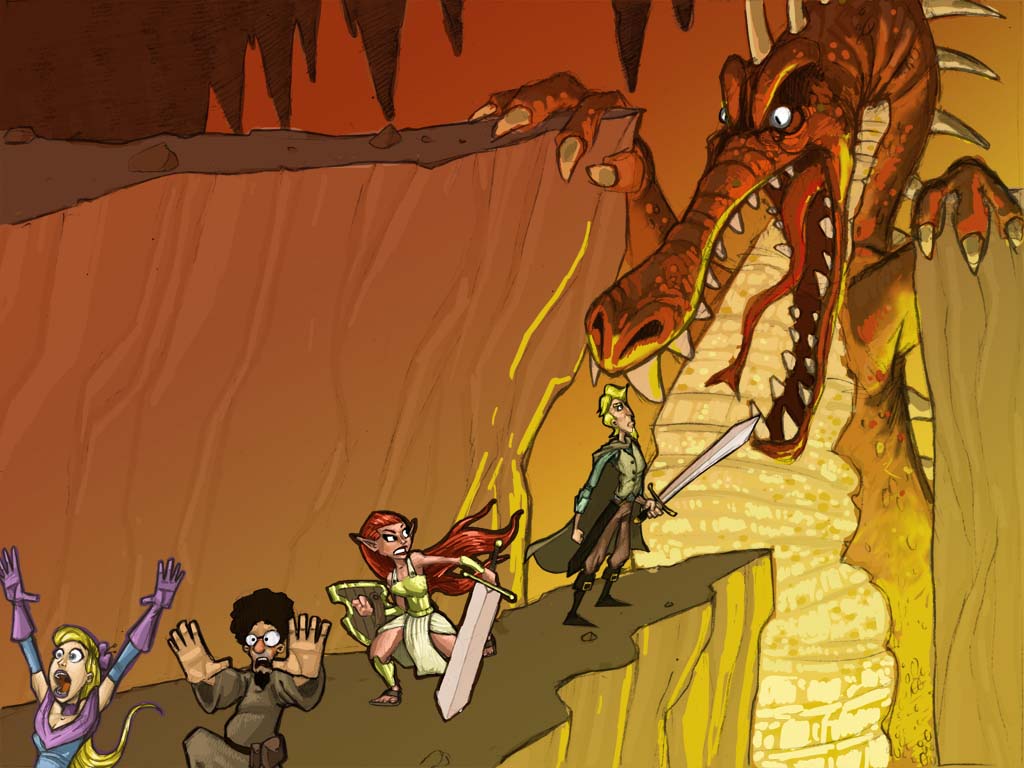 I think I have the coolest, weirdest spell system ever in Frayed Knights 2: The Khan of Wrath. Of course, I’m biased.
It’s not that I literally have an infinite number of spells. For practical purposes, for each spell class there are probably four or five dozen meaningful spell variants per level without going into the combo spells. I mean, seriously, how many different ways can you inflict blindness upon your opponents? Okay, let’s look at it:
1. There’s a single-target inflict blindness
2. One that effects both enemies within a certain “rank” (distance away),
3. One that inflicts blindness on a primary target and up to two targets behind the primary
4. One that “explodes” – which means the primary target is hit for the full effect, and everyone else in the group for half the duration (if they don’t avoid the effect)
5. A “group” spell that does full blindness to all enemies.
Okay, there’s five. And then within a spell level there’s a range of durations – figure plus or minus maybe a turn. And some minor variations on the endurance costs and attack accuracy. They could be mildly interesting if you had to choose between two variations at some point, but ultimately they aren’t really meaningful differences.
What the mechanic really comes down to is that you’ve severely limited one or more targets in their ability to attack for a period of time. What matters is how many targets, and for how long. For how long has a pretty narrow window of interest as well. If the average combat lasts around five turns (sort of my target for the game), anything significantly greater than five turns becomes meaningless as well. At least, it is for the players using the spell. For enemies using it against the player characters, that could be a different story, as blindness can persist into the second or third combat if left uncured.
All of this stuff is still getting balanced and tweaked, and some of that has led to some fundamental design changes. For example, inflicting blindness is obviously far more effective at neutralizing a front-line enemy than a mere stat drain. Even if it is easier, faster, and less costly in endurance to drop an enemy’s strength than to blind them, blinding a hard-hitting enemy is still the “best” solution, so that’s only a partial way to balance it out. The other part is to make it easier to resist or cure blindness or other conditions, and to make sure the enemies have some access to these things too.
This feeds back to the central concept for the massive variety of spells (and spell-casting equipment) in Frayed Knights 2. Does blindness not work on this enemy? Try something else. So – yay for the core design.
But all this in turn multiplies my interface woes. How do I make all this manageable for the player? Just like real life, too many options can confuse when the pressure is on.
I’ve simplified a few things. Like the idea of selectively beefing up spells to more powerful versions – that’s gone. I’m toying with a skill that will automatically do that on a more limited scale, but really – in a game with (semi-)infinite spells, why would I want the player to invest in sticking with their old, moldy spells instead of constantly finding bigger and better abilities as they progress?
The thing is – all of these factors are interrelated and as I tweak one, it changes the flow of everything else. I don’t think perfection is attainable in this case, but it does seem like things get better with each iteration.
Filed Under: Frayed Knights - Comments: 3 Comments to Read
RPG Codex Picks their Top RPGs of 2014
Posted by Rampant Coyote on January 16, 2015
RPG Codex has released their top picks for PC RPGs of 2014, including audience picks, editor’s votes, and individual editor picks. They also have a short list of the most anticipated releases for 2015.
RPG Codex 2014 Game of the Year Awards
Not exactly the same picks, but a very similar grouping from RPGWatch’s choices. And my own.
Everything I said yesterday applies equally here. But here’s something else worth commenting on: For those of you familiar with the site, RPG Codex is not noted for their optimism about the state of the genre (or gaming in general). Or for watering down their opinion for the sake of politeness. They are a passionate and knowledgeable crowd, although their preferences are nowhere in the same zip code from each other sometimes.
From the opening paragraph, you get this:
“I took the liberty of calling them Role-Playing Games of the Year, because we’ve finally had a year that didn’t suck balls. In fact, this year has been so good that one of the most common issues has been people not having time to play all the titles.”
For RPG Codex, this is pretty dang complimentary. If that doesn’t signal a potential sea change for the genre, I’m not sure what does.
But I’ll join them in hoping this trend continues.
Filed Under: News - Comments: Read the First Comment
RPGWatch names the best 3 RPGs of 2014
Posted by Rampant Coyote on January 15, 2015
If you are a fan of classic western style computer RPGs – the kind that seemed to be in an unending supply from companies like Origin, SSI, Sir-Tech, Mindcraft, Westwood Studios, and Interplay – then for a while, it may have seemed like the golden age of computer RPGs was far behind us. Through the late 1990s and the first decade of the 2000s, we were fortunately drip-fed some nice role-playing experiences. Some of them were even pretty awesome. But it was nothing like the heyday of the late 80s and early 90s.
 Except… arguably, now it is. 2014 saw dozens upon dozens of indie releases (which I talked about last week in my 2014 Indie RPG Round-up Part 1 and Part 2). Between those and the mainstream releases, and some of my personal favorites like Dead State, and some off-beat but interesting titles like Steam Marines, The Banner Saga, Heroes of a Broken Land, and NEO Scavenger … I’d have to say that 2014 was a banner year for RPG fans.
Although it did seem to me that the mainstream RPGs for the PC were somewhat… diminished… compared to past years. Not by much, but at least the indies (and “big indies” – straddling the gulf between the big publishers and the little homebrew shops) picked up the slack.
RPGWatch held votes for the best RPG of the 2014. The audience and the editors actually agreed for once:
Game of the Year Awards – 2014 (RPGWatch)
Now, bear in mind that RPG Watch is for PC role-playing games, which is why you won’t find any console exclusives, and more of a classic / western RPG bias. Hey, when the rest of the gaming world seems to think that Square Enix invented the role-playing genre, someone’s got to take that stand.
 Considering the audience, the only mild surprise was in whether Divinity: Original Sin or Wasteland 2 would come in first place. Third place was a little more interesting, with Dragon Age: Inquisition taking third place, and followed by Shadowrun: Dragonfall Director’s Cut and then by Might & Magic X: Legacy.
A year where something like Might & Magic X: Legacy won’t even place in the top three? Where Dragon Age: Inquisition only takes third? You can argue for exact positioning all you want (I know many of you reading don’t get the attraction of Divinity: Original Sin), but to me this speaks to it being a year of stellar quality as well as amazing quantity of titles.
RPGWatch has also published the votes for the most promising PC RPGs of 2015. Sadly, Frayed Knights 2 wasn’t on the list to be voted on, but given the circumstances and delays, I can’t blame them.
 Most Promising RPGs of 2014 (RPGWatch)
With Pillars of Eternity, The Witcher 3, the just-released Avernum 2: Crystal Souls, the full release of Shroud of the Avatar, possibly (? Can I hope?) Torment: Tides of Numenera, hopefully Frayed Knights 2 and Age of Decadence, I’m hoping for just as great a year this year as an RPG fan…
HAH! As if I’ll have time to play. I’ll still be playing catch-up on 2014’s games, I’ll bet.
Filed Under: News - Comments: 5 Comments to Read
Interview at City Weekly
Posted by Rampant Coyote on January 14, 2015
 Okay, I don’t think anything here is news to any long-time readers here on the blog, but it was fun to talk about Rampant Games as well as reminisce about the old days at SingleTrac in this interview I did with Salt Lake City Weekly.
You can check out the interview here:
Rampant Games: Talking with local video game designer Jay Barnson at City Weekly
An excerpt:
Gavin: What made you go for the turn-based combat system compared to simulation or instant combat?
Jay: Because the mainstream publishers (and many indies) were already making those kinds of games. I don’t want to make just another Diablo clone or whatever. If I had something really cool to contribute to that style of game, something that would set the game apart or really have something interesting to say, then sure, I’d do it. But I wanted to go back and explore a different style of gameplay and thought I had something interesting to say there. Also, it is very difficult to control an entire party of characters in a real-time action game. Not without losing a lot of the focus on individual actions. A more thoughtful pace made sense.
Filed Under: Interviews - Comments: 3 Comments to Read
When Radio Shack was cool…
Posted by Rampant Coyote on January 13, 2015
It’s funny. As mush as I might embrace change and improvements, there’s still a part of me that still expects the world to be exactly the same as it was when I was fifteen. At least the parts I interact with. When I walk into a mall, a part of me still wants to seek out the once-ubiquitous arcade.
And part of me still thinks I might walk into a mall as part of daily life…
There’s a Radio Shack store in a shopping strip near my house that I pass by almost daily. I go there pretty infrequently (although more frequently than I visit a mall…), and it’s mainly a place to get overpriced home theater and stereo equipment, cell phone accessories, remote control vehicles, battery chargers, and HDMI cables. Although towards the back, I was gratified to see that they still sell fuses, some solid-state electronic components, and – much to my surprise – a couple of electronic project kits for kids.
That last discovery, several months ago, was a pleasant one. When I was a kid, that was what Radio Shack represented. It was a hobbyist electronics retail shop. They had computers (the famous TRS-80s… the “TRS” stood for “Tandy / Radio Shack”), a bunch of electronic gizmos and toys, computer software, electronic project kits galore, and of course a bunch of components and cables for wiring up your home electronics. It was a store I’d visit just to browse. I’d spend hours looking over their catalogs and mailers each year. I had a couple of their electronic project kits, and learned a little bit about electronics that way. Mainly, I learned what would happen to a microchip that was core to one kit if you decided to pour extra power into it via a model train transformer. Oh, and I learned what burned electronics smell like that way, too. You never forget that smell.
I bought parts from the Radio Shack as an older teen to build a device that would transform the electricity from a 9-volt battery into a muscle-curling hundreds of volts for use as a practical joke – or a way to prove one’s macho-ness in the most non-macho, geekly way possible.
Like its sister company Tandy Leather, Radio Shack was a retail store for the Do-It-Yourselfers. And maybe it was what it represented that was so exciting to my young mind. It was the idea that this stuff did not belong inside some ivory tower of academia or inside the white clean-rooms of industry, but there in your garage or basement workshop, or up in the bedrooms of twelve-year-old kids. In that way, maybe it helped instill the “indie spirit” in me. For that, I owe it.
Not enough to buy any more HDMI cables from them, though. I could get two of ’em for the same price from Office Max or Amazon.
But hey, maybe I’ll buy a heliquad from ’em someday or something…
Filed Under: Geek Life - Comments: 5 Comments to Read
Productivity: The Group of Three
Posted by Rampant Coyote on January 12, 2015
The middle 50%+ of game development is the hardest for most people, I’ve found. At the beginning of the project, the game is being built up from nothing and is making rapid improvements daily. It’s exciting and motivating. And at the end, even though it’s a hard slog, you can see the light at the end of the tunnel. But in the middle, apparent progress is minimal, and there’s just a lot of crap to get through to get it from that early prototype to a finished product.
Back when I was working on Void War, I came up with a methodology – well, a dumb little trick – to help me get through the less exciting phase of game development. I was talking with some people last week about productivity tricks and staying motivated, and thought I’d share this again (since it was lost with the old blog). Honestly, I’ve felt lately that I need to go back to it, just because I’ve been slogging along in a lot of boring work for a while and the game hasn’t made a visible improvement in a while, which can be demoralizing. It works for me. Maybe it will for you.
Maintain a Task List
Number one, you need to maintain a task list. If you aren’t doing that, and have been flying by the seat of your pants, then you’ve already got something critical to fix if you want to get your game done.
I’ve found that simple task lists – occasionally prioritized, but really nothing more complicated than a straight-up list (possibly marked by category – see below) – is the easiest, best tool for me. I’ve used them since the SingleTrac days, and they seem to work better than more sophisticated tools. Ideally, the tasks should be broken down into jobs that will take a short, reasonable time to complete. For me, that means tasks that I can complete in one day or less. If a task is much bigger than that, I try to break it down into smaller sub-tasks. But not too small. If they are less than a quarter of a day in length, I group similar tasks together.
Plan Task Transitions
When I’ve tried to track my progress, I’ve found my biggest waste of time is always on task transitions. Still. I end up spinning my wheels at the end of the task, poking around for little things to tweak, or I end up hunting down a distraction which eats up more time than the original task. It’s a sad commentary on my own laziness, I guess.
This is something I still need to work on. But the “Group of three” helps (at least cuts down the transitions somewhat). Part of it for me is to make sure I already have the next task “queued up” and ready to go, so as soon as I’m finished with my current task, there’s no question about what to do next. I can roll right into the next one. This means taking time at the beginning of my day (which, as a part-time indie, means “night”) and plan out I’m going to work on, in order. I can change the order later, if I choose, but otherwise I have a default plan and no excuse to break my stride and hunt down distractions. Or to waste time gold-plating what I’ve already finished.
The Group of Three
Because I love making games, there are many game-making tasks that I really look forward to doing for one reason or another. They are fun. They are exciting. They are intellectually stimulating. Whatever. We’ll call these the fun tasks.
Then there are some tasks that are really going to visibly improve the game. By “visibly” I really mean “apparent to an outside observer” – so it could be audio or something else, even a layer of polish that will really make things “feel” better. I’m going to call these “visible tasks.”
Then there are some tasks that are just going to be painful or dull, but they have to get done. Often they’ll involve rewriting prototype code or something else that is neither fun nor will make much of a difference to the playable game – they are just things that must get done. We’ll call these “tedious tasks.”
My trick to getting through the long haul of development is to group one task from each category together, and force myself to complete all three before I can move on to the next group. It’s motivating for me, because I want to move on to the next “fun” task… but I have to finish a visible task and a tedious task before I’m allowed to do so.
The other motivational trick is that by grouping the visible tasks in there as well, I force apparent progress. I may not be very excited about them individually, but it does mean that team members and outsiders get to see progress in the game – and I get to feel good about the visible progress. So that’s a longer-term win and motivation.
Now, there are some tasks that might fall into two categories – you can pick a category for them based on whatever list is starting to run low on items. You may need to double up on one category to make it a group of four or whatever. Fortunately, by the time you have to do this, you are getting near the end of development.
Filed Under: Game Development, Production - Comments: 5 Comments to Read
Steven Peeler on Traits in Zombacite
Posted by Rampant Coyote on January 9, 2015
Steven Peeler of Soldak Entertainment – the dude behind Depths of Peril, Din’s Curse, and Drox Operative, has a bit to say about a new mechanic in the fantasy-zombie-apocalypse RPG in development, Zombacite. The mechanic is traits – special passive abilities that can be acquired via increased stats. He hopes that it will help encourage people to level up some statistics that they might not normally increase for a particular character class (like intelligence for a warrior).
“Traits can significantly change your character. This is because they have major positives, but also because they all have negatives. You will need to take into account the positives and negatives and make a difficult choice to take the skill or not. Since you still need to use a few skill points to get the skill, getting the skill is not automatic when you meet the attribute requirement.”
More information can be found here.
One of the trickiest things when balancing a game is making sure that an option doesn’t become a “non-decision” because it is too useful, too useless, or simply doesn’t make enough of a difference with other options. It looks like he’s addressing that.
Personally, I’m not so sure about the negatives with his examples, but I imagine that will come out in playtesting. I don’t know if a projectile continuing on to hit other targets is worth a 15% hit to damage, especially when I have to pay skill points for the privilege of the damage reduction across the board… but I’m sure Steven does. If killing things at a range to avoid infection is such a major deal, and enemies tend to come in hordes rather than single ‘boss’ type monsters, then it might make lots of sense.
Filed Under: Design - Comments: 2 Comments to Read
The Indie RPGs of 2014, Part 2
Posted by Rampant Coyote on January 8, 2015
Here’s the rest of the list of indie RPGs released for the PC in 2014. If you missed part 1, you can read it here: The Indie RPGs of 2014, Part 1.
Do I have a favorite indie RPG of 2014? Honestly, I haven’t been able to play these games enough to really make an informed decision, but Divinity: Original Sin and Wasteland 2 are definitely on my short list. I feel a little bad about this, because I worry about these big-budget indie titles crowding out the smaller, lower-budget titles. But the people behind these games have clearly had as much passion and personal investment in their titles as any other indie, and I have to give credit where credit is due. Do the higher production values give these titles the edge over someone’s earnest 8-bit-style roguelike? Yeah, but (for me) it’s not that tremendous of an advantage. Maybe I’m just too much of a jaded retrogamer.
Let’s get to it, shall we? Here are 30 more indie titles rounding out the PC indie RPG releases of 2014:
Legend of Grimrock II (Almost Human) – the sequel to the hit first-person dungeon-crawler in the vein of the Dungeon Keeper and Eye of the Beholder series, Legend of Grimrock 2 lets the players adventure outdoors as well as in the dungeon, with more puzzles and combat heavily dependent on timing, precision, clever solutions and careful exploration.
Legends of Persia (Sourena Game Studio) – Action / RPG / Adventure game (Diablo-like) involving Persian mythology
Legionwood 2: Rise of the Eternal Realm (Dark Gaia Studios) – An RPG Maker title geared for hard-core, experienced RPG players.
Lisa the Painful RPG (Dingaling Productions) – Side-scrolling post-apocalyptic (and pretty much gonzo) RPG made in RPG Maker “about survival, sacrifice, and perverts.”
 Lords of Xulima (Numinatian Games) – Epic indie RPG with turn-based combat, isometric world, and a classic old-school feel on a lost continent.
Madam Extravaganza (John Wizard Games) – an RPG Maker title from the very talented John Wizard Games, makers of the Dawn’s Light and Lilly & Sasha series. Bring your life savings to the inn in the Monsterville, defeat the monsters, and you may return home with more wealth than you can imagine. What could possibly go wrong?
Neo Scavenger (Blue Bottle Games) – Post-Apocalyptic survival RPG. Major emphasis on survival.
Pier Solar and the Great Architects HD (WaterMelon Co.) – Quite a story for this one, originally a homebrew release for long-obsolete Sega consoles, it has now come to the PC (and many other platforms) after many years of development.
Prologue: A Guardian Story (Senshi Labs) – An RPG Maker title that parodies jRPG cliches.
Quest of Dungeons (David Amador) – Turn-based graphical roguelike.
Reflection of a Fallen Feather (Forepawsoft) – An “adventure-RPG” hybrid in the 16-bit jRPG style.
The Secret of Qwerty (Gryphon) – A simple 8-bit style RPG combined with a typing tutor. Edu-rpging!
Sacred Tears True (AlphaNuts) – A card-battle jRPG using the RPG Maker engine.
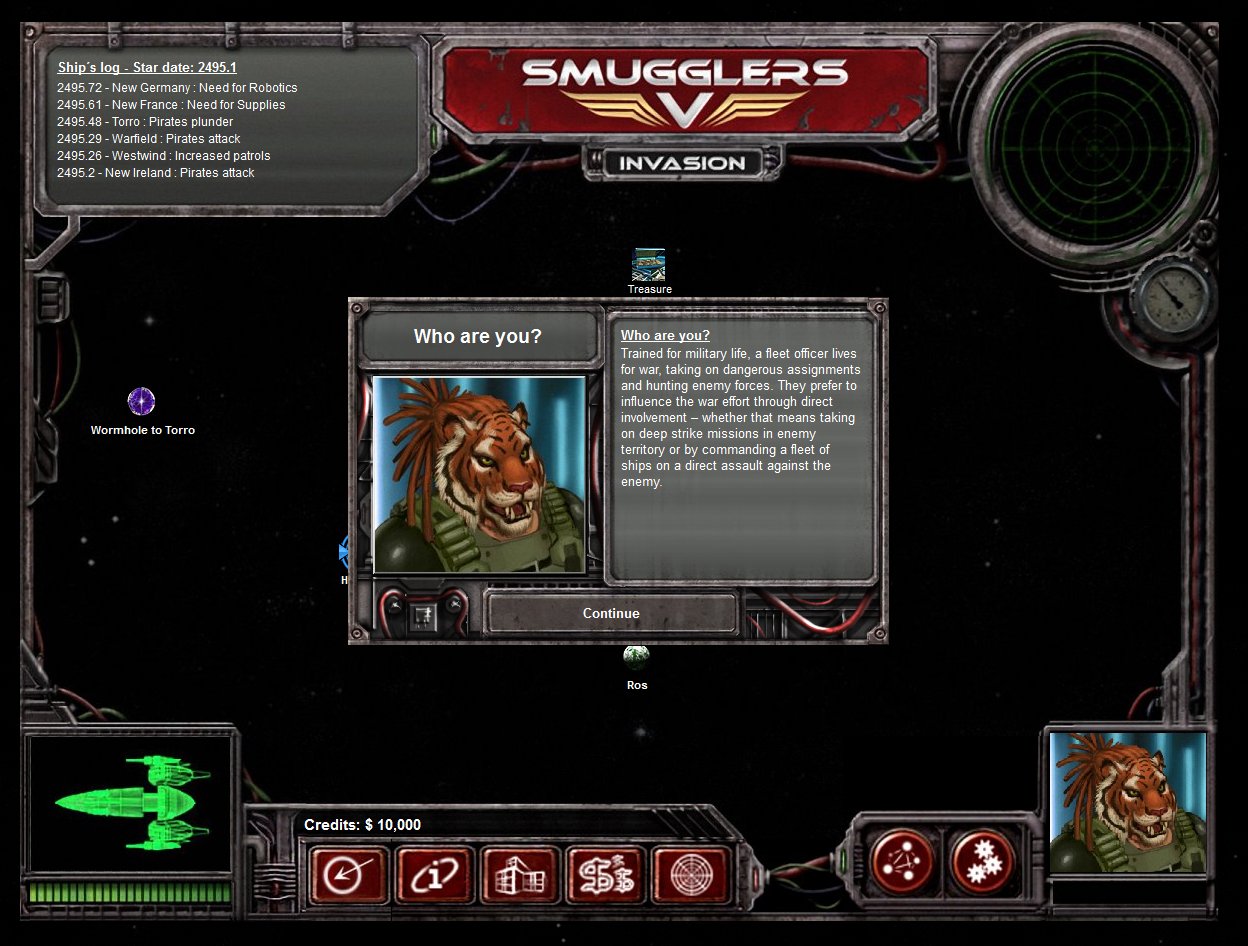 Smugglers V: Secession (Niels Bauer Games) – Man, I haven’t even been able to play Smugglers IV yet! While more on the periphery of RPG-ness, this is a long-running turn-based game of space trading.
Smugglers V: Invasion (Niels Bauer Games) – Stand-alone expansion to Smugglers V: Secession
Sproggiwood (Freehold Games) – A story-driven, turn-based roguelike set in a humorous world inspired by Finnish mythology.
Star Nomad (Halfgeek Studios) – A real-time combat, 2D, space trading sim / RPG. Yeah, there’s a lot in that mix.
Steam Marines (Worthless Bums) – Squad-based tactical roguelike aboard a steampunk spaceship. There is just too much awesomeness in that description.
Steel & Steam: Episode 1 (Red Meat Games) – Steampunk fantasy in a 16-bit jRPG style.
Subterra (Warfare Studios) – In a vicious underground world, a young man must brave danger to unseal the portal to long-forgotten Earth to save his sister from a deadly disease.
Sweet Lily Dreams (Rose Portal Games) – An RPG Maker title. Save the world of dreams and fairytales from being consumed by a terrible nightmare.
The Tale of a Common Man (Aldorlea Games) – The latest RPG Maker game from Aldorlea Games, this is the story of a common farmer who becomes embroiled in extraordinary circumstances.
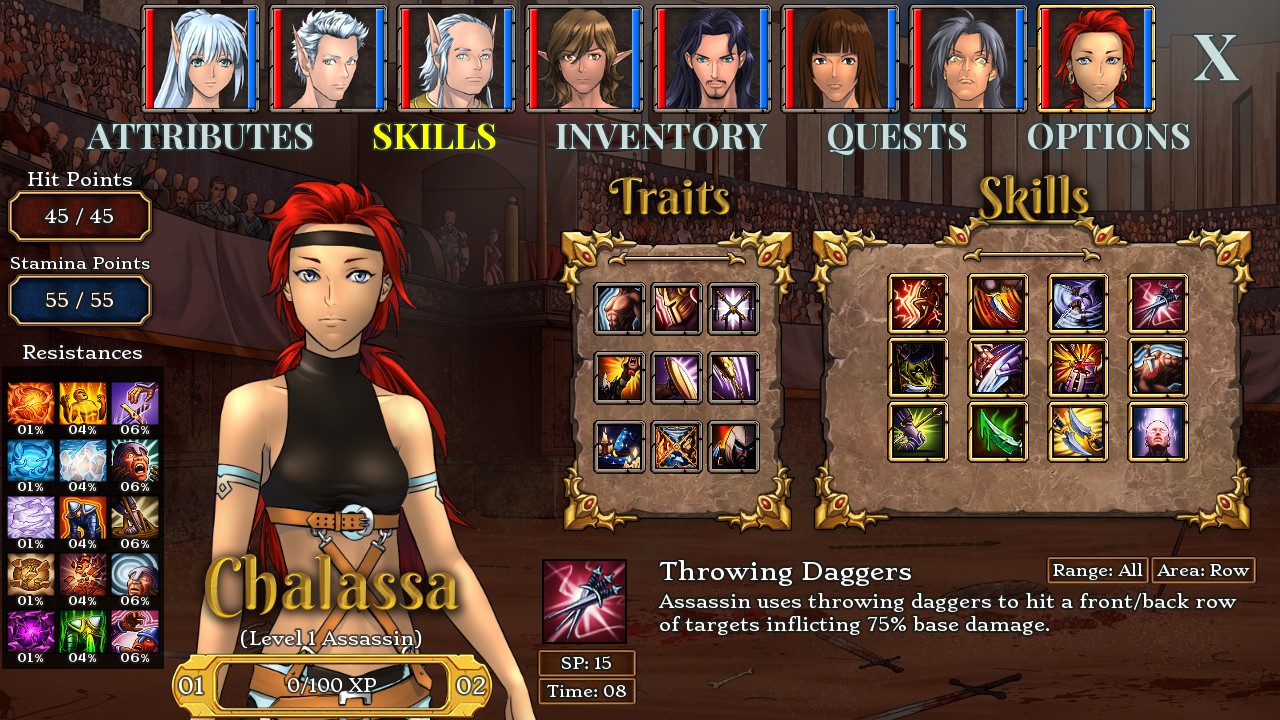 Tales of Aravorn: Seasons of the Wolf (Winter Wolves Games) – Taking place in the same world as the previously released Loren: Amazon Princess, this title includes a number of improvements, including an isometric map and a larger world to explore.
TinyKeep (Digital Tribe Game) – An action-roguelike with cartoony graphics. The big twist with this one is an emphasis on using the environment, traps, and enemy rivalries to defeat enemies indirectly, rather than always opting for a head-on confrontation.
Transistor (Supergiant Games) – A stylish, artistic sci-fi themed action-RPG by the makers of Bastion.
Undefeated (Aldorlea Games) – Another RPG Maker title by the prolific developer Aldorlea games, you play three soldiers who must solve the mystery of an encroaching wasteland.
Unrest (Pyrodactyl Games) – An RPG set in ancient India played from the perspective of an ordinary person, almost exclusively through nonviolent interaction.
Valiant: Resurrection (Amaranth / Lone Wolf) – Previously entitled “Asteria,” and probably had its name change due to another game by the same name released earlier this year (which a friend of mine worked on). This is an RPG Maker title. The game’s plot centers around a hero named Argos who is seeking to bring his lost love back from death.
Wasteland 2 (inXile Entertainment) – The sequel (of sorts) to a classic RPG released twenty-five years ago. Wasteland 2 is set in a somewhat less-than-serious post-apocalyptic world. If it sounds like the Fallout series, you’d not be incorrect – Fallout was actually something of a spiritual sequel to the first Wasteland. Wasteland 2 stays true to its old-school roots with challenging turn-based, tactical combat but with deep, interesting decisions and more modern production values.
Wind Child (Warfare Studios) – An RPG Maker title. A quest to save a young girl from an ancient sorceress brings together four great heroes who may have a greater connection with each other than they had imagined.
There you go! That’s a grand total of 56 indie RPGs of 2014 – more than one a week of what I’d consider reasonable quality! Did you miss some of these? Most of these? All of these? Well, now you can hunt ’em down and give some of ’em a try.
What did I miss? What was I in error in counting? Should something not really be considered “indie” or is it still not “released”? Let me know in the comments!
Filed Under: Indie Evangelism - Comments: 10 Comments to Read
The Indie RPGs of 2014 – Part 1
Posted by Rampant Coyote on January 7, 2015
Now that 2014 has officially come to a close, I thought I’d take a very brief look at many the indie role-playing games that were released this year for the PC. I’ve given up all hope of this being an exhaustive list, so please feel free to chime in with other titles that were released during 2014. As it is, we have more than 50, and that was without delving too deeply into the ranks of the most amateur releases.
Trying to list the indie role-playing games released in any year nowadays is a pretty complicated thing, and not only because trying to track down the games themselves can be exhausting and difficult. But pretty much every aspect of the subject raises more questions. What constitutes “indie?” What really counts as an RPG? What does “released” even mean anymore, in days of early access, multiple release dates across multiple distribution channels? I mean, Frayed Knights: The Skull of S’makh-Daon just released in 2014 on Steam, whereas it was largely unheard of before then, so does that constitute a “new release?” I’m not counting it, really, but it was really just a straight line that moved very, very slowly. There were more than a few games that only enjoyed a “large” release in 2014 a year or two (or more) after their original public launch.
Because there were so many – and I wanted to include a few videos and pictures – I broke this into two articles. Part 2 can be found here: The Indie RPGs of 2014, Part 2.
Without further ado, here are (many of) the RPGs released for the PC in 2014…
500 Years: Act 1 (Poor Will Games) – Real-time 2D space exploration RPG
Atonement: Scourge of Time (Astronomic Games) – an RPG Maker title in a dark fantasy setting
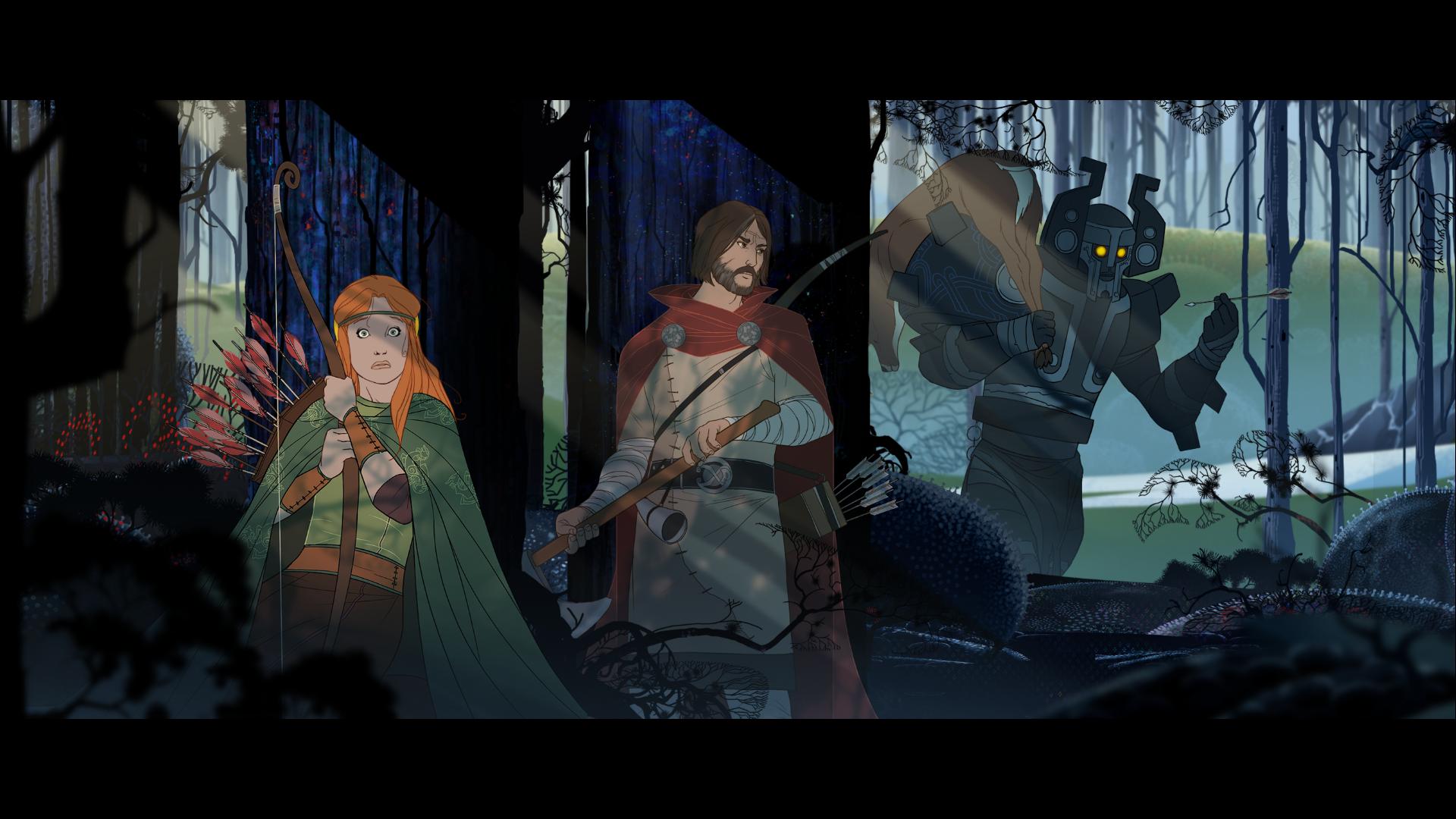 The Banner Saga (Stoic Studio) – A Kickstarter’ed RPG done with Disney-style graphics based on Norse mythology which finally made its release. Turn-based, tactical combat, and a very different approach to the genre – but still quite satisfying. And a sequel is currently in development.
Bionic Dues (Arcen Games) – A tactical roguelike with Mech customization.
Boot Hill Heroes (Experimental Gamer) – In the style of a 16-bit console jRPG, but with a decidedly western twist – it’s a western, for one thing! The Wild West in the style of classic Square titles, and with the added potential of four-player cooperative multiplayer.
Coin Crypt (Dumb and Fat Games) – A “roguelite deckbuilding adventure game about *lootmancers* who can unlock the hidden power inside of coins and use them in magical duels.” Inspired by Spelunky, Nexus City, and the board game Dominion.
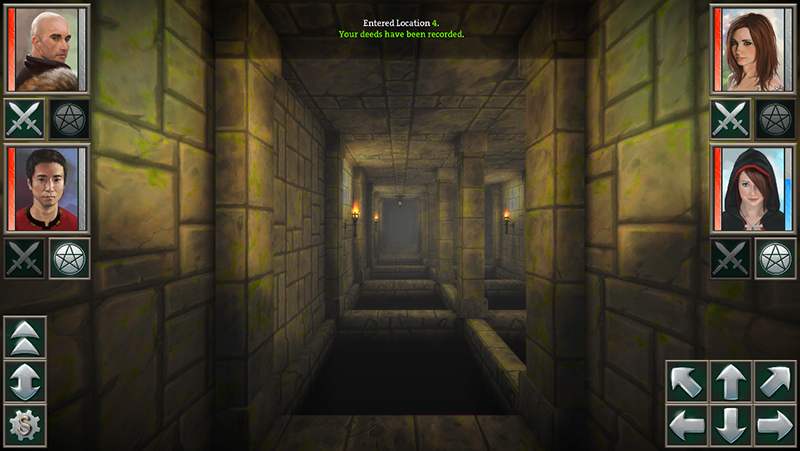 Coldfire Keep (Steve Jarman) – A first-person, grid-based, party-based dungeon crawler in the style of Dungeon Keeper,
DarkEnd (Kodots Games) – an RPG Maker title from freshman Kodots Games, with an emphasis on dynamic (!) dungeons and side-events, dungeon-crawling, and interesting tactical combat.
Data Hacker: Corruption (New Reality Games) – The second of the three-game series of RPG Maker titles involving virtual reality worlds.
Dead State (Doublebear Studios) – Finally released! A thinking-man’s zombie apocalypse RPG, which is more about building a community for survival against a hostile world and even more hostile humans. Turn-based, heavy on the hard human decisions and survival tasks.
Deity Quest (Fancy Fish Games) – A Pokemon-inspired light-hearted RPG where you play a minor deity in a quest to become the Overgod.
Divinity: Original Sin (Larian Studios) – My personal pick for RPG of the year, which is saying a LOT considering the incredible, wonderful RPGs released this year. It’s a single-player and co-op multiplayer (well, dual-player) old-school style RPG in the vein of the old Ultima classics done with modern style and high production values. It’s also old-school hard, so be warned, but with a marvelously interactive world.
Dungeonmans (AdventurePro Games) – I’m not sure if there’s a relationship between this and the “joke” game in Homestar Runner, but this is a tongue-in-cheek graphical roguelike where you can actually build an academy for other heroes like yourself (and carry some of your experience & knowledge over to new characters when (perma-)death happens).
Dungeon of the Endless (Amplitude) – Dungeon crawling Roguelike+ Tower Defense.
Edolie (Amaranth Games / Eridani Games) – Another higher-quality RPG Maker title. A dangerous threat is looming on the horizon, but the people of Edolie seem oblivious or unconcerned. Only Willow and her friends seem willing to brave peril to uncover the threat.
Eschalon: Book III (Basilisk Games) – The long-awaited conclusion to the isometric-view RPG with serious old-school, western sensibilities.
Fight the Dragon (3 Sprockets) – Community-created / expanded hack & slash RPG with single-player and multiplayer co-op capabilities.
Finding Hope (Falling Star Studios) – A light-hearted RPG Maker title.
Fragile Soul (Dragon Adventure Entertainment) – A graphical roguelike where you play the soul of a departed hero, who must now quest to save his own soul from damnation. To make things even trickier, it’s not just a clever title – a single hit will end your quest.
 GhostControl Inc. (Bumblebee Software) – I covered this in some detail my October “Halloween Games” feature. Basically, build up a ghost elimination team and business in London.
Girlfriend Rescue (Aldorlea) – A departure from Aldorlea’s usual fare, Girlfriend Rescue is an adventure / RPG / beat-em-up in the modern world with bizarro elements.
Halfway (Robotality) – A science-fiction, turn-based tactics RPG. Take control of the survivors of a colony ship invaded by aliens.
Heroes of a Broken Land (Winged Pixel) – Combining city-building with dungeon-delving, this is a strategy-RPG with multiple adventuring parties and dynamic, procedurally generated worlds.
Heroes of Steel (Trese Brothers) – Tactics RPG for mobile and PC in a post-apocalyptic fantasy world. The first chapter was released at the end of 2013, but the full game was released in 2014.
Heroine’s Quest: The Herald of Ragnarok (Crystal Shard) – A spiritual successor to the classic Quest for Glory series, but featuring a female protagonist (cool!), Norse Mythology (epic!), and a price tag of $Free (rock!).
Joe Denver’s Lone Wolf (Forge Reply) – The PC and mobile game based on the classic game books of the 1980s (which I actually played!), featuring lots of text, mini-games, and something of a real-time / turn-based hybrid combat system.
Filed Under: Indie Evangelism - Comments: 2 Comments to Read
How 3D Racing Games Worked Before 3D
Posted by Rampant Coyote on January 6, 2015
This may be for hard-core code geeks only, but I don’t care. It’s fascinating reading! It’s an article about how titles “faked” 3D race tracks in an era before there really was the hardware or processing power to do real 3D at racing-game speeds. I remember making some games of my own that faked it that *kinda* used these techniques, but nothing as sophisticated (or as tricky) as the things described here:

As a modern-era game developer, is there any reason to use these techniques? Maybe, but I think in a lot of ways it would only be for your own personal enjoyment of re-creating the look & style of a classic old-school racing game.Or if for some reason (it happens!) you are making software for an obsolete platform.
However, as a general thing to put in your thinking cap, it’s worth noting that “faking it” is not restricted to obsolete hardware. We may always run into situations where we are limited by the hardware in some way, and programmers and designers may have to come up with clever work-arounds. Whether it’s doing cool 3D worlds to work on somewhat sluggish mobile hardware, getting a ridiculous number of sprites running in a web-based game, trying to make a large number of AI behave believably inside a medieval town, or what have you… it’s always good to remember that it’s how it looks, feels, and play, not whether or not you did it “right.”
On these old platforms, the games had to be fast. Without the illusion of speed, the game would fail. So it was all about providing that illusion, and making it cool. That’s still what we do in games – create illusions. We create illusions of a larger world outside the “walls” of the game. We create the illusion of real people inhabiting our worlds, of solidity to our physics, of a natural order and real people where all we really have is an extremely large number of on-off switches. So while these exact techniques may be of extremely limited value except as intellectual exercises, the approach remains valid.
Filed Under: Programming - Comments: 3 Comments to Read
Favorite Rocksmith 2014 DLC Packs
Posted by Rampant Coyote on January 5, 2015
 Yep, I’m still playing Rocksmith 2014. A lot – at least IMO, with around 300 hours of playtime (still an order of magnitude away from what I’d need to really get “good”, I know…). I recently hit something of a minor breakthrough – you know, the point where you finally escape the plateau you’ve been on for a while? I can’t tell you exactly what it was, although I suspect that some of it was simply that I am more cognizant of how hard I’m fretting (a bad habit from an old acoustic I started learning on when I was 16, I think) and simply greater familiarity with certain scales. It’s not like I’ve been practicing the scales as much as I should have, simply that I’ve been learning enough songs with similar keys that I have developed a feel and familiarity with where my fingers should naturally play. It’s a small victory, but it’s pushed my scores up a bit more, and my playing “unplugged” is … well, better. Not great, but better. Still nothing I’d really feel like showing off, but then it always sounds better when you are backed by a band.
As far as musical preference, I’m still pretty old-school. I listen to classic rock radio stations, and I tend to think of “new” music as being anything less than fifteen years old. So my preferences for music to learn from Rocksmith 2014 tends to be kind of biased. I want to learn to play my old favorites. Although sometimes I discover that old favorites aren’t always the most useful for learning new skills. But as someone still very much at an intermediate level, it’s nice having some easier songs where I can just focus on the basics.
A lot of my favorite packs are actually from the original Rocksmith. I’ve not included them here, but for a while there (like, the first quarter of last year), it seemed like the focus had shifted to smaller, indie bands I’d never heard of. Good stuff (especially for learning some more unusual chords and techniques outside of the old radio-friendly basics), but lacking infinite time and money (and possessing even more limited skill), I’ve only picked up a couple of those.
So listing my favorite Rocksmith 2014 DLC packs is almost a case of saying “What’s my favorite music?” Even excluding the stuff I’m not too familiar with, I’ve probably spent as much on Rocksmith (including the old game) as I did on my new guitar. But comparing my skills to where I was a couple of years ago, I’d have to say it’s money well spent.
So I’ve tried to weight these as much as how much they have to teach me as how motivating they are simply because they are old favorites. Here are the ones that have been the biggest ‘wins’ for me, and if I were to recommend the game to someone with my same old-school tastes, these are the packs I’d suggest getting along with it:
1. Jimi Hendrix Pack
This is a mega-pack and feels like cheating. But so what? It can be purchased as a single pack or as four smaller packs, and all told includes a dozen classic rock tracks by one of the most influential rock guitarists of all time. This is as much a “must buy” for Rocksmith 2014 as any other pack. Unless you got the XBox One or PS4 versions, in which case you get it as a free incentive until the end of this month. The songs include “The Wind Cries Mary,” “Voodoo Child (Slight Return),”Castles Made of Sand,” “Purple Haze,” “Foxey Lady,” “Little Wing,” “Red House,” “Fire,” “Bold as Love,” “If 6 was 9,” “Freedom,” and “Manic Depression.”
2. Bachsmith
This is an all-original arrangement of classical music by musicians on the Rocksmith team. The music has been arranged in a variety of styles and techniques to provide a good advanced learning tool, but it’s just awesome stuff. Fun, educational, and good to listen to. The songs include Bach’s “Little Fugue in G Minor,” Grieg’s “In the Hall of the Mountain King,” Beethoven’s “Moonlight Sonata,” Mozart’s “Ronda Alla Turca,” and Wagner’s “Ride of the Valkyries.”
3. Arena Rock Singles
I’m a sucker for hair metal. And this is it. This is a collection of singles and can’t be bought as a pack at a discount, sadly, but they are all different bands & labels. These are songs that make you feel like you are a rock god when you play them, the good ol’ fashioned Guitar Hero feeling. Three of the five require you to down-tune your guitar a half-step down to E flat. But between this and a few other packs, there’s enough songs tuned to E flat that you can play a nice variety of pieces while you are down there these days. The songs include Autograph’s “Turn Up the Radio,” Dio’s “Holy Diver,” Billy Squire’s music industry send-up “The Stroke,” Winger’s “Seventeen,” and Poison’s “Nothin’ But a Good Time.” There’s a big list of candidates – especially one-hit-wonders – who could have been included in this one, so I’m looking forward to a potential “Arena Rock Singles 2” in 2015.
4. Surf Rock
I thought surf music was the one thing that was really missing from Rocksmith 2014. Not that I’m a big fan of surf music, but as my skills have developed, I’ve found myself appreciating it more. It’s older music from a simpler era, but still fun and catchy and immediately recognizable, and isn’t too hard to learn to play. The songs include Dick Dale’s “Misirlou” (a must-have for anything calling itself a surf rock pack!), The Surfari’s “Wipeout” (the other must-have for a self-respecting surf pack!), and The Venture’s “Walk Don’t Run.” And hey, it’s a good chance to exercise that whammy bar!
5. Boston
Technically challenging and one of the best rock groups of all time. The only thing wrong with this pack is that it was only three songs, but that leaves plenty of room for a second pack. The songs include “Don’t Look Back,” “Foreplay / Long Time,” and “Hitch a Ride.” Fortunately, Rocksmith 2014 came with “Peace of Mind” as an included song, so we’ve got a pretty decent collection. IMO, the Boston songs often have more challenging rhythm guitar parts than the lead parts, so don’t get too hyper-focused on playing lead on these songs, as fun as they are.
6. The Who
Five songs by one of classic rock’s superbands. If you want a real rhythm part workout, try “Pinball Wizard.” There’s not a lot of guitar part in “Baba O’Reily,” but it’s fun to play along with. “Who Are You” is another “must-have” for this pack, and I’d have been sorely disappointed if “Behind Blue Eyes” hadn’t made it in. “The Seeker” rounds out this pack. The one downside of this pack is that two of the songs aren’t “true tuned,” so you have to retune your guitar a little to play along (to E447 for Behind Blue Eyes, and E454 for Baba O’Reily) . If you want to practice a single song over and over again, it’s not a big deal, but I find myself skipping them out of laziness.
7. No Doubt
I’m not a huge fan of No Doubt, but their music fuses rock with ska, which makes for some interesting chord progression and rhythms that are unusual in traditional blues-based rock. They are fun, sound great, and teach some new skills. Win! The songs include “Don’t Speak,” “Spiderwebs,” and “Ex-Girlfriend.”
8. Iron Maiden
Because… Maiden. One of the best and most influential metal groups of all time, and challenging without seeming completely out of my league. And it’s a five-pack! It includes “Run to the Hills,” “Aces High,” “2 Minutes to Midnight,” “Fear of the Dark,” and “The Number of the Beast.”
9. The Killers
They sound like the 80s, but … different. And IMO, kind of angsty, but in a personal way, unlike the generic disaffection of the grunge period. It’s mixed in with the synth and the 80s style, but it has accumulated a flavor of its own. For me, I found myself dealing with some unfamiliar chords / fingerings, which remains a fun challenge. All but one of the songs are down-tuned to E-flat, so it is another good pack to get if you want a variety of fun songs to play while you are down-tuned. The songs are mainly their “greatest hits” plus a new one: “Mr. Brightside,” “When We Were Young,” “Somebody Told Me,” “Runaways,” and “Spaceman.”
10. Tom Petty
This was a tough call, and the pack is something of a mix. Some song parts are downright boring to play, but if you are really trying to master some strum patterns with all the “voice” of the originals, they’ve got a lot to teach you. And as a bonus (for me), most sound pretty good on an acoustic guitar, although some of the bends wouldn’t work so well. The songs include “Learning to Fly,” “Refugee,” “American Girl,” “Free Fallin’,” and “I Won’t Back Down.” Coupled with “Mary Jane’s Last Dance” that comes with Rocksmith 2014, and “Good Enough” from the original game (if you have the original game and paid the fee to migrate it over), that’s a lot of Tom Petty.
Honorable Mentions
Bon Jovi – because, hair band stuff again. Fun and not super-challenging. Duran Duran – because 80’s. Get used to some really funky bends and slides. Foreigner – because they rock, but to me it’s mainly isolated riffs without much to learn. Foo Fighters 2 – because more Foo Fighters is not a bad thing, and their songs feel like a decent stretch from the more conventional stuff. And Aerosmith. Gotta love Aerosmith.
So… which ones have I mastered yet? None of the above. Although I can do pretty well on a couple of the Surf Rock songs – I’d just need to focus on getting them down perfect. I’ve been working a bit on “Foxy Lady” but going from the simplified version I once kinda-learned to a note-perfect version is more of a challenge than I’d expected. One of the problems with having so many songs to work with is that it’s very tempting to go for playing the variety rather than really focusing on getting one song note-perfect. Many of the songs I still find myself playing the most come from the first game and from its DLC… but that’s simply because they snagged some great ones for the first game.
Filed Under: Guitar Games - Comments: Read the First Comment
Analyzing Diablo
Posted by Rampant Coyote on January 2, 2015
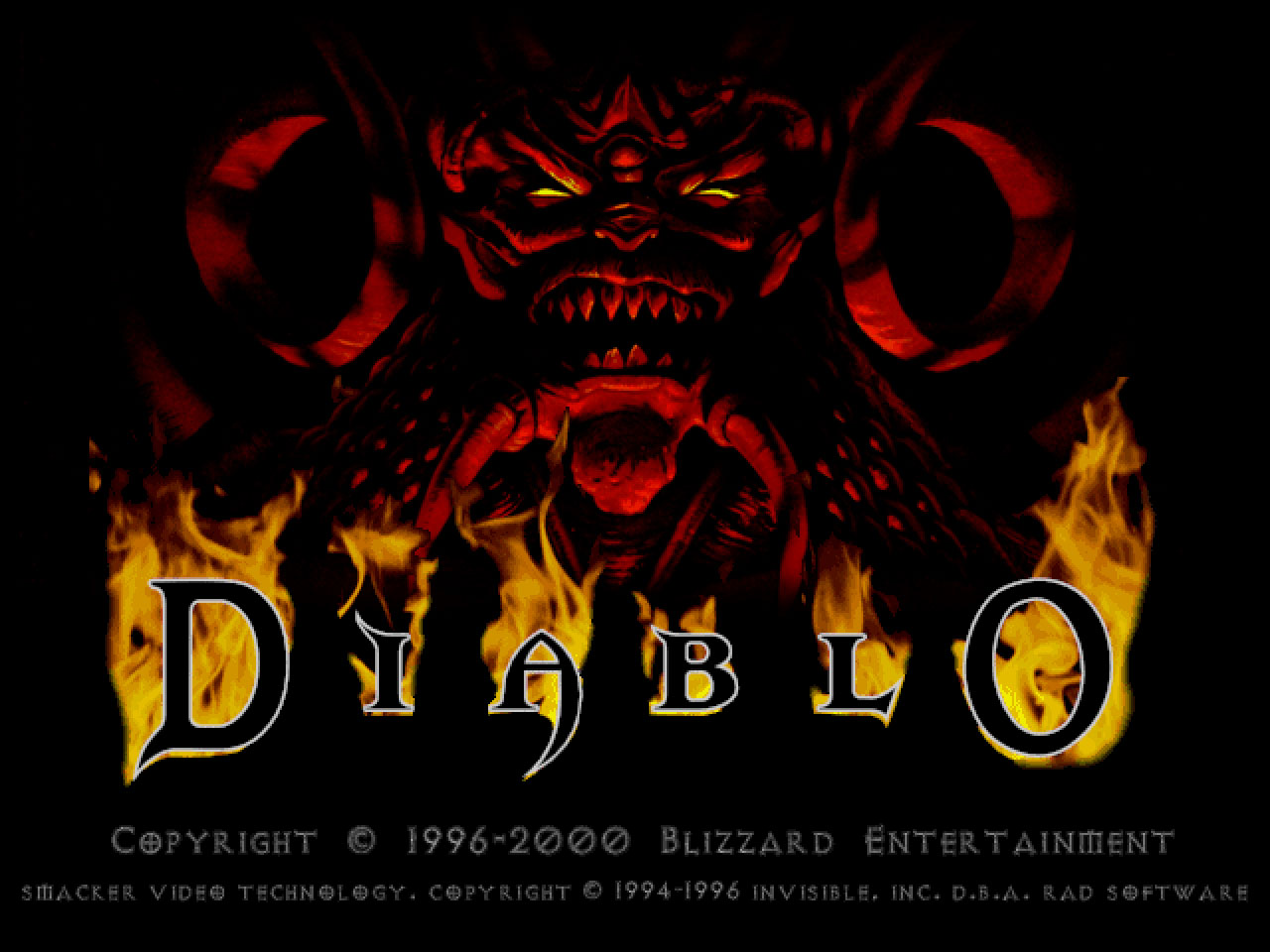 Radek Koncewicz of Incubator Games has done a retrospective of the original Diablo with an eye towards dissecting its design. He includes some commentary on its journey from a more conventional roguelike (Diablo actually started out as a turn-based game) to a best-selling PC action-RPG.
An excerpt:
“It’s immediately obvious that consumables made up the largest group of spawned items. A total of 175 dropped throughout the game, with an average of 9.2 per map. As usual, the smaller static maps skewed this to be a bit lower than the median.
“Consumables steadily declined throughout the game, and this is notable as it’s a fairly subtle way of adjusting difficulty. Early on in the game, health and mana potions are quite abundant in order to facilitate exploration and experimentation for newcomers. Later on, it’s expected that the player has a greater mastery of the game’s mechanics and needs to worker harder to maintain momentum.”
There are plenty of screenshots and charts for your nostalgia and edification. If you are a game designer or curious about the design concepts used to make Diablo such a compelling experience – it’s well worth reading.
“A Night with the Devil” at Significant-Bits.com
Filed Under: Design - Comments: Comments are off for this article
Copyright © 2026 Rampant Games | Privacy Policy
Powered by WordPress.
