What’s Old is New Again: “Pay Once and Play”
Posted by Rampant Coyote on February 16, 2015
Remember how I keep harping on the cyclical nature of the industry, and how gimmicks and trends may rise and fall, but basic principles stay the same?
Yeah, well, this:
Gamasutra: Apple Launches “Pay Once & Play” promotions for games that aren’t F2P
Is actually paying for a game and then playing it without it nagging you or offering to sell you more features is apparently rare enough that they are turning it into a marketing gimmick?
Or is just paying for a game making a comeback on mobile?
Filed Under: Biz - Comments: 3 Comments to Read
How to say “You’re Fired!” at a game company
Posted by Rampant Coyote on February 13, 2015
Kotaku has an article entitled, “The Pizza Party Where Everyone Got Fired.” It contains horror stories about working in the video games biz. Or, more properly, about losing work in the video games biz.
Read the story. It’s amusing in a stomach-turning kind of way.
For me, it was right after a Valentine’s Day pot luck. Fifteen years ago tomorrow. Wow. That was a long time ago. Doesn’t feel like that long. But yeah – we had the big party, and then after the party, half the company was invited to one meeting, the other half to another meeting. In retrospect, although it was devastating at the time (I’d worked there more than five years, and it was my first job out of college), I think I was invited to the better of the two meetings. We got out clean, I got a small but reasonable severance, and I was able to snag a better-paying job by the end of the week.
A far worse case didn’t happen to me, but convinced me that the far better-paying job was going to end badly. We had some people from corporate visit. One particular team was really nervous, and at the end of the day they were all taken into a room and explained that no, layoffs were NOT happening. Even better, they’d received a two-month extension on their milestone. The brass explained that after two months, the game would be re-evaluated, but they had that much time to pour their heart and souls into this latest version of a long-running franchise product and make it really shine and become competitive in the marketplace again.
I guess the secret point of this pep-talk was to avoid any sabotage or something, because the entire team was laid off individually as they came into work the next morning and found their key-cards didn’t work.
I’d taken some non-game jobs after that. I learned working at some start-ups with sometimes inconsistent funding / revenue periods that I’d be willing to accept a single late paycheck. At one place, I went over six months with inconsistent paydays. The dev team – some of the last employees left at this shop – decided as a group that we’d draw the line at two paychecks overdue. It was a good rule-of-thumb which I’ve fortunately not had to follow too often since. When one paycheck hadn’t been made and another payday rolled around two weeks later without a check, we informed the remaining management that we were done. Effectively, we informed them that the company was now over. It closed up shop the next day.
When I had a game dev job a few years later with a few late paychecks, I followed the same rule of thumb. Then one day, a payday came along and our previous paychecks hadn’t been made. I’d already cleaned out my desk, and had a job offer waiting for me. At the end of the day, people were rounded up by teams for meetings. Paychecks didn’t require meetings, so I took my last remaining personal possessions out to my car. At the meeting, we were informed that the paychecks would be late – again – but that a milestone payment would be coming really soon. But, we were warned, layoffs would be coming soon, and would likely hit about half the company. So we needed to work extra hard to make sure we were in the top 50%.
“So wait a minute,” I asked a coworker. “We’re supposed to work twice as hard in order to keep this crappy job that they aren’t paying us for anyway?”
I resigned a half-hour after the evening. I was given a check covering all remaining pay, but I knew from experience that there was a good chance they’d bounce. I’d learned that I could call the bank and find out whether or not there were sufficient funds for the check to clear. About a week later, I called and was told that yes, there was enough to cover the check. Since I had a bank branch only two blocks away, I raced over and cashed the check before anything unfortunate could happen.
I might have been the last person at that company (of triple-digit employees) to receive all of his pay. Many of the other employees ended up going as much as three or four months without pay before the company finally collapsed.
It seems the games biz has a lot more problems dealing with layoffs than other industries. I’m not sure why that is. Maybe because managers are pulled from the ranks of introverted game developers?
Filed Under: Biz - Comments: 6 Comments to Read
Old-School RPG Design – Navigating and Exploring
Posted by Rampant Coyote on February 12, 2015
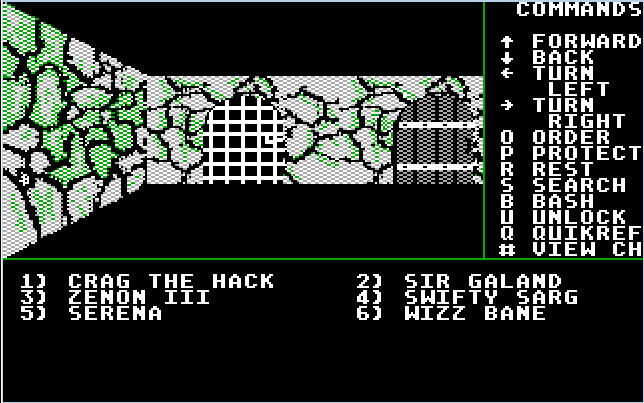 So I was going to do some research. Just… you know, research. I’m always trying to capture the feel of “old-school” gaming in Frayed Knights, and so I thought I’d go back and check out Might & Magic Book 1 – The Secret of the Inner Sanctum. So I got hooked on it once, but on a new computer I had to start over, and I’m really only going to take a peek for just a few minutes around the world. Well, okay, I’ll spend time making characters, just for old time’s sake (screenshot with the pre-gen characters notwithstanding), and THEN I’ll just poke around for maybe a half hour. Not very long at all. Just as a refresher.
Yeah. Right. That plan didn’t work. This is Might & Magic that we’re talking about. Nevermind I’ve got tons of cool new games waiting to be played – I’m now a few hours into Might & Magic 1. Again.
The thing is, these classic old games succeed – at least for me – on a level that many of their modern (yeah, indie) imitators do not. I know – I play ’em. I *cough* make ’em. How is that possible? There’s no inimitable genius here or technological or design wizardry (pun intended) going on in this game that’s pushing 30 years old (for the Apple II version). What gets missed? What’s so addictive for an old-school gamer like myself?
There are a lot of answers to that question, but I’m going to focus on something that gets lost a lot in modern RPGs – indies included. The most basic interactions of not only these old games, but of almost all games. Movement.
Movement in these old first-person dungeon crawlers is pretty basic. You can turn left or right, move forward, or move back. Some of the games also allowed you to move left or right. In these gridded game worlds, each step was a full square, so if nothing intervened, you could traverse the entire map for a level in seconds.
There’s our first little bit of possibly accidental brilliance – movement was really fast unless something interesting happened. This, at least, a lot of games “get.”
But something interesting happened a lot. That’s a probably intentional piece of brilliance, especially in the Might & Magic series. Not just getting into fights. Might & Magic 1 cribbed from the best of the genre, so it’s not like Jon Van Caneghem was startlingly original. He just did it very well. The game doesn’t stoop to the level of Wizardry 4, where practically every step was a torturous exercise in “messing with” the player (which actually came out a year later). But even in wandering around the starting city, you really can’t take anything for granted.
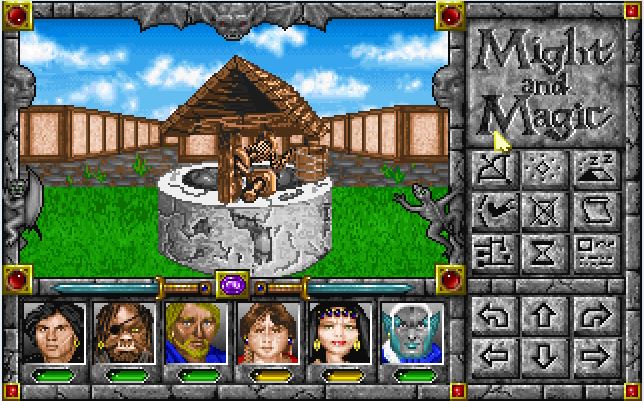 So what goes into walking around a gridded area in these RPGs? What is the world like, and what kind of state information can be accessed or manipulated?
Well, first, you have the player’s party. They have an X and Y coordinate, a facing, and a movement direction. The movement direction is usually the same as their facing direction, but not necessarily.
Then you have the map itself. For every square in the grid you may have an event tied to it, and you have four possible directions of movement which may be allowed or restricted. There are visuals representing this. If you can’t go in a direction, you’ll usually see some kind of wall or barrier. If movement is restricted by some means, you’ll often find a gate or door of some kind. And if you can pass freely, you’ll usually see nothing at all – just the square beyond.
But from there, things can get really interesting. What if there’s no natural illumination, causing no visual at all unless the player creates some form of light? What if the wall is actually an illusion, allowing the player passage but they have to hunt for it? What if a square allows movement into the next square, but that square doesn’t allow reciprocal movement back? In other words, you find you can only move one way? What if an event is triggered not only by entering the square, but based on your facing when you enter it? Then of course, there are the infamous invisible walls. Probably not the most enjoyable gameplay option, but it’s an option.
As far as events, some can mess with your state. Change your facing (an old, and somewhat annoying trick in the old days without automapping). Move you to a different location, possibly on another level (like pits dropping you to the next level), and possibly without warning or notification (leading to one of the notorious “infinite hallway” effects…)
And we can go further than this. What about the order in which the squares are entered or interacted with? How about squares that change their information based on interactions – walls moving, doors opening, illumination changing, an impassible chasm turning into a bridge, etc. Or just the event triggers changing based on other events in the dungeon. How about the timing in which you enter the square?
 One of the best modern examples of this is the Legend of Grimrock series, although it was of course inspired by the Dungeon Master and Eye of the Beholder series. In these games, the dungeon feels much more like a collection of puzzles, and there’s definitely more of a feeling of “solving” a level more than exploring it. But the complex interactions of the map and movement across it are there.
And that, ladies and not-ladies, is a key part of the nature of these “old-school” western RPGs, and least within the “first person perspective” genre. Something many indie games would be well-advised to consider. Movement is not just something you do to get from one event to the other. Movement is a major gameplay mechanic. Exploration – truly discovering all the little tricky interactions and secrets and advantages – is not a second-class mechanic. It’s not just something you do to find some bonus treasure. There were a whole bunch of puzzles, tricks, and gameplay to be found that had nothing to do with all the other RPG mechanics, like your inventory or experience or hit points – just with your location and orientation and the map state.
This can be fun. I think that’s what keeps getting forgotten in some modern attempts. Sure, it can get old after a while, too (a weakness in Legend of Grimrock), so it should be mixed with a variety of gameplay elements to keep things interesting (just like combat after combat can get very old very quickly). But it should be no great exaggeration to say that exploring the map is half the fun.
Filed Under: Design - Comments: 15 Comments to Read
Answering the Important Questions… Apache vs. Dragon
Posted by Rampant Coyote on February 11, 2015
You know, we didn’t have documentaries like this when I was a kid. Instead, we had to research the material ourselves, the hard way, and turn it into an RPG or a wargame. Then we’d discover that the ol’ M-230 chain gun needs a critical hit to damage Smaug in a vital area, like his eyes, or his missing scale.
Filed Under: Geek Life - Comments: 2 Comments to Read
Coming Soon: Mechanized Masterpieces 2
Posted by Rampant Coyote on February 10, 2015
“I’m dying already, Mr. Chase. I don’t know that I will survive another sleep in that machine, or another week outside of it. I should be long dead already.”
“But why accelerate it?” Miriam pleaded.
“Because I’m done surviving. I need to live again, if only for a few hours. I need to be strong, bold, and brash. I need to become Brom Bones again. Can’t you see what I am asking? Do you understand what a gift it would be for a man to choose not only when but in what manner he finishes his mortal life?”
— The Van Tassel Legacy, by Jay Barnson
I finished the submitted draft for this story about a year ago. It’s exciting to see it finally see print in this upcoming anthology. There were some pre-releases sold this last weekend, so the book is now out in the wild. It won’t officially be released on February 28th, but it’s now available for pre-order from Amazon:
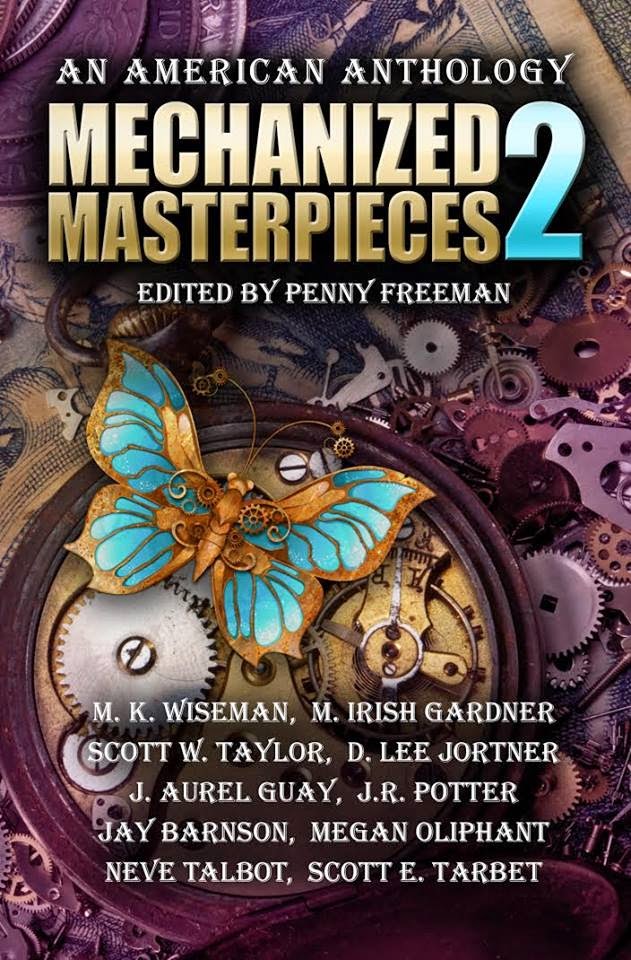 Mechanized Masterpieces 2: An American Anthology

This is an anthology of steampunk fiction that is inspired by classic American literature. My story, The Van Tassel Legacy, is based on The Legend of Sleepy Hollow by Washington Irving. It takes place approximately fifty years after the events of the original tale. A young scientist arrives in the village of Sleepy Hollow, New York, and becomes embroiled in treachery and old secrets within the Van Brunt family. And, of course, a story about a phantom horseman from the Revolutionary War…
And if you aren’t familiar with Steampunk… here’s my take on the subgenre.
Filed Under: Books - Comments: Read the First Comment
AAA to Indie – is the flow of talent going only one way?
Posted by Rampant Coyote on February 9, 2015
Many years ago, I wrote an article for the Escapist called, “Going Rogue,” which was about mainstream – often AAA developers – leaving their big-studio jobs for indie development. A few months ago, Jeffrey Grubb wrote “Why Triple-A Developers Are Going Indie (and Why Indies Aren’t Going Triple-A.”
I’ve definitely been noticing the trend lately. It feels like the big, mainstream studios are constantly closing down or performing major layoffs, and rather than hunt around and relocate in order to get another job for another game studio that will probably disappear in about three years, the folks are just forming their own indie studio. They’ll put together a Kickstarter to keep themselves in raman noodles for a few months, and go off to the races.
And thus we have a glut of indie game studios out there. Back when I wrote my article, having mainstream game dev experience as an indie was unusual. Now, it may not be typical, but it’s hardly uncommon.
This business is cyclical, and what I expect to see happen is… more of what we’ve always seen happen. Yes, you’ll see more AAA devs leave the mainstream industry to go indie than the other way around. However, once the industry gets its footing again (right now there’s a sea-change going on, and everybody’s reeling), you’ll get the bigger studios / publishers gobbling up the more consistent, quality indie studios. That’s the way AAA brings the talent back in. They promise the resources and deep pockets to help the little studios grow and weather the lean times. But over time, the little formerly-indie studio becomes completely borged and either fully assimilated or eliminated. It’s the game dev jungle.
Of course, I could be wrong. The whole industry / hobby / medium may be changing so much that, like the dinosaurs, the ecosystem may no longer support what we traditionally think of as AAA games. At least not on the scale that we’re used to. I think you’ll still have larger publishers / consortiums / businesses that act to consolidate the industry a bit – just for mutual survival – so there’ll still be the fragmentation / consolidation cycle.
But fundamentally, I think Jeffrey Grubb nailed it. Right now, AAA doesn’t offer anything for an indie game developer except maybe a more steady paycheck. But as a programmer, I can make more money outside the games biz. And since working for a major publisher often precludes work “on the side” as an indie… that’s really not much more than a fallback position (game designers and artists, unfortunately, have a bit more struggle finding good jobs outside of the games biz). So why go back?
Filed Under: Biz, Indie Evangelism - Comments: 2 Comments to Read
Minecraft Didn’t Sell Itself
Posted by Rampant Coyote on February 6, 2015
 It’s popular (in indie circles) to say that Notch did everything wrong with Minecraft, yet it still managed to become the biggest indie success story of all time. The game was confusing to players until they’d checked out some kind of out-of-game tutorial (or had someone sitting next to them explaining it to them). It was written in Java. Distribution was weird. Notch didn’t go through the traditional channels. He didn’t even try to get his game on Steam, for crying out loud! (In fact, I think he refused the offer).
Oh, and he didn’t market it.
Except… really… he did. He marketed it quite well, and cleverly. And this should be a lesson to indie developers across the board. He marketed the game in a very indie way, bypassing some of the conventional wisdom and methods. But some furious marketing was good. Something for all of us to learn from. Not that exactly imitating him would yield the same results – we’ve all gotta find out own style and niche, adapting to (rather than following) current trends and technology.
Konsolo has a fantastic article about exactly how Minecraft was marketed that I’ve been meaning to share:
Filed Under: Biz, Game Development - Comments: Read the First Comment
Indie Hats
Posted by Rampant Coyote on February 5, 2015
I have the brain of a programmer. Or maybe I just have the programming of a programmer. This bites me in the butt as an indie. If I’m not coding, I don’t feel like I’m doing “work.”
This is wrong, wrong, wrong, and I have to keep working at it. Because, with that attitude, I will sluff off important things like design, writing, business development, and working with other people in order to get what I psychologically feel is getting ‘real’ work done. That causes some nasty avoidable bottlenecks, because I feel this need to be “productive.” It can also mean (as has happened on this project quite a bit more than once) that I end up with some stuff in an advanced development stage while other stuff hasn’t even been prototyped yet, meaning I don’t know if the stuff that’s “advanced” is actually what I want in the end or not.
On larger projects, it’s a lot easier to lose sight of things.
One of the big challenges of going indie is learning to be comfortable in all these hats. You may despise the whole business / marketing / sales thing, but you must embrace it. If you work with others (and maybe if you don’t), you have to embrace project management. It’s your game, so even if you work with an artist, or sound designer, or composer, the buck ultimately stops with you for decisions and direction on things you may not know much about. Ditto if you are primarily an artist and have to work with a programmer. You may not have the skill to do his or her job, but you have to know enough to work with your programmer and provide some basic instruction, guidance, and oversight.
And as I keep re-learning, it’s not a case of learning to do it once, but over and over again to avoid slipping back into old habits.
Filed Under: Production - Comments: Read the First Comment
Underworld Enters Crowdfunding
Posted by Rampant Coyote on February 4, 2015
 It’s funny how much I’ve been looking forward to throwing money at OtherSide Entertainment. I wish I had ten grand to send them, because I’d… well, no. Actually, I’d spend it on Frayed Knights. But I’d be tempted.
The Underworld Ascendant Kickstarter is live.
As of the time I’m writing this, they are 1/10th of the way to their goal. I think I’ll join them in saying I’d be thrilled to see ’em hit their goal the first day. I’m very cautious about pushing Kickstarter campaigns, because of the risk. The risk is still there, but speaking for myself, I personally think they have what it takes to make it happen, and so I’m willing to pony up a bit to give them their chance. And if they hit the stretch goal for co-op play. Well. If they pull it all off and manage to recapture the feel of the original, I’ll be ecstatic.
I still have a design outline I wrote up years ago for an Underworld-like game. I opted to go for the Frayed Knights design instead, though a couple of ideas from the one design found its way into Frayed Knights. A couple of other ideas temporarily found their way into the game, but it turns out that they sucked, so they were gotten rid of again. For a brief period of time, though, my mouse control mirrored the movement control in Ultima Underworld. You know what? Bad idea. I’m glad that didn’t catch on back in the day.
But I realized there was a big, empty hole in the modern RPG experience. As much as the Elder Scrolls games borrowed from Ultima Underworld, they were very much their own games, with a very different (and very cool) flavor. One of the few games that came close to capturing that feel was Arx Fatalis, and that game was published over a decade ago.
I used to call games like the Underworld series more of a “survival RPG,” but that’s taken on a whole new meaning in an era of post-apocalyptic titles. But really, the thrilling thing about them was that they were kind of “Dungeon Simulators.” Which, I’ve come to realize much later in life, is perhaps closer to the old-school RPG style… where the emphasis was much less on “role-playing” and more on surviving in what feels like a “living” interactive world. Where creativity and cleverness can trump high stats, and cool events happen organically rather than being scripted.
I feel I have reason to believe that’s what we’ll end up with at the end of this process. But that’s me. YMMV.

And in only vaguely related news (in the “old-school comeback”) department – Becky Heineman is planning a long-overdue sequel to Dragon Wars.
What an amazing time it is to be a CRPG fan.
Filed Under: Game Announcements - Comments: Read the First Comment
Mythica: A Quest for Heroes
Posted by Rampant Coyote on February 3, 2015
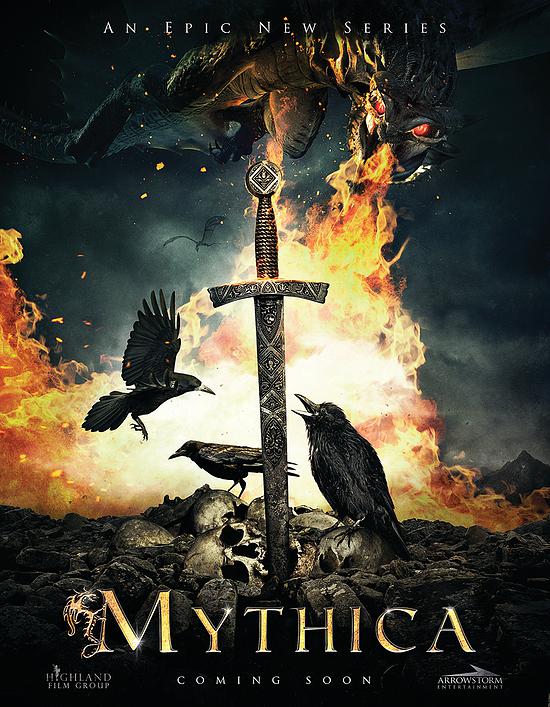 Back in the early-to-mid 80s, there were rumors of a Dungeons & Dragons movie. D&D was a weird fad, so of course Hollywood was investigating the possibility of making a movie out of it. And of course, Hollywood investigating (or even buying the movie rights) means very little. We geeky kids were disappointed that while it was talked about, it didn’t materialize.
But not as disappointed as we were when an official Dungeons & Dragons movie finally did hit the theaters in December 2000, in all its blue-lipstick glory. All I can say is that we were all very grateful that The Fellowship of the Ring appeared a year later and washed that taste out of our mouths. Since D&D was largely inspired by the Lord of the Rings books, I think it’s fair to say that the Lord of the Rings trilogy finally gave us the D&D movies that we always wanted. And then some.
But if you have already seen the movies a few times and are looking for some other high-fantasy movie that feels like a rousing game of Dungeons & Dragons, the pickings can be a little slim.
Saturday night, a cold had killed my voice, I was exhausted from FanX, and I was supposed to run a Pathfinder game for game night. It wasn’t happening. However, I’d just received my backer DVD from the Mythica: A Quest for Heroes kickstarter. I’d run into Jason Faller, one of the writers and producers for the movie, at FanX the day before, and he’d assured me (in spite of his obvious bias) that this was their best movie to date. So our gaming group opted to watch this movie instead.
Mythica: A Quest for Heroes is a lower-budget, independent film that is inspired by gaming. And by “inspired by,” I think I mean, “it’s like a D&D campaign got turned into a movie.” But I mean that in a good way. It’s part of a trilogy of movies, for which all principle filming is already completed.
You know what? We really enjoyed the movie. No, it’s not going to go toe-to-toe against The Fellowship of the Ring or anything, but it was a decent movie that felt like an idealized first adventure of a D&D campaign.
The film follows a lame slave girl named Marek, who has been secretly studying under the magician Gojun Pye (played by Kevin Sorbo). She discovers that he is leaving, and begs him to buy her contract and take her with him. Instead, in classic D&D logic, he gives her instructions that effectively amount to, “Go adventure and gain a couple of levels, and then I’ll teach you some more.”
Seriously. He uses different words, but that’s basically what he says.
It doesn’t take long before running away becomes a necessity. Following Gojun Pye’s suggestion, she heads out of town to a tavern – naturally, the source of countless adventures in D&D campaigns. There she meets a young priestess named Teela who is desperate to rescue her sister who has been kidnapped by orc raiders. Sound familiar? Teela can’t afford to hire seasoned adventurers, and is clearly unimpressed by Marek, but Marek promises that she has a “team.”
So Marek frantically uses bribery and duress to extract commitments from Thane the warrior, and Degen the rogue. They get together with Teela and the four misfits – not getting along very well together to begin with – must face a small army of orcs and a fearsome ogre, among other deadly threats to rescue Teela’s sister.
If you are a D&D player, this storyline probably sounds incredibly familiar. But nevertheless, the filmmakers manage to throw enough twists to keep it entertaining. And as far as it’s low-budget, indie status… thanks to CGI, the special effects are at least up there with an average Doctor Who episode. While the main story is tied up in a satisfactory way, it feels like there was a lot that was set up to be addressed in the future installments. I’m looking forward to them.
Is it a cinematic masterpiece? Of course not. But Mythica: A Quest for Heroes is a fun ride, an entertaining fantasy adventure that hides its shoestring budget remarkably well. Especially if you are a fan of fantasy role-playing games, I recommend the movie.
Filed Under: Movies - Comments: 6 Comments to Read
FanX Report – 2015
Posted by Rampant Coyote on February 2, 2015
I spent the weekend at the Salt Lake Comic Con FanXperience – sort of an offshoot of Salt Lake Comic Con. As far as the differences between this and the full-fledged Comic Con, it felt like there were fewer panels, and the celebrities were pulled from media outside of traditional geek fandom. I guess it’s supposed to be more of a “pop culture” thing. This year they deliberately reduced the size of FanX to 50,000 attendees (last year it hit 100,000, and Comic Con hit 130,000). It was hardly intimate, but it felt a lot smaller than the previous events.
As I was at a combined table for Xchyler-published authors. We didn’t think that sales were as brisk as they’d been at similar events, and I don’t know why that was the case. We heard similar things from some other authors, but I don’t know how the rest of the vendors fared. We may need to think about another approach for these conventions. I missed the last couple of hours on the floor, though, and typically that’s where the big flurry of buying happens. (I know that’s how I do it… I window shop until the final day).
 Compared to my running a game booth for Frayed Knights at Comic Con in September, this was much, much more relaxed. I actually got to play regular attendee about half the time. I got to see Billie Piper and Carrie Fisher. (In a very meta- type photo, I took a picture of Billie Piper getting her picture taken with us. Although – I also got other people snapping pictures, so one could argue that it is a picture of people getting a picture of Billie Piper getting a picture with us….) Billie Piper was very down-to-earth. Carrie Fisher… not so much. But she was very fun. She smooched the first guy to bring her a Coke – we’re talking serious, 15-second kiss here – so he’s got a story to tell about how he made out with Princess Leia.
A panel on “The Science of Interstellar” – all about the current scientific theory that the movie was based on – was absolutely fascinating. The panelists did a great job, and seemed to know their stuff (they had one physicist among them, at least, who works with a little bit of what they talked about in the movie on a daily basis).
The costumes were – as usual – half the fun. My favorites included a woman dressed up as Idris from Doctor Who – but her dress was clearly (if understatedly) a Tardis. Clever! Also, there was a girl in a Toothless costume (from How to Train Your Dragon) who was amazing (although – especially when she walked on all fours – it looked exhausting). There was also a couple dressed as Thermians from Galaxy Quest who were pretty amazing. I wish I’d taken more pictures – I was way too slow to pull out the ol’ phone or tablet.
The exhibitor floor was also very nice – as usual. While there were plenty of regular shops selling the standard geeky wares, I was personally impressed by all the local talent on display. Particularly the artists (because their skill is on display) and craftspeople. It was also a small enough event this time around that I was able to run into a lot of people I knew, even though it was still far too big to run into everyone I’d hoped to see.
Filed Under: Geek Life - Comments: Comments are off for this article
Volume Control
Posted by Rampant Coyote on January 30, 2015
Okay, I’m not an expert on polishing games. I wish I was. Maybe after I have another dozen games under my belt, I’ll know more. We’ll see. But here’s something to me that appears obvious, but maybe that’s just because I haven’t made a game for Android yet:
When a game runs, it should respect the global volume control settings. “Media volume” should be… like… all media. You know? No exceptions.
In other words, when you install a game in the middle of the night – like, say Heroes of Might & Magic 3 HD, and may have to put the tablet down because the lengthy install procedure, you should not have to worry about the game starting and blaring its music at top volume when you’ve had the tablet in silent / vibrate mode.
Just sayin’. That’s a very simple polish thing that should be automatic. Sounds kind of obvious to me. It sounded kind of obvious to my previously-sleeping wife who woke up to the blaring music, too.
As for HoMM3-HD, we started out on the wrong foot. Let’s not have a repeat of this, like, forever, okay?
Filed Under: Geek Life - Comments: 7 Comments to Read
RPGs and Fear of Commitment
Posted by Rampant Coyote on January 29, 2015
 Once upon a time, computer RPGs were expensive. Retailing for as much as $79 – which was around $150+ in today’s inflation-adjusted dollars – they were a serious money commitment. They tended to stay reasonably close to full price until the sequel was released – maybe dropping down as low as $45 (which is still $80-$90 by today’s rates).
And in terms of time? Hey, if you were gonna lay down 80 bones for a game, you wanted to squeeze every dollar’s worth out of it. So these games had to be big, beefy, and offer around an hours’ worth of entertainment for every dollar. When you invested in an RPG, you were in for a long-term commitment. Not only would it kill your game budget (well, they did for me), but they would represent weeks – maybe months – of effort to complete.
These RPGs were going to become your world for a while. And they did. I think that’s why I have so many fond recollections of these old-school games. I lived in these worlds for a while.
One does not simply walk into Mordor… or Xeen… or Britannia… or Lost Guardia… or Faerûn…
By contrast, you have the roguelikes. These have been around as long as their full-fledged RPG counterparts (arguably even longer, as some of the oldest RPGs would look a lot more like roguelikes today), but with permadeath lurking around every corner and potentially in every morsel of food, when you start up a roguelike, you do so with the expectation that your entire gaming experience is unlikely to last more than about fifteen minutes. More if you are an expert at that particular game, less if you are new to it. Like the old arcade games, while there may be a theoretically achievable ending (or at least a kill screen), it’s generally just a case of seeing how long you can beat the odds and survive.
If full-fledged RPGs are a long-term commitment, roguelikes are… I won’t even call them a single date. They are more like flirting at a party.
I wonder if that may be part of the reason for the rise in popularity of roguelikes lately is due in no small part to this. They offer a bit of the entertainment value of a full-fledged RPG, but without the commitment. Because the bottom has virtually dropped out of the pricing on games these days, I wonder if the time requirement has become an impediment… particularly for the Internet-addicted, social-media-trained audience we’re becoming. Where one game once had to last us for weeks, we can buy a bundle of indie games for less than a dollar a title. I dunno about you, but I get what would once have been considered a years’ supply of games when Steam or GOG.COM have a big sale. I have a multi-year backlog now.
So committing to a game is psychologically much harder to do. Choose a game out of dozens and dozens with which I’m going to have to be pretty exclusive for a while? That’s difficult!
But worth it? I dunno. Sure, if it’s an old classic or a popular recent release, I have reason to believe it’ll be worth investing the time and effort into the story, learning the game system, making my characters, and wading through all the introductory material before getting to the “good stuff.” Then it’s only a matter of “settling down” for a few weeks (given my limited playing time) and getting to business. But which one?
And there are all these promising, rarely-covered old and new indie RPGs that somebody ought to try. Seriously. One of my all-time favorites, Knights of the Chalice, received very little acclaim outside of a few outlets, yet it proved to be a couple dozen hours of pure tactical, old-school joy on my end. What if I’d missed it because I was too busy playing the more popular, critically-acclaimed or “classic” titles? Honestly, I played a good deal of the greatly-lauded Bastion and tried to like it (I certainly enjoyed the narration and the music!), but in the end it left me flat, and feeling like I wasted my time.
But is that really so different? Back in the day, there were still plenty of choices, but they weren’t so easy to access. It was a matter of investing both time and a serious chunk of change.
All I can say is that no, making RPGs shorter is not the answer. At least not as a general rule. I’m fine with playing “short” 15-hour-ish RPGs, but I still do love the good ol’ epic quest. Once I finally, like Bilbo Baggins, find myself persuaded to step out the door.
Filed Under: General - Comments: 4 Comments to Read
Appearance: Salt Lake City Comic Con Fan Xperience
Posted by Rampant Coyote on January 28, 2015
 I’m going to be at the Salt Lake City Comic Con “FanX” convention this weekend at the Xchyler Publishing booth. At least part of the time. Sadly, I’m fighting off a cold right now, but I hope to be in good shape at least by Friday. Not sure about Thursday yet.
There won’t be any demos of Frayed Knights 2 this time, I’m afraid. That sucker has its guts still on the floor of the garage, getting souped up for something a bit more… complete. Also, sadly, the new anthology – Mechanized Masterpieces 2: An American Anthology – doesn’t release for another month. Bummer. But I’ll be there with some copies of Terra Mechanica.
If you’ll be there, come say hi. We’ll be in booth Purple 8.
There’ll be other people to see there, too, or so I’ve heard. Folks like Doctor Who’s Matt Smith, Karen Gillen, and Billie Piper. Christopher Lloyd. Brandon Routh. Nichelle Nichols. Carrie Fisher. People you might have heard of. 🙂

Filed Under: News - Comments: Comments are off for this article
Daggerfall in Unity?
Posted by Rampant Coyote on January 27, 2015
There have been several projects to remake Daggerfall. But this is… different. Although I know it can’t be as good as I imagine, I am excited about the potential of this toolset. I guess that’s how I know I am a game developer at heart. I see something like this, and I don’t think, “Ooh, I could play a Daggerfall remake!” I think, “Holy cow, what could I make with this?” Of course, given all the other stuff that has to be made to turn something like this into an actual RPG, what I might make might be suspiciously similar to Frayed Knights: The Khan of Wrath right now.
The toolset is really intended for people to make their own Daggerfall re-creations / spinoffs / whatever. It reads in the actual data files from the original game (which is free from Bethesda) and allows you to do all kinds of stuff with it. Mainly in the style of the original, 20-year-old game. There’s a lot you can do without any coding, and even more you can do if you don’t mind writing a little code, incorporating more content / code from third parties (like AI packs), or using some of the tools developed by the community.
For those who missed it, one of the killer things about Daggerfall (even moreso than its predecessor, Arena) was the scope. You want to talk about procedural / sandbox worlds? The world of Daggerfall was immense. There were some semi-custom towns, NPCs, and dungeons in the game (including some trippy alternate dimension stuff) if you followed the main plot, but following the main plot wasn’t even just optional… the game actively tried to derail you. Fail to be in the right spot at the right time, and you might never be able to “finish” the main storyline. Not that it mattered that much. Daggerfall was kind of a fantasy-world simulator where you just made your own way.
But – with this toolkit – there could be some new life left in that antique world. Like the holy grail of Daggerfall fans in the mid-90s… multiplayer! Yeah, adventure in the actual dungeons of the second Elder Scrolls game with a partner. That would be… kinda cool, if not exactly the bomb now in 2015.
Filed Under: Retro - Comments: 3 Comments to Read
Shut Up And Take My Money: Yet More Classic RPG Series Reboots
Posted by Rampant Coyote on January 26, 2015
I have faith. Proven teams & talent. The IPs… maybe a little less so, mainly because it’s been so long. But if the success of Wasteland 2 or Might & Magic X: Legacy are any indication, a committed team dedicated to classic old-school games can create worthy successors. Now we have two more classic RPGs that will soon have crowdfunding campaigns for their triumphant return.
I have a tough time containing myself. This is the kind of thing that seemed like an impossible dream ten years ago.
First up: Some of the original Looking Glass folks putting together the new Ultima Underworld, sans the “Ultima” part but otherwise very much the third in the series (the second one was more tightly tied to the Ultima IP – it was just tacked on at the end in the original). The Kickstarter begins February 4th. I can’t be part of this fast enough, if only in a very peripheral way.
Underworld Ascendant by Otherside Entertainment
Ultima Underworld was one of the “holy trinity” of games that came out at around the same time from Origin that made me decide to try a career in game development. The other two, naturally enough, were Ultima 7 and Wing Commander (well, really, Wing Commander II). It is one of my all-time favorite games and my favorite RPGs. I feel in some ways, it still hasn’t been matched / exceeded, and I’m really thrilled to see what Paul Neurath and company have planned for this new title.
And then, hot on the heels of this game having a Kickstarter launch date, Brian Fargo made the announcement I’ve been kinda waiting for over the last few weeks:
It’s official.. And I’m very personally excited to be working on this. More details to follow. pic.twitter.com/OegeiAU28B
— Brian Fargo (@BrianFargo) January 24, 2015
Yes, I’ve been expecting this one. They’ve had the license for The Bard’s Tale forever, and many of us were disappointed when inXile released the comedy game by the same name several years back (which actually wasn’t a bad game, IMO… just unhappy that it was called “The Bard’s Tale“). I can’t say that the original games were really that influential on me. The best thing about them was Tales of the Unknown Volume I: The Bard’s Tale (the real title… it was supposed to be the “Tales of the Unknown” series, but that didn’t stick) that they beat Wizardry I to release on the Commodore 64. I had been anxiously waiting the chance to play Wizardry I on my own computer – which never actually happened back then – and then a friend tells me all about this awesome new game that was “just like Wizardry, only better!”
And sure enough, graphically, he was right… it was clearly superior. The dungeons and city streets were kinda-sorta “textured,” and the enemy encounters were partly animated. It took me forever to make a party strong enough to walk around the city streets without dying, however. I wondered what kind of game designer made it so your party of adventurers can’t go outside their front door without getting slaughtered.
Still, it was a fun game, and though I never completed it (and probably never will), it was a pretty influential title for me back in the day. Anyway, there’s more news on it here:
IGN: Brian Fargo Announces First Bard’s Tale Sequel in 27 Years
Actually, they have the date wrong – the original game came out around 30 years ago. Dunno where 1988 came from – I think that was when Wasteland 1 released. Anyway, doesn’t matter. Bottom line: Dungeon crawling, pulling from the original for ideas, and some interesting ideas for non-traditional but still turn-based combat.
I’m in.
Filed Under: Game Announcements - Comments: 3 Comments to Read
Copyright © 2026 Rampant Games | Privacy Policy
Powered by WordPress.
