Cirsova #5 (and 6) Preorder Open, and Altered States II in Paperback!
Posted by Rampant Coyote on January 25, 2017
 I am currently on track to have at least as many stories published this year as last year. Which is AWESOME. My goal is to exceed that. I’m still working on that.
Anyway – my first completely new story for 2017 is coming out in March, in Cirsova #5. They are now taking pre-orders… sort of the mini-subscription thing again. You can pre-order #5, #6, or both, in digital, paperback, or even hardback format. Pulp-style goodness in the modern era!
I think the cover of issue #5, by Benjamin A. Rodriguez, is my favorite so far, too. This issue focuses on a shared world concept by Misha Burnett… the “Eldritch Earth.” These stories are set in a prehistoric Lovecraftian Earth, after the reign of the Old Ones. If you’ve read Misha’s story in the first issue, A Hill of Stars, then you are familiar with the idea.
This was a very fun collaboration exercise, with a chance to blend styles from Burroughs, Howard, and obviously Lovecraft with new ideas and modern styles. Very fun stuff. My story is called “The Queen of Shadows,” dealing with some of the secrets underneath the city of Deodanth.
For 2017, Cirsova has scaled back to just two issues. You can pre-order them here:
Cirsova #5 and #6 Pre-Orders via Kickstarter… Lovecraft, Swords and Space Ships!
Enjoy! Also, if you want to advertise, you can buy ad space in these issues at the same link.
As a reminder, Cirsova #4 just recently shipped, and is available with my pulpy sword-and-planet adventure story, The Priests of Shalaz. You can get it here.
 Finally – Altered States II: A Cyberpunk Anthology is now out in paperback! Huzzah! It’s so new they haven’t joined the digital and print versions yet, but for now, here’s the link to the print version! You can also still get the digital version here.
I’m a big fan of digital (duh!), and my Android tablet spends about half of it time in the Kindle Reader for me. But there’s still a lot to be said for having an honest-to-goodness, low-tech, no-battery-charge-required physical copy that you can pull off the shelf.
Have fun!
Filed Under: Books - Comments: Comments are off for this article
Gamedev Addicts Anonymous…
Posted by Rampant Coyote on January 24, 2017
[At the weekly meeting of Game Dev Addicts Anonymous]
Hi, I’m Jay.
Hi Jay
I’ve gone nearly 30 days without game development.
Congratulations!
No, it’s driving me crazy! It’s mainly because my primary development computer went on the fritz and died and I’m waiting on a replacement. I haven’t touched it because I couldn’t transfer my main project to my laptop in time, and I didn’t want to start on something new, but after three weeks, I’m starting to look at everything I see with an eye towards how I could turn it into a game. I now have something like twenty game ideas I seriously want to work on. Each could be done pretty quick… in two weeks. Except… deep down I know that two weeks really equal at least six months.
Stay strong, man! We know you can beat the addition!
Screw beating the addiction!
Don’t say that!
I can’t help it. Dang it, I need to be making games. I’ve had some old ideas for the Commodore 64 I want to play with. Not really on a C-64 emulator, just in that style. And some arcade-style games. I wonder if I have a backup of my old Apocalypse Cow resources… I keep talking about redoing that in Unity…
Hang tough! It’s been almost 30 days, man!
I mean, it takes almost nothing to start a new project. I’ve done the “Game in Zero Hours” thing during the daylight savings time switch. It’s very doable. I don’t even need to turn it into a commercial product.
But you’ll want to, anyway. We’re all like that!
I mean, how about just… JUST… doing combat from a tactics RPG.
It sounds like nothing, then you’ll be just a month away from completion for the next twelve months!
Just a little arcade game. Or a little RPG experiment. How about a bare-bones strategy game? Just a game in a weekend thing. I really should experiment with my Steam controller, too. I bet there are some cool things I could do with that. I have this folder of ideas I wanted to try on the Ouya. How hard would it be to do an update to Void War?
That all does sound kind of fun, but…
How about a game where you are jousting with tanks, instead of shooting? Or, I’ve got it, a strategy game of frogs vs. flies? Or something where you are the wind spirit and your job is to try and make clouds that resemble something so people on the ground can marvel at how coincidentally it resembles something?
Here’s this experimental idea with procedural level generation I wanted to try. And I still have this GameMaker Studio license I haven’t done anything with since that little protest game. I haven’t even opened the RPG Maker licenses I’ve owned since that bundle deal a couple of years ago. Although really, I think I’ll stick with Unity if I want to be productive. I’m getting pretty good at it by now.
You guys gotta help me! I’m addicted. I’m going through withdrawal. How do I manage this … I’m about to go and make Yet Another Breakout Clone any minute just to satisfy my craving.
Folks…? Hello…? Talk me down…?
[Everyone in the Game Dev Addicts Anonymous has left to make their own games…]
Filed Under: Game Development - Comments: 6 Comments to Read
Call of Cthulhu – the (next) Video Game!
Posted by Rampant Coyote on January 20, 2017
 I discovered the Call of Cthulhu game in a review in the pages of Dragon Magazine back when my only experience playing RPGs was from those published by TSR (D&D, Boot Hill, Top Secret, and Gamma World). I read the review about three times, and told my best friend about it. Later, he got the rules, and I got to look them over, but I don’t think we ever played.
I got the chance to play a year or two later with another group, where I was the newb to the rules. It was awesome. It was scary and freaky and cool. I think that adventure took place at a dinner party in the 1920s. We started realizing that our host was not a good guy. We discovered a secret door in his house to some tunnels, and he sicced a bunch of ghouls on us. I remember being stuck in a chamber at the end of the tunnel… one that I intended to explore. I stood off to the side with a sword-cane while one of the characters who’d managed to smuggle in the stereotypical Tommy gun in the violin case opened up on the horde of ghouls streaming down the tunnel. It thinned out their ranks a little and injured a bunch of them, but it didn’t stop them. One girl said she was going to cast a spell. At the table in the real world, the rest of the players looked at her like she was insane. I didn’t fully realize at the time just how dangerous (and insanity-causing) spellcasting was in that game.
That wasn’t my first introduction to Lovecraft, but my interest in his stories grew significantly after that. As a side-note, ghouls only appeared twice in Lovecraft’s stories that I’m aware of. In one, they are freaky and potential threats but really just more disturbing. In the other, they are allies of the main character. And I’ve got a soon-to-be-published story involving ghouls of a Lovecraftian flavor…
But I digress. The dice-and-paper RPG (at least the older editions) kinda brought all these stand-alone stories into a something of a loose milieu, with a rules system that encouraged characters to behave somewhat like the characters in the stories, with a nice blend of investigation and action, and unlike D&D, combat was deadly and something to be avoided until you were good and ready (and usually limited to fighting humans and lesser monsters, like ghouls). Even investigation could prove deadly or dangerous to a character’s fragile sanity. There was always a question of how far you were willing to go… push too far, and the adventure may be (at least temporarily) over for your character as they’d freak out with temporary insanity and possibly be incapable of functioning further.
Now that Lovecraft’s works have begun slipping into the public domain, Cthulhu and several of his other creations have made it into many, many games. Still, there have been several strong efforts to capture the elements of his stories and the feel of the role-playing game into a computer game. Some efforts off the top of my head include Shadow of the Comet (later rebranded Call of Cthulhu: Shadow of the Comet), Prisoner of Ice, Alone in the Dark (the original was very much a Lovecraftian game), Call of Cthulhu: Wasted Lands, and Call of Cthulhu: Dark Corners of the Earth.
And now, it looks like we’ve got a new one that will be out this year. Call of Cthulhu (please don’t let the full title actually be Call of Cthulhu: The Official Video Game, like all the branding says now… ugh!) looks pretty intense based on the new trailer (and the E3 video from last year). Trailers don’t prove anything other than maybe whether or not the marketing team knows what they’ve got and knows how its supposed to feel. In that respect, it looks like they get it.
I can only hope. If it really mimics the feel of the RPG, I’ll be thrilled….
Filed Under: General - Comments: Comments are off for this article
Book Impressions: The God-Touched Man
Posted by Rampant Coyote on January 18, 2017
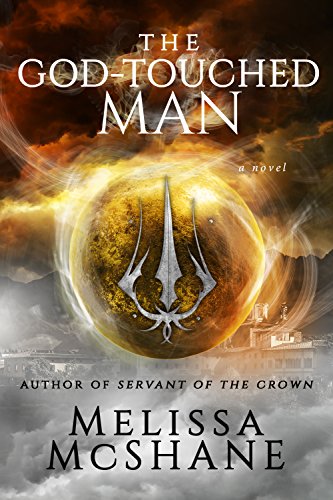 I felt a little guilty because I haven’t read The Smoke-Scented Girl, one of the first books by Melissa McShane. We even have a paperback copy! And here I am reading the next book in the series, The God-Touched Man. On the plus side, I can happily say that while I assume that some of the people and events mentioned in this book are chronicled in the previous one, I did not feel at all like I was missing the story. This book takes place in the same world some time later, but it’s a completely self-contained story.
The story takes place in a fantasy world with technology and culture approximately the level of the Victorian Era. Well, in part. Time travel is involved, so some of the characters end up in their own world’s more medieval past. Now, time travel is normally one of those things that’s only interesting from the perspective of our own world, because of the context in our own reality. McShane gets around this by making the novelty more of a cultural difference… essentially Victorian characters dealing with a medieval European culture (with magic thrown in on both sides). Otherwise, it’s just a plot device, and treated as such. The characters are cut off from their support mechanisms, and are propelled to see events through to get back to their own time… and once back, the story REALLY gets started.
The main character, Percy Feranter, is a charming rogue and a government agent. He’s not quite a 007 type… while he can more than hold his own in battle, he’s far more of a lover than a fighter. His counterpart and sometimes unwilling partner through his adventures is the dark-skinned and beautiful Ayane Caligwe, a former guerrilla fighter, and far more of a fighter than a lover. The two are not wizards, yet they get stuck up to their necks in trouble involving powerful wizards, gods, artifacts and places of power, time travel, relying upon their far more mundane skills to try and survive and complete their mission.
All-in-all, it’s a fun fantasy adventure. I like that it’s not trying to be an “epic fantasy” (as much as I enjoy that, too). It’s a straight-up adventure story in a non-traditional fantasy world with some very enjoyable characters. I enjoyed the book, but then, I haven’t NOT enjoyed any of McShane’s books so far.
The God-Touched Man is available on Amazon
Filed Under: Books, Impressions - Comments: Comments are off for this article
Pulp RPG Bundle … Like chocolate and peanut butter…
Posted by Rampant Coyote on January 17, 2017
 Maybe the I’m the only one around these parts that might be interested in this. I’m posting it anyway, just ‘cuz… Pulp! RPGs! In a bundle! Sadly this isn’t a PC RPG Bundle*. But if you are a dice and paper gamer, this is something pretty cool nonetheless! Four dice & paper RPGs (PDF versions) based on pulp-era fiction! Two-fisted heroes, femme fatales, gumshoe detectives, rocket ships, robots, and stuff like that.
It sounds fun. I have these, but I haven’t played them. I’m too busy playing Pathfinder every weekend! But I’ll have to carve out an opportunity some three-day weekend or something.
This bundle includes:
Two-Fisted Tales RPG (Revised) – inspired by pulp adventure stories.
Exiled in Eris – Inspired by pulp science fiction and fantasy: Planetary romance, sword & sorcery, and the wild west.
Bloodshadows: Fantasy-Noir RPG (Third Edition) – Pulp Adventures meets dark fantasy and noir. Spellslinging detectives!
Mean Streets RPG (Expanded Edition) – inspired by 1940s-era film noir.
If you are interested, the bundle is available at DriveThruRPG:
The Amazing Pulp / Noir RPG Bundle
If you are only interested in one or two, the bundle listing has links to the individual games. It’s not a huge bundle discount, but it’s something.
(* The closest CRPGs inspired by pulps that I can think might be anything Conan or Cthulhu – although those may borrow the names and creatures, but might not have the feel of the pulps that they are based on. Also, there are the two spin-off Ultima adventures available on GOG.COM – for free! – Worlds of Ultima: The Savage Empire, and Ultima Worlds of Adventure 2: Martian Dreams).
Filed Under: Deals, Dice & Paper - Comments: Comments are off for this article
Mythica 5: The Godslayer Impressions
Posted by Rampant Coyote on January 16, 2017
 I may have to watch Mythica: The Godslayer, the 5th and final film of the indie fantasy Mythica series, another time to figure out how I feel about the film. Since the idea of watching it again is appealing to me, I guess that’s a pretty good indicator. Actually, I want to re-watch the whole series again, but finding the time for 8 hours+ of film might be a challenge.
So… Mythica. A low-budget indie film studio made an epic fantasy film series that feels like a pretty cool D&D campaign. Modern technology has made it so a film that would have cost tens of millions to make back when I was a kid can now be done for under a million. The crowdfunding they did for each project went primarily into the post-production work, and this final movie in the series made more in crowdfunding than the previous ones … on the order of $130k. I expect this is because the crowdfunding campaign came after the release of the third film (Mythica: The Necromancer), and that one pretty much kicked all kinds of butt, setting a high water mark for what Arrowstorm could do.
The film series follows a bunch of misfits (of course) in a fantasy world who band together originally for profit, escape, and to do some good. This leads them into conflict with necromancers who are seeking pieces of the fossilized heart of an ancient lich-king (a Sauron type). They also torque off a few other powerful folks, including the guildmaster of thieves. Marek, the wizard of the group, has a particular problem in that she is a natural-born necromancer. Her powers are significant, and sometimes necessary, but they often exceed her control and can lead her to evil. Her potential is so great that she becomes a personal interest for the evil Szorlok, the one gathering the heart pieces (called the Darkspore), beyond the fact that she and her group have won victories against him.
The fourth movie was a somewhat comedic action-adventure romp that ended with the heroes negotiating a minor victory in light of the villain’s triumph. This final chapter starts out a few weeks later, and it’s pretty much full-on angst mode with the party split between two pretty desperate quests… protecting humanity in the face of Szorlok’s now-godlike power, and trying to find the one item that might defeat him before it is too late.
Gamers will certainly appreciate the fact that our little adventuring party that was running away from orcs and barely tackling ogres in the first movie are to the point where they are directly dealing with gods at this point. They’ve leveled up. The vague visions from on high and minor cleric powers from A Quest For Heroes have given way to up-close and personal conflicts and negotiations with divine or semi-divine beings at this point. Our heroes are full-on badasses now, for all the good it is with the world getting destroyed all around them.
One thing that I liked was that these heroes are the only ones left who have any chance of standing up to the Necromancer, yet even with direct intervention by a goddess and one of the most powerful artifacts in the world (and hot on the trail of another), they still don’t know what they are doing. Marek constantly second-guesses herself, and in spite of her supportive companion, the truth is… she’s at least partly right. As they point out in one argument, even with the one artifact that can now defeat their foe, it’s not like the necromancer is going to let them walk through his army, come up to him, and give him a love-tap. Even as powerful as they are, they are way out of their league and have only half of a plan.
That’s pretty much as it should be.
For the most part, I thought the special effects in this film were some of the best so far. The extra money was well spent. Scenes in a particularly fantastic location at the end of the film didn’t turn out as well… this was a new effect for the filmmakers, and I didn’t think they turned out as well. All-in-all, a mixed bag, but I appreciate that they were shooting at a further target this time around.
I think the performances of the principle cast (the four adventurers) were the best of the series so far, or close to it. They had some meaty material this time. This film hit a bunch of backstory elements that I really wish had been better sprinkled throughout the series. You learn more about Marek’s and Dagen’s history, and the relationships between the characters grows a lot more complicated. Great stuff, but it’s almost too much to get packed into this final film. However, in some cases, it’s unavoidable. Thane’s love interest took on a MAJOR change in the last couple of films, and what seemed almost straightforward at the end of the last film is proving far more complicated, and this was the only film to show that… but there wasn’t enough time. It feels like we needed another film between 4 and 5 to cover some of this territory.
Another criticism I’d level at it… and I apologize for being a little vague here, but I’m trying to avoid getting too spoilery… is the whole climactic actions involved in the subtitle of the film… the slaying of said gods. But the nature and threat to the gods is kinda… vague, yet its a key point to the movie. While it’s trite to have the big red pushbutton or a countdown timer of some kind, without something like that the villain’s ultimate plan is kinda wishy-washy. He says what he needs – for reasons, I guess, and once he obtains it he must wave his hands around in his tower for a little while summoning lightning for an indeterminate amount of time to achieve his goal. That’s not too satisfying.
These are more than quibbles. They don’t wreck the film for me, but they probably hold it back from its potential. That’s unfortunate, as there’s a lot I really loved about the film. It will likely be a solid second-place favorite for me.
Still, it’s a solid conclusion to the series. It’s definitely a conclusion… the story is over, and the characters and world have irrevocably changed. It’s done, and finishes with a bang in The Godslayer. I’ve gotten used to getting to see a new Mythica film every six to nine months that I’m a little sad the series is over.
Filed Under: Impressions, Movies - Comments: Comments are off for this article
Cyberpunk is dead, long live cyberpunk!
Posted by Rampant Coyote on January 13, 2017
In his introduction to the new cyberpunk anthology Altered States II, Isaac Wheeler of Neon Dystopia suggests that a lot of what cyberpunk envisioned back in the 1980s has come to fruition today. We’re living cyberpunk. Not just technologically (in some ways, our technology has exceeded the wildest dreams of the authors in the 1980s), but culturally. He notes the Occupy protests and the hacker group Anonymous as examples.
In a lot of ways, though, the modern world has made cyberpunk as a subgenre obsolete… at least from the classic fiction that defined it in its heyday in the 80s and early 90s. Like the planetary romances of the pulp era set in our own solar system, once science and culture catch up to it (or pass it by), it becomes less science fiction and more fantasy. Or at least, it feels dated. It’s been over 30 years since Neuromancer, so of course it’s not going to hold up perfectly, especially when it was so culturally rooted in the western world of 1984.
As a fan of those old planetary romances and of steampunk, I don’t mind this too much. Dated doesn’t bug me. I still love Neuromancer, Islands in the Net, Snow Crash, Hardwired, When Gravity Fails, and the other classics of the era. I don’t expect my SF to be a predictor of the future. Considering the worlds described in these stories, I really don’t want them to be. But the sorts of things that would work in those older stories might not work in a new fiction. That’s exactly why you might think that as a subgenre, cyberpunk is nearing extinction.
But… it’s not. Nope, it’s not been the hot trend for a long time, but it’s still out there. It’s morphed and adapted and subdivided and melded. The membrane walls surrounding the style have been permeated or broken down completely, intermingling with countless other types. Yay, diversity! So now we’ve got Post-Cyberpunk, Nanopunk, Biopunk… and just plain ol’ science fiction with borrowed elements from cyberpunk. And of course, straight-up cyberpunk itself, with modern updates: A gigabyte is no longer a large amount of storage space, and it certainly won’t be in 50 years. The Soviet Union is not going to be a going concern. Although… this is all spec fic, why not have a story in an alternate history / alternate future? Gibson did that himself in his story The Gernsback Continuum. Someone could write The Gibson Continuum today.
For me, I didn’t really ever view cyberpunk as an SF literary protest song, as some did. Maybe as a cautionary tale, sure. For me, I saw cyberpunk as the juxtaposition of two things. First, it’s an exploration of the impact of technology on a personal level. Exactly the kinds of things we’ve seen now with smartphones and the Internet. Naturally, cybernetics are an excellent symbol for this… it’s hard to get more personal than replacing your body with machinery. How does that affect you as a human being? How does it change how we relate to each other? How does it impact society as a whole?
Secondly, cyberpunk is about the struggle of an individual against overwhelming collective forces… a common conflict in many stories across genres. The collective forces might not be united… in cyberpunk, they often aren’t… so it may not be a totalitarian regime. In classic stories, these forces often took the form of megacorporations, crime syndicates, the government, or … hey, they might be all one and the same these days. Technology is both the weapon of the oppressor and the revolutionary.
Perhaps a third element might be the more grim, depressing view of the future. While this was hardly a new invention of the genre (just go back and watch Fritz Lang’s Metropolis, released in 1927) or even an uncommon approach in science fiction at the time, the nature of the conflict (see element #2) all but requires an oppressive world. I don’t really require this in my personal definition, but in general, cyberpunk embraced the idea. Cool.
From that perspective, there’s absolutely nothing “dated” about the genre, beyond it feeling like we’re living it a bit. But isn’t that the source of all great speculative fiction… abstracting the human experience and putting it in a form that allows us to explore it safely? And maybe cyberpunk isn’t quite so distinctive now as it was in the 1980s. Big deal. If anything, I figure it probably needs another shot in the arm (never mind what kind of drugs might be in that shot!), a little update for the modern era, and it’s good to go.
The authors in Altered States II: A Cyberpunk Sci-Fi Anthology have done this (except for the reprinted classic). I’ve enjoyed several of the stories so far. These are probably not worlds you’d want to live in (or even that you could live in, in the case of the robot-story Expiration Date). But they are entertaining and hopefully thought-provoking tales taking cyberpunk into their own directions.
My story in the anthology, Doubleblind, represents my own exploration into the subgenre from a modern vantage point. After being steeped in the stuff back in the 1990s, it was a lot of fun to explore how much has changed,… and how much might stay the same. That’s definitely something I want to do again, because I think the modern world represents a TON of ripe fodder for turning into cyberpunk tales.
You can pick up the book at Amazon, currently in eBook format but soon to be out in paperback as well:
Altered States II: A Cyberpunk Sci-Fi Anthology
Filed Under: Short Fiction - Comments: 4 Comments to Read
All Hail the New Computer Go Master
Posted by Rampant Coyote on January 12, 2017
 Man, I remember spending weeks obsessing over how to write the ultimate Go playing program that would do this. It looks like Google’s Go-playing program, an updated version of the tournament winner from a few months ago, has used a stealth approach to become the unofficial champion… masquerading as a human player in online play. It has even defeated the reigning world champion, winning 60 out of 60 games during its run.
Humans Mourn Loss After Google Is Unmasked as China’s Go Master
These were unofficial games during the testing process, so crowning a computer as the grandmaster of Go isn’t official yet, but… it’s basically over.
The interesting thing here is how wildly creative (within the limited field of Go) the software could be. As stated in the WSJ article:
“Master puzzled its human rivals by placing pieces in unconventional positions early in the game and changing tactics from game to game. Sometimes Master skirmished with its opponent across the whole board, while other times it relinquished territory with hardly a fight. Master’s record—60 wins, 0 losses over seven days ending Wednesday—led virtuoso Go player Gu Li to wonder what other conventional beliefs might be smashed by computers in the future.”
I remember how science fiction shows and stories in the 1970s and 1980s often portrayed humans as superior to computers because of our creativity and willingness to think outside the box. We’d confuse the computer controls in these stories with erratic actions that seemed illogical on the surface but were truly cunning underneath. With the limited computing power of that era, that seemed reasonable.
I guess now we’re the ones getting schooled by the computer in outside-the-box thinking. Sort of like a digital Ender Wiggins from Ender’s Game, the new software comes to the table with a lack of preconceived notions of how things are supposed to be done, and tackles the problem by observation, pattern recognition, prediction, and logic. It’s a little scary to consider, but also pretty cool.
It would be easy to both over-generalize or underestimate this achievement. The software that fueled the Jeopardy-winning Watson has saved lives diagnosing patients in medical systems. At least one person has died because they were over-reliant on their car’s automated driving abilities. The incredibly complex software behind the “brains” of these systems are only as good as their ability to understand and model their problem domain… which, in the real world, is a lot more complex than even we humans understand it.
While games like Chess were bound to a very limited problem space and was thus subject to a lot of “brute-force” techniques, this limited its applicability in the real-world. Go is a far less bounded problem, which is why it took another twenty years for it to reach this point. This victory doesn’t mean an open-ended world of computer intelligence or anything like that. But it does open the way for a lot of very powerful tools that might on this technology that can help us come up with better real-world solutions in all kinds of fields.
That is pretty exciting to me.
Filed Under: General - Comments: 3 Comments to Read
Mein Desktop Ist Kaput!
Posted by Rampant Coyote on January 11, 2017
 My desktop computer is dead. Again. 🙁
I can resurrect it for brief periods, but not long enough for transferring a large backup, apparently. I haven’t seen unusual heat values causing it to automatically shut down, just the ol’ Blue Screen of Death. Well, okay, it’s Windows 10, so it’s the new Blue Screen of Death. However, sometimes it won’t even boot, so it’s not (just) a Windows installation problem.
After many weeks of trying to solve increasing problems, this is about to be a day of unplanned upgrades. I’d hoped to put that money into getting a Vive, but noooooo…………
I’m just frustrated with having sunk so much time and money (primarily time) into dealing with problems. It’s not like I have that much ‘free time.’ However, I am grateful that I managed to get it up and limping along well enough over the holidays to finish writing a novel, get some work done on Frayed Knights 2, and get some honest-to-goodness gaming in. So there’s a pretty significant silver lining.
I guess that’s the way it goes. Cars and computers and home appliances. The modern world. I’m just glad I have a functional (and honestly, pretty decent) laptop. So I’m moderately functional for the time being.
Filed Under: Geek Life - Comments: 5 Comments to Read
The Emotional Journey of Creating Something Great
Posted by Rampant Coyote on January 10, 2017
This probably doesn’t need much commentary…
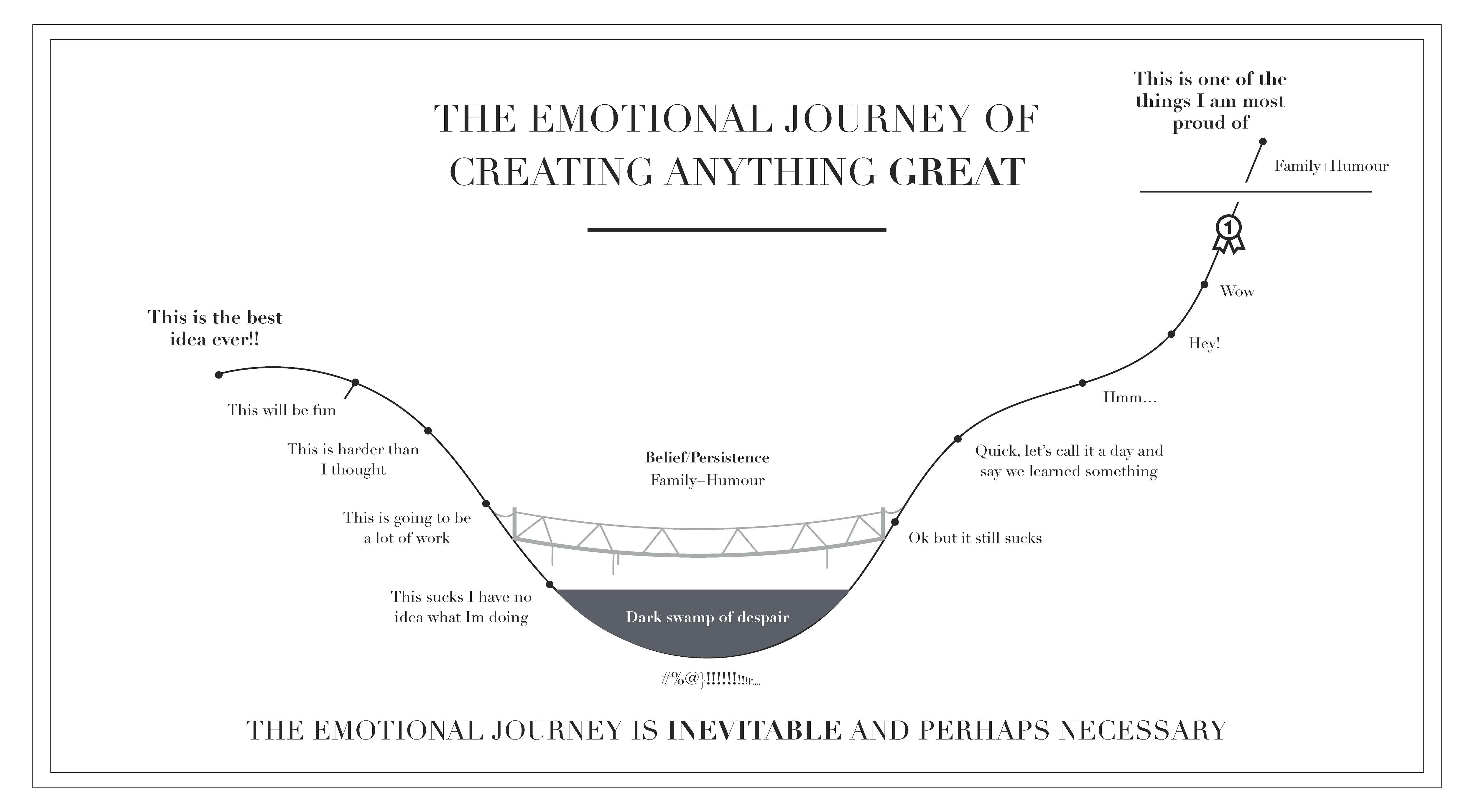
… But I’m going to add some anyway.
A depressing truth: That journey looks the same regardless of whether you’re making crap, something okay, something good, or something great. It just ends at different points along that line. But anything worth trying is going to go through that process and journey.
Another depressing truth: Sometimes you emerge from the swamp of despair, start having hope, and then find out you aren’t actually out of it yet. Sometimes this happens over and over again on a big project.
More inspiring truth: While sometimes Something Great happens early from a combination of factors (including luck), much of the time… if all other variables stay somewhat consistent… the peak on the other side often ends a little higher each time. So it’s worth taking that journey several times.
Filed Under: General - Comments: 2 Comments to Read
Final Hours of the RetroEngine Sigma Crowdfunding Campaign
Posted by Rampant Coyote on January 9, 2017
 The RetroEngine Sigma seems like it’s a stylish and easy way to obtain emulator console gaming. Since the best value I got out of the failed “microconsole” revolution was its value as an emulator platform, and putting together your own emulator out of a Raspberry PI is a non-trivial task, I get the appeal.
If you want to play more than the 15 licensed classic games that ship with it (including Heavy Barrel, Burger Time, Karate Champ, Lock ‘n Chase, and a bunch of ones I’m far less familiar with), though, I imagine that will take a bit of effort anyway, although they promise an easy-to-use method of setting it up via a smartphone or tablet. Considering the price isn’t a whole lot more than the cost of putting the whole thing together from scratch (assuming you don’t have parts just lying around), and it looks pretty sharp, it seems like a pretty decent deal. And 16 Gb can hold an awful lot of classic games.
There are only a few hours left to jump on the campaign. You can find the RetroEngine Sigma campaign here. As usual, I’m not endorsing it or anything, just pointing it out.
Although – the NES Classic Edition comes at a similar price point with 30 fully legal games. Some folks have even hacked it and gotten it to run more than twice as many games from ROM images. Just sayin’. Although they are pretty hard to find right now. Still… if easy is what you are looking for and you are from the NES generation, it could be a better bet.
Filed Under: Deals - Comments: 4 Comments to Read
Elite: Dangerous adds long-awaited content in coolest way possible
Posted by Rampant Coyote on January 6, 2017
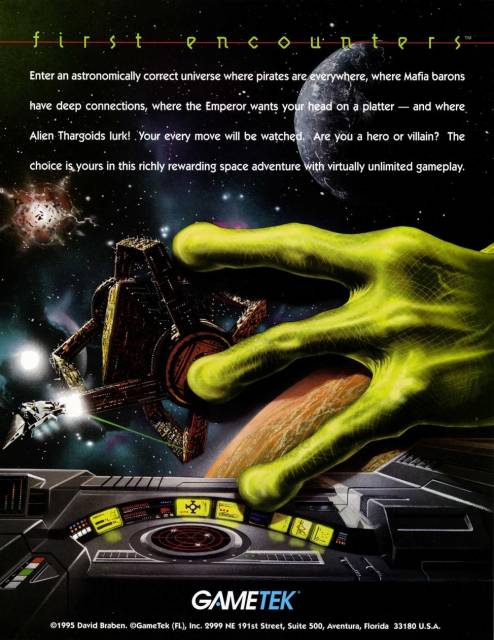 There was one alien race in the Elite series waaay back when – the Thargoids. They were present in the first game as enemies. Insofar as it had a storyline, the Thargoids were involved in the story of the third Elite game, Frontier: First Encounters. As I understand, they weren’t enemies in the that one. I never played much of Frontier: First Encounters, because it was buggy and hated my joystick. Huge disappointment for me, because I was addicted to the point of obsession to Frontier: Elite 2 for months.
The Thargoids have been largely absent except for hints in the new Elite: Dangerous.
Until now, that is. They are starting to appear, now, and pretty much in the best possible way EVER. It’s a treat for those players who have encountered it, and it also does a great job of providing a powerful atmospheric effect to remind you that you are supposed to be in space… and space is scary and dangerous and empty. I’m gonna have to get back to playing. Hats off to Frontier Developments… this is how you add new content to a game!
Filed Under: General - Comments: 3 Comments to Read
Bring a Friend to Hyboria, Faerûn, the Northern Realms, or Post-Apocalyptic Earth
Posted by Rampant Coyote on January 5, 2017
 After yesterday’s post, several people asked me “Who actually asks if RPGs are dead?” If you are computer RPG fan today, and you are even casually plugged into what’s appearing on the major digital distributors, you get a pretty good idea of there being more games coming out in this genre than you have time to play. Especially if, like me, you are also a retro-gamer who enjoys playing the older stuff we may have missed the first time around.
I can’t answer the question in general, but I know of at least one case where it was an acquaintance who hasn’t gamed much in years, but fondly remembers the classic turn-based CRPGs of his youth. A quick check revealed a bunch of big-name games like Fallout 4, Skyrim, Diablo III, and Borderlands… all of which looked action-intense and not his cup of tea. He wondered in a public forum if nobody made those kinds of games anymore – the ones he used to enjoy. I had to practice great restraint to avoid going into massive exposition mode like I did yesterday on the blog on the poor guy.
So yeah. A little over ten years ago, it was a legitimate question. I used to try and keep track of as many indie RPGs that were in development as I could back then. I had a tough time keeping track then. Now things have exploded to about 10x that – well beyond my capabilities of keeping up, but you do need to be a little bit plugged in to see it.
 Here’s an educated guess on my part: As much as we’re in a golden age of really cool new CRPGs, I’d guess that the majority of the games out there in this category don’t make money. Or at least not enough to keep going on. Sure, there are situations like Kingdoms of Amalur: Reckoning, where it seems like the company itself was badly managed and needed a home run in order to finance development of another title (see what I did there?). But there are also situations like Might & Magic X: Legacy, where we don’t know exactly what happened, but clearly sales didn’t justify continued development and sequels on what was already sort of a budget offering for the publisher. For all its flaws, I liked the game, and had hope for future installments. Finally, there are countless indie titles of varying quality, and often even the best of these don’t make money. Like, not even breaking even with their hard costs, based on anecdotal evidence.
Now, there’s nothing that’s really going to change that. That’s just life in the big city, and the competition is fierce. I don’t care so much about who gets what share of the pie, so long as everyone gets their shot. I do want to see that the pie keeps growing, though. That means the demand has to stay there to justify developers taking risks, maybe sucking up a failure or two while they improve their chops. That means we need more fans, more gamers, more converts to the RPG fold. The audience needs to keep growing.
Over the holidays, my youngest daughter was introduced to the Borderlands by her sister and brother-in-law. I mean, she’d seen me play it on the PC before, so she was vaguely familiar with it. But they played multiplayer cooperative with her through Borderlands 2, and she was hooked. After they left, she bought a used XBox and picked up a copy of the game for herself – both to play on her own, and to play with them when she could.
That’s how it’s done. At least, that’s one way really good way to do it.
That means inviting these folks who are only “kind of ” interested to play these games. We existing fans are the best people to help bring folks into the fold. Now, the best game for the beginner might not be the same games that we go nuts over – the quirky, complex indie titles that cater to advanced players. It depends on the person. If its someone who cut their teeth on the old SSI Gold Box games, a turn-based game with tactical combat might be a good match. Others might prefer something along the lines of Torchlight II. Or, like my daughter, they need some time in multiplayer cooperative mode to really catch the vision. Maybe they need some tips on how to play, and some evangelizing of certain games so they know it will be worth it taking the time to play. Whatever.
The point is… it’s easy to find ourselves in a bubble with this hobby. RPGs are still niche, and we need to get outside of that and invite others to come join us. A lot of the potential RPG players out there aren’t the kind that will respond well to smack-talk and the challenge of proving themselves. They are just looking for fun games to play, as we all are.
Let’s invite them into our worlds, and let them feel welcome.
Filed Under: Geek Life - Comments: Comments are off for this article
Are CRPGs dead or dying?
Posted by Rampant Coyote on January 4, 2017
TLDR Version: Are you kidding me? We’re in the new golden age of computer role-playing games, my friends! There’s never been a better time to strap on a digital sword (or laser gun) and enjoy some dungeon-delving fun on your PC. You just have to know where to look.
 Full Version: I was one of the mournful folks back in the early 2000s complaining about the lack of good Computer Role-Playing Games (CRPGs). They didn’t make ’em like they used to, most western RPGs were Diablo clones or otherwise an action-video game with some RPG elements. The giants of the last two decades who had made all those wonderful CRPGs of yore had disappeared in all but name… SSI, Origin, New World Computing, Sir-Tech, etc. And the JRPGs that made it to North America were often … Pablum. Uninspired, unexciting. It seemed that most of the CRPG creativity was going into Massively Multiplayer Online games… which were fun in their own way, but in many ways removed from the kind of experience I craved. The biggest problem came down to the simple fact that CRPGs are among the more difficult and expensive games to produce, and with the ever-rising budgets of the mainstream game companies, they had to be overly conservative in their designs or risk catastrophic failure. It felt like we’d reached… well, not an evolutionary dead-end, but certainly one that wasn’t bearing much exciting fruit.
I looked back wistfully on the “golden age” of PC role-playing games, from the late 80s until the early 90s. Oh, man, back then it seemed there were so many amazing computer RPGs coming out each year that I couldn’t afford either the time or the money to play them – and back then, I had a lot more time! But that era was done, the modern pickings were slim, and they just didn’t make ’em like they used to.
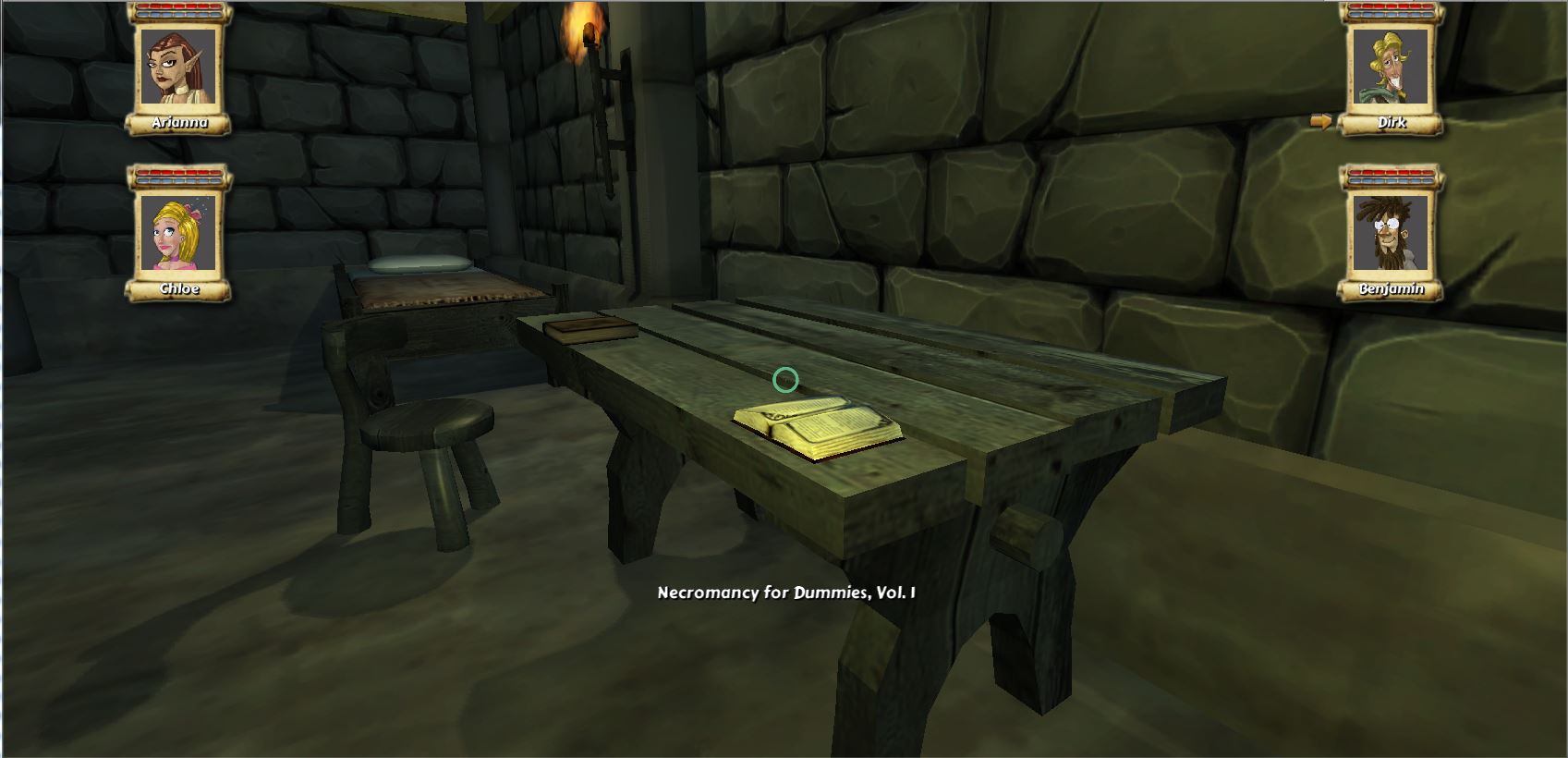 It was such a problem that I wanted to do something about it, since the whole “indie” thing looked like it had potential. I was far from alone, and far more talented folks than me jumped in to address the same problem. Times got really amazing. A lot of the games borrowed heavily from the “retro” designs of old… maybe too much, in some cases, especially with the plethora of RPG Maker titles that were hard to distinguish from each other. Quality ran all over the board, but on the indie front, the CRPG genre exploded. Like crazy.
And it kept going. Still. And the really, really cool thing is that they were successful enough for some of the bigger studios – mid-level and even larger – to take notice. Which brings us to today, where we have some really high-end, AAA RPGs that are often pretty good, if few in number. Then you have sort of a mid-tier games, with budgets generally in the high six to seven figures. Then you have the tons of indie titles, which range from slick, polished, and commercial, all the way to some high school kid’s first efforts with GameMaker Studio or RPG Maker.
Yet I often hear some people wondering if the genre is dead or dying. Maybe it’s mostly hard-core Call of Duty players who honestly haven’t had role-playing games on their radar. Or maybe they are casual or lapsed gamers who are genuinely interested in playing some classic computer-role-playing games like they played when they were younger, and have no idea if people even make ’em like they used to. Ten or fifteen years ago, the answer to that question would have been, “Not so much,” and I might wonder if the genre is dead or dying myself. But today, things have drastically changed.
What’s Out There?
 I mean… let’s look at just the last three or four years. On the big-name, big-budget side of things, I have to say things are looking up. The reinvention of Fallout has been a major success, Dragon Age and Mass Effect have been worthy entries, Deus Ex has continued, and we have some new(ish) titles like the Risen and Dark Souls. And we’re seeing games like the Final Fantasy series and Valkyria Chronicles brought over to PCs in North America. We even got an RPG set in the South Park universe! And yeah, the games like Borderlands which are pretty hybrid.
If I was only looking at the mainstream side of things, I’d say things are improving. Not great, but improving. (I left out one major title here… well, probably a lot… that I’ll get to in a second). Compared to something like 2003, that’s an improvement, albeit a limited one. I’d still be mourning the loss of great gameplay and the styles of RPGs of the old days that I loved. The new stuff is cool and lots of fun, but doesn’t quite scratch the itch.
 Well, then we’ve got a “mid-tier” which has taken cues from the success of lower-end indies and have made some really spectacular stuff that exactly scratches the itch. This is a fuzzy definition, but in my mind it includes games being made for budgets in the upper-hundreds of thousands to the low millions. These range from publisher-funded studios making games on a lower budget (like the sadly not-successful-enough return to the Might & Magic RPGs, Might & Magic X: Legacy), to the crowdfunded darlings like Wasteland, Torment: Tides of Numenera, Pillars of Eternity, Shadowrun, Bard’s Tale, Underworld Ascendant, Grim Dawn, and Divinity: Original Sin, to games that are more on the self-funded or funded via investment capital like the Torchlight and Legend of Grimrock series, to moderate-budget Japanese imports that are getting localized for North America.
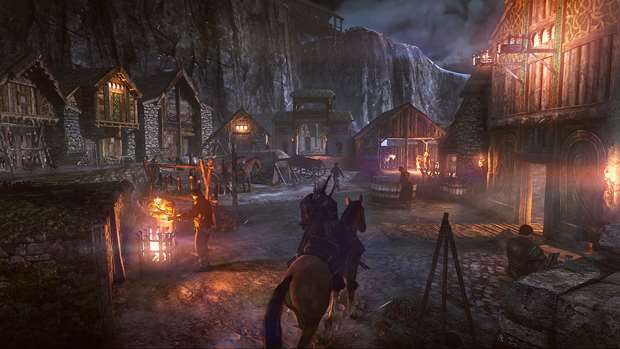 And then there’s The Witcher, which started as kind of a mid-tier indie game by some guys with a couple of licenses and a low overhead, and launched a series (soon to be two series, I hope, if Cyberpunk 2077 is hugely successful) that was all-the-way AAA, with the latest already being considered a classic.
These games are increasingly visible to mainstream gamers, and from this perspective… just the “middle tier” on up… my 2003 self would be dancing on air. Life is good, and CRPGs are BACK, baby. Back from the brink, back to being awesome (and often profitable), and back to covering a wide style of gameplay that RPGs have always been known for. (And yes, we were playing action-RPGs on our Apple IIs back in the day, right alongside the text-heavy turn-based titles).
The Indies Dwarf Them All
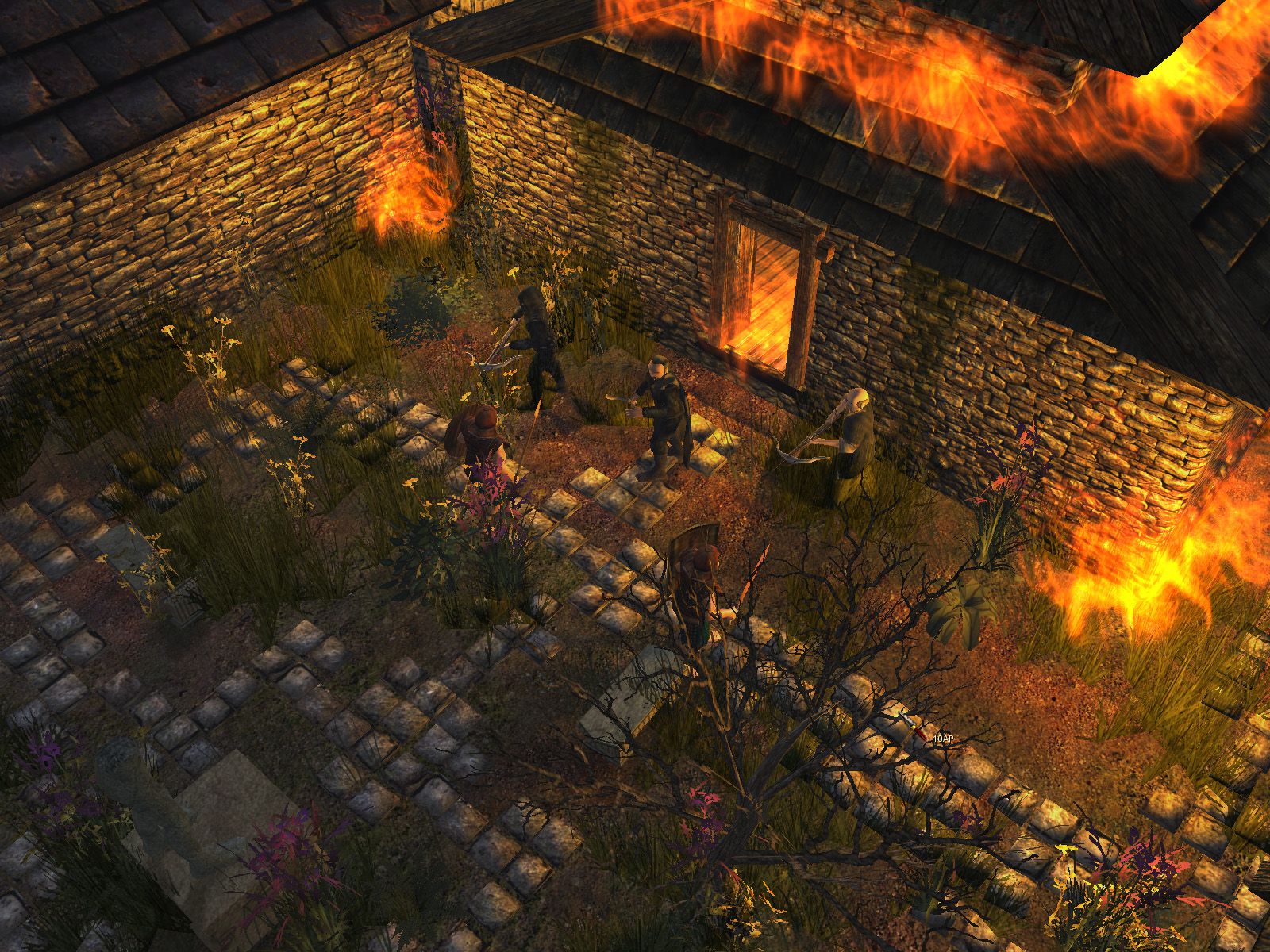 But even taking that wide variety and tremendous quantity of titles out now, that hardly scratches the surface anymore. No, we’ve got tons and tons of indie titles that are well under the half-million-budget mark. Probably – I don’t know the actual budget, and the accounting for donated time and everything probably gets so weird the creators themselves aren’t really sure what the budget really was. While there’s tons of absolute crap in that category, there are some really fantastic titles there that I hesitate calling out even a few here, because trying to be anywhere close to fair about it would turn this into a list of a hundred titles. Anything by Iron Tower, Basilisk, Soldak, and Spiderweb is solid, and games like Darkest Dungeon, Underrail, Undertale, Tales of Maj’Eyal, and Stardew Valley have garnered some real success and critical acclaim. But those aren’t even the indie RPGs I’m enjoying right now.
Again, the list can go waaay on. If I was playing these games full-time, I wouldn’t be able to play all of the RPGs coming out for the PC in one year in that year (or, if I tried to play to some semblance of completion, in the next three years). Many of the ones that might not be break-out hits are still fun and enjoyable. And again, they run the full spectrum from text-based Roguelikes, to action-RPGs, to games reminiscent of the 16-bit jRPG style, to party-based turn-based dungeon crawlers, to survival RPGs, to some stuff that I really don’t know how the heck to classify them because they are weird and innovative as all get-out. All tastes, all levels of quality… it’s a wild time on the indie side.
The Indie-Era Advantage
 One cool thing is that these indie budgets are often not too far off from the budgets of the “mainstream” RPG titles of yesteryear. With the newer technology, access to cheap game engines and off-the-shelf components, and quality modern tools, indies can make games for the same price that are superior in technical ways. Superior in game design…? Well, that’s another story. But sometimes, the answer is yes. Or at least that they are comparable. Sometimes those old classics aren’t really as great as we give them credit for (but we love them anyway).
And better yet: Games are cheaper than they’ve ever been (adjusting for inflation). With price pressure from indies on sites like itch.io, the great sales and discount pricing on places like Steam and GOG.COM (not to mention their huge library of classic games tweaked to run on modern systems), and astonishing bundle deals from places like Humble Bundle, Bundle Stars, it’s pretty easy to build a huge library of games for relatively cheap, including discounted mainstream titles.
If you are a fan of these games, then you probably already knew much of this. But if you are one of those folks who are just curious as to the state of the genre, I hope I’ve been able to answer things. In my view, the “golden age” of RPGs is NOW. Enjoy it while it lasts… and I hope it lasts for a good, long time!
Filed Under: Indie Evangelism - Comments: 9 Comments to Read
For 2017, I …
Posted by Rampant Coyote on January 2, 2017
It’s a new year! Time for resolutions, right? For 2017, I want to:
1) Write all the stories!
2) Make all the games!
3) Be the best husband and father in the world!
4) Rock the day job so we’ve got money coming out of our ears!
5) Read all the books on my backlog, including all the new ones I’ll get this year!
6) Get my weight back down to what it was in college!
7) Finally master Carry On Wayward Son on the guitar!
8) Play through all the games in my Steam and GOG accounts!
9) Become a Time Lord!
I figure I should probably start with #9, as that would make the other eight a bit more achievable.
Barring that, I do have three problems: Lacking infinite time, infinite energy, and infinite willpower. So I guess I’m going to have to pick my battles a little more carefully. I’m coming off of a nice, relaxing vacation right now, where I actually found time to play games, finish my novel (the one I was working on for NaNoWriMo!), spend time with my family, get some reading done, see a couple of movies, work on Frayed Knights 2, and even go to the gym. So I’m feeling like I can do it all. That will last until… oh, later this week, when I hit crunch again on the day job (hopefully not as intense as October / November).
But in all seriousness, there are some steps I can take to improve myself on all of these. Even with #9, I’ve found some ways to be more efficient with my time in some areas, and I need to reinforce those habits. (Getting the hell off of social media except in very specific, limited time slots is one very powerful trick!) So I’m breaking all these down into smaller goals that I can revisit regularly, and a plan to get there. That’s how it’s supposed to be done, right?
I spent some time working on that, and while those aren’t things I’ll share publicly, they are some nice, concrete, achievable objectives that won’t always take the full year to achieve. In fact, I was able to check one off the list already. That’s a nice way to start the year!
Anyway, I’m hoping 2017 will prove a really awesome year, and there are some things already in the works that are giving it a good shove in the right direction.
Filed Under: General - Comments: Read the First Comment
HAPPY NEW YEAR, EVERYONE!
Posted by Rampant Coyote on December 31, 2016
I know it’s popular on the Internet to look at a bunch of big celebrity deaths in 2016 and a certain election and look at it as if it were a terrible year. While we suffered some losses and disappointments, overall it was a pretty good year for me. But… it’s (almost) over now, and the little arbitrary mark on the calendar offers a good chance to wipe the slate clean of negatives and focus on goals and changes and better things. The ball is already rolling for some cool events and things going on for me, and I feel I’m going into the new year with more experience, better ideas, and maybe even as a better person than I entered 2016. So… here’s hoping!
I hope that you and yours enjoy a wonderful new year. Take charge of what you can and make 2017 your best year ever.
And remember, HAVE FUN!
Filed Under: General - Comments: Comments are off for this article
Copyright © 2026 Rampant Games | Privacy Policy
Powered by WordPress.
