The “Totally True” Story of Final Fantasy creator Hironobu Sakaguchi
Posted by Rampant Coyote on March 10, 2015
Mega64 did their traditional roast of this year’s winner of the lifetime achievement award at GDC. This time, it was Final Fantasy creator Hironobu Sakaguchi, creator of the Final Fantasy series. He gamely played along.
I guess if you are totally unfamiliar with the Final Fantasy games (and their big-screen movie… um, attempt), then this won’t make any sense.
Filed Under: Geek Life, Retro - Comments: 2 Comments to Read
On the Road Again
Posted by Rampant Coyote on March 9, 2015
I’m off on another exciting adventure as a lead software engineer for crane simulation systems. This week, my journeys take me back to the land of my teen years, the weird-but-lovable state of Maryland.
Unfortunately, I don’t yet know what my accommodations or my Internet access is going to look like yet. Since I don’t have the entire week pre-posted and ready to go, don’t fret if I miss a day or two. All is well. Or at least, all is probably well and doesn’t suck too horribly. But I may not be able to answer messages too quickly. Or maybe it’ll be just fine. We’ll see.
As another “unfortunately” – I’m not going to be anywhere near the Washington DC area where I grew up. 🙁 I was hoping to hit the ol’ stomping grounds, but unless I feel like staying an extra day at my own expense (and I don’t), it ain’t happening. Closest I’ll be is near Baltimore one night.
At least I have craploads of games and books to read while I’m out there. I have a monstrous backlog of both. So boredom shouldn’t be an issue in the evenings. I even have a thumb drive with the latest code for FK2, although doing game dev on the road with my laptop can be a little challenging.
Have fun!
Filed Under: General - Comments: Comments are off for this article
Frayed Knights: I love it when a plan comes together
Posted by Rampant Coyote on March 6, 2015
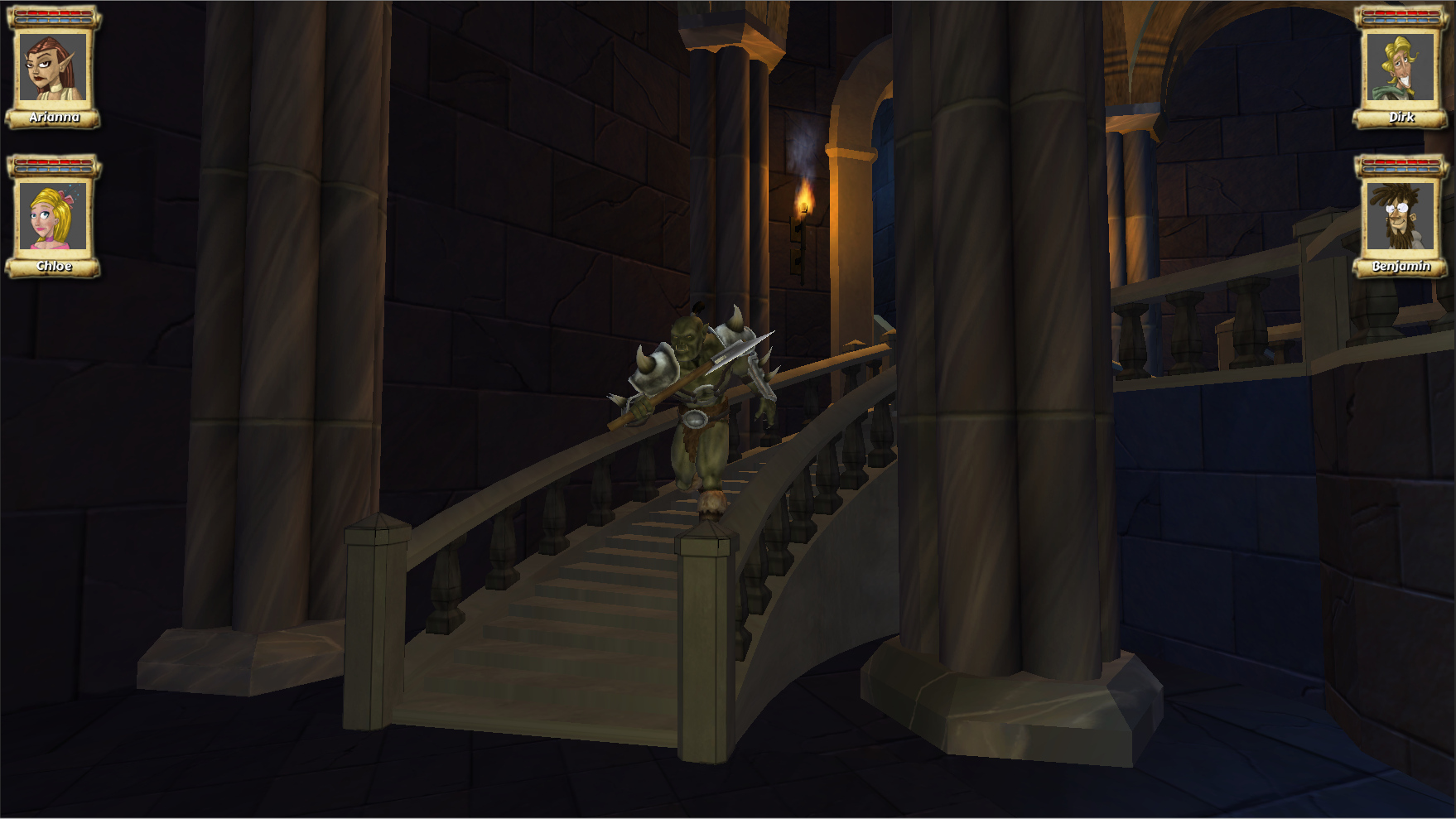 I never watched “The A Team” when I was a kid. Okay, almost never. I think I saw maybe two full episodes, and bits and pieces. But Hannibal Smith had a catchphrase (80s television characters were full of catchphrases) that I still use to this day – “I love it when a plan comes together.”
I spent way too much time with Frayed Knights 2 laying groundwork to avoid some of the problems we experienced with building content in the first game. Maybe too much – I may have spent more time up-front as I’d hoped to save. Especially considering how many steps backwards I found myself taking, realizing I’d gone too far in the wrong direction. I think the first year of development was largely wasted, but at least I learned a lot about Unity in the process.
But as I’m trying to divide my time equally now between code and content (particularly because I can get help on the content side, if I don’t leave them hanging), it’s extremely nice to have all that up-front work done and working. For a lot of the basics of putting together the interactivity of a level, it feels like I’m working with a higher-level toolkit. Where something as simple as a basic door used to take me 2-5 minutes to set up and place in FK1 even when I got the process down pat and in a rhythm, it’s now a matter of about fifteen seconds or so. More complex behaviors take a little longer, but still less than they used to.
This really makes designing environments much less of a chore. In theory (and, so far, in practice as well) what it comes down to is that I get to spend my time focused on more interesting stuff. Complex interactions or unique one-off behaviors. That’s what I love. And hopefully there’ll be more payoffs when we’re getting to the balancing / testing / fixing stage.
I love it when a plan comes together.
I love it when a game comes together. I should have been far better about this from the get-go, because rapid iteration from a playable prototype is really important. But it’s really cool seeing a whole bunch of these pieces finally coming together, working well together (mostly), and although we’re still dealing with a lot of stand-in visuals and stuff… being able to see a game there. This is different from September’s demo, because there were a lot of things we simply had to turn off because we ran out of time and they weren’t working right, or because it would have caused a lot of player confusion.
While the light at the end of the tunnel is still quite a ways off, being able to see it makes all the difference in the world.
Filed Under: Frayed Knights - Comments: 3 Comments to Read
More Troops Deployed for the Upcoming VR War
Posted by Rampant Coyote on March 5, 2015
 Valve produced a prototype of their upcoming “full-room” VR system this week at GDC. Sort of like the Microsoft’s Kinect answer to the Wii controls, the prototype is winning raves from those who have tried it. The Dev Kits are supposed to become available in a few weeks, and they are suggesting a launch by years’ end.
Oculus VR is preparing to launch their Gear VR in coordination with Samsung. Finally, a launch, of sorts…! And Sony’s got its Project Morpheus stuff planned for the first half of next year. Microsoft recently unveiled its “Hololens” for something of an “augmented reality” thing.
It seems like the battle lines are being drawn with the expectation that this will be the new killer platform. But then, a couple of years ago, it was all about microconsoles, and that hasn’t really hit the big time yet, either. (I still like my Ouya, though…)
Part of me is imagining some kind of terrible dystopia in the not-too-distant future where everyone’s even more wired into their mobile devices than they are now, only with goggles and gloves to isolate themselves even more from the “real world.”
But part of me imagines playing a dungeon crawler with VR gear for maximum immersion, and I think, “Wow, how cool would that be?”
And there’s a realistic part of me that remembers how sick I felt after 10 minutes using an early Oculus Rift dev kit. Although the “Lighthouse” motion tracking technology Valve promises (and is giving away freely for other companies to take advantage of) supposedly solves that problem.
I don’t know if this is going to be the “it” technology of the future. It sounds like the kinds of games the companies want to see produced for VR are NOT the kind of games you’d expect – high-octane, fast-action first-person stuff. Instead, it sounds like using the VR to control a third-person camera to play around with a lower-intensity 3D experience might be the winning concept with current technology. I guess we’ll see.
I can guarantee that I’ll be there, at least as a customer, but I don’t know how long I’ll stay. Hopefully longer than 10 minutes at a time.
Filed Under: Tech - Comments: Read the First Comment
The Good, the Bad, and the Ugly – Being an Indie in 2015
Posted by Rampant Coyote on March 4, 2015
The whole definition of “indie” is getting pretty dang fuzzy these days. Studios that are “independent” but have still been largely publisher-driven are doing the indie thing with all kind of alternative funding methods, and then there are 12-year-olds who have managed some not-insignificant success throwing together their first iPhone game.
In an interview called, “It’s Getting Harder to Be an Indie,” Chris Millar speaks of some of the realities and challenges – and excitement – about being an indie game developer. I liked it because it’s realistic without being depressing.
Then, at GDC this week, we had some pretty remarkable news about game engines (which tells me that as rough as the indie business is these days, I’m glad I’m not in the engine business):
* The Unreal Engine is dropping its subscription (which was already pretty cheap) and is going free – with royalties above a certain level (as before). So – yeah. Everything free, all the time, pay up 5% when you make more than $3k per quarter.
* The “free” version of Unity 5 is now the Personal Edition, and it will now include all of the “Pro Edition” features with a few exceptions (incentives) – like getting rid of the Unity Splash screen, the pro version of cloud build (which is cool for larger distributed teams), and improved debugging / performance tools.
* The “Source 2” engine from Valve is released and will be available for … wait for it… free.
* Corona Labs is releasing it’s mobile-based 3D SDK for…. uh, hang on here… oh, yeah. Free.
* Autodesk (makers of 3DS) is entering the engine fray with their upcoming Stingray engine. No word on pricing yet, but they are gonna have a tough time competing with free.
* While not a GDC announcement, Game Maker Studio maker YoYo Games was just purchased by PlayTech. Game Maker Studio Standard Edition went free last summer. And it’s a pretty cool tool. The promise (we’ll see if they keep it) is that this purchase allows them to really forge ahead with development of system. They’ve already been pushing ahead with their version of Unity’s very popular Asset Store.
* The Khronos Group announced their open-source next-generation successor to the venerable OpenGL, called Vulkan. Mobile support is a priority…
The pricing and power of tools these days is just unbelievable. It’s a dream come true for a low-budget game developer.
Plus, there’s been a wave of announcements of new hardware and new platforms.
And yet…
I was reading the other day how last year, on iOS, they averaged 500 new games PER DAY. That’s a new game released every three minutes. Back in the console heyday, when it got to dozens of new releases a week it was getting pretty glutted. Now, that happens during your lunch break. I don’t think the story will be any different on any of these new platforms if they are in any way “open” and prove popular.
All this means two things to me:
#1 – It is a wonderful time to make video games. Seriously, there has been no better era that I can think of. We have ridiculously more powerful platforms, a higher install base, easier access, more powerful tools, lower barriers to entry, fantastic distribution, and extremely low-cost tools that run the gamut of requirements from game development to team collaboration to billing.
#2 – There may have been more difficult times to make a living as a game developer, particularly as an indie, but from what I’m hearing / seeing, this is somewhere near the lows. The field is glutted to a ridiculous degree. I mean, 500 games per day. You could make the greatest game in the world and spend a fortune on marketing, and still get overlooked. It’s getting downright ugly out there. It’s not a whole lot prettier for the big publishers, either.
All-in-all, I’d say this is a fantastic time to START learning to develop games. And for a part-time indie like me, who doesn’t really need game revenue to pay the rent? I can’t complain. But my plans to go full-time and “make it big” in games might be put on hold for a little while longer.
Filed Under: Indie Evangelism, News, Tech - Comments: Read the First Comment
Underworld Ascendant Kickstarter hits its final 72 hours
Posted by Rampant Coyote on March 3, 2015
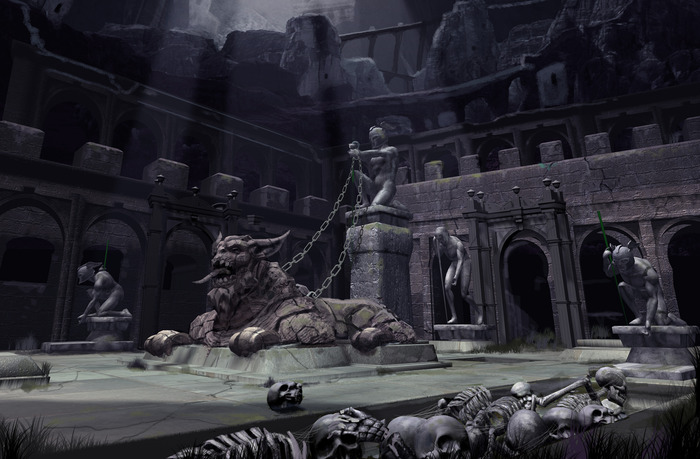 I don’t really mean to plug this thing, though I guess I really am.
As always – buyer beware. I doubt it (or I wouldn’t be a backer), but there’s nothing preventing a Kickstarter-backed developer from taking the money and running. Or simply screwing things up royally. It’s happened before, and it will happen again.
That being said, this is probably the most exciting Kickstarter project I’ve ever backed. At least some of the old gang getting back together again to create at least a semi-indie version of what sounds like a true sequel to one of my favorite games of all time. And certainly one of the most influential.
The project is now fully funded – whew! – and is into its stretch goals. I’m excited about many of these. I guess I should also admit that I’m acquainted with Tracy Hickman (he’s a local), so I’d love to see him do writing for it as well. But the Lizardmen stretch goal would be even better. There’s less than 72 hours to pull all that off.
Thus, a reminder, and then I’ll shut up about it. At least until the campaign is over. But while I’m not too certain of what they’ll be able to pull off, I’m excited for their direction and goals. If they can at least manage to capture the feel of the original Ultima Underworld games, with that level of interactivity and open-ended design, I’ll be thrilled.
I still go back and play these old games, cumbersome as they may be in their early 90s just-discovered-the-mouse kind of way. I still play the soundtracks for inspiration. The games nailed what I always imagined “dungeon delving” to be on so many levels – including NPC interaction, problem solving, a more organic approach to quest design… If these guys can manage to tap back into that feeling, that approach – whatever caffeine-fueled magic that drove the development of the first games – then this should be a winner.
Underworld Ascendant Crowdfunding Campaign
Filed Under: Game Announcements - Comments: 6 Comments to Read
Rampant Coyote Interview at RPGWatch
Posted by Rampant Coyote on March 2, 2015
I’ve got an interview over at RPGWatch today. Check it out!
As you’d expect, it’s mainly about gaming and game-making, but there’s a little bit about my writing as well. I’m actually a little afraid to re-read it right now. I can’t recall my state of mind when I answered Couchpotato’s questions, but I suspect I might have been either a little more off-guard or overwhelmed in the interview. Too much going on!
I do know that I’m a bit more upbeat about role-playing games nowadays. Back in the bad ol’ days when I started Frayed Knights, the old-school style of RPG that I used to love was … well, not quite dead, but definitely on life support. Since then, it’s made a recovery in all the good and bad ways I can think of. Which means its probably gonna run its course, flood the market, and die of overpopulation again. But how often do you get to live through such a resurgence? I have way more new, exciting, old-school RPGs sitting in my inventory right now than I have time to play (though I have a business trip next week, so maybe I’ll be able to get some gaming in…
Filed Under: Interviews, Rampant Games - Comments: 9 Comments to Read
More MM2 Interviews
Posted by Rampant Coyote on February 27, 2015
You can probably detect a pattern here this week. 🙂
Here’s an interview with MK Wiseman about her story, The Silver Scams. She was also in the first Mechanized Masterpieces anthology, with a “sequel” to Phantom of the Opera.
And one with D. Lee Jorner, author of “Payoff for Air Pirate Pete”, on J. Aurel Guay’s Blog.
As one of the authors, it’s only appropriate that J. Aurel Guay also has a little interview here.
And one with M. Irish Gardner.
The Rise of the House of Usher‘s author, J. R. Potter, is spotlighted (spotlit?) here.
And as one final reminder – the big online launch party will be tomorrow night. I’ve attended these things for other publishers as well, and have actually won some prizes (helped take care of Christmas for me last year…). So fun stuff. I’ll be giving away a copy of Frayed Knights: The Skull of S’makh-Daon and a signed copy of the previous anthology, Terra Mechanica.

Filed Under: Books, Interviews - Comments: Comments are off for this article
Steampunk and Mechanized Masterpieces
Posted by Rampant Coyote on February 26, 2015
 I was both a little early and late to the whole Steampunk concept. I was a fan of “Cyberpunk” back in the late 80s and early 90s (yes, I’m that old), and so I really enjoyed books by Bruce Sterling and William Gibson. When I found out they were collaborating on a non-cyberpunk (or, as some phrased it, an “alternate-history cyberpunk”) book, I was intrigued. So I bought it and read it as soon as it was out on paperback, and found the concept very fascinating, if the execution not quite up to the best by either author.
And – that was kind of it. I told people about the cool idea from the book: the brilliance of imagining that the computer revolution happened a hundred years earlier than it did (a plausible past, actually, as demonstrated by the London Science Museum actually building Babbage’s Difference Engine #2 using period methods and tolerances).
 In the meantime, “steampunk” gained popularity. I’d also seen several movies and anime shows with a steampunk-ish style (Miyazaki’s Castle in the Sky remains one of my all-time favorites). As far as other “steampunk” books, however, I’d been kind of ignorant. I’d read the His Dark Materials series – of which The Golden Compass was by far the best. I liked the steampunk fashion (who wouldn’t?), and the impressive gadgetry. It was just… fun.
Amusingly, the whole steampunk “movement” – fashion, conventions, imagery, etc. – are driven not by any particular shows or books, but kind of gained a life of their own. This is unlike the average science fiction / comic book / anime convention, where the media leads and the fans are fans of particular books / manga / shows. In Steampunk, the fans lead, and the media follows.
For me, however – blame it on programming at an early age – I still look to the media, especially books, for a foundation. So when I was dragged by my family – mainly my daughters – to a steampunk festival, and I found myself truly enjoying the experience, I sought out books to broaden my understanding of the genre. I mean, sure, if you really want to know more about it, you just hang out at these gatherings, but they are rare. Books can sit on the dresser for a fun read at any time.
So I attended panels on steampunk literature (which universally included The Difference Engine as one of the early works), and visited the dealers for some good reading material. One of the first books I read was a collection of short stories based on classic literature. It was called Mechanized Masterpieces: A Steampunk Anthology
Mechanized Masterpieces was part of my introduction to “modern” steampunk stories. Maybe it was a better introduction than I realized, because it was pretty wild seeing authors having fun and re-envisioning classic stories with a steampunk twist. There were a couple of stories based on Dicken’s A Christmas Carol – one a direct “what really happened” invention, and another about peripheral characters. There was a lovely prequel to Jayne Eyre involving airships and voodoo and Mr. Rochester. A wild story of cyborgs and privateers in “Sense and Cyborgs” based on the youngest sister Margaret from Sense and Sensibility. A mysterious secret about Victor Frankenstein’s wife in “Lavenza, or the Modern Galatea.” The tales ran the gamut from wild adventure to mystery, even tragedy.
I half-jokingly called it a book of steampunk fan-fic for classic literature. But I think that left a little bit of an impression on me. While steampunk can be dark, even tragic, it’s also very free and fun. You should have fun with it. It is what you make of it, taking place in an alternate history that’s recent enough for it to feel familiar, but far enough behind us (and with enough weird, fantastic elements) that it’s not clearly remembered.
And so, as I began writing steampunk, I was pretty happy to be accepted in an anthology by the same publisher – Terra Mechanica: A Steampunk Anthology
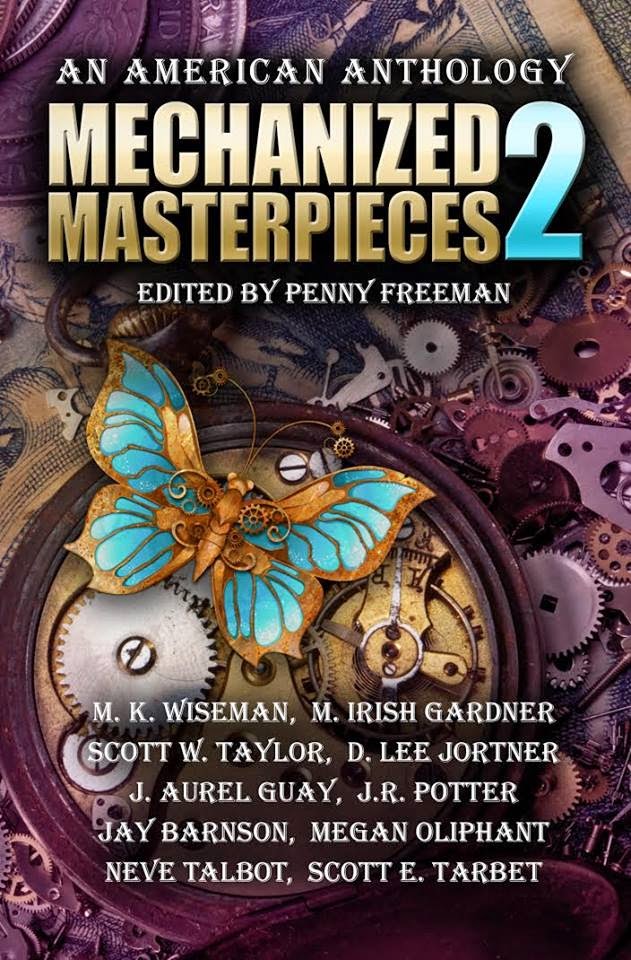 But in a lot of ways, it felt like even more of an accomplishment to have been accepted in the sequel to my modern introduction to the genre – Mechanized Masterpieces 2: An American Anthology
As before, the stories run the gamut of style and sources of inspiration. I hope that it will prove to be as good an introduction to steampunk to others as the first one was for me. My own story is based on Washington Irving’s The Legend of Sleepy Hollow. I took what I thought was a different approach to the story than is usual, even discounting the steampunk elements.
Another story that surprised me was A Princess of Jassom. I read A Princess of Mars only a couple of years ago and really enjoyed it. I was super-excited to find that one of the stories in the anthology was inspired by this series. It’s another wild adventure story in a similar vein, and in that same universe (and same family), but the action is decidedly more terrestrial.
There’s plenty more there. It all goes on sale on Saturday on Amazon and other sites, and is currently available for pre-order. Also, we’ve got a big Facebook-based release party going on that evening – you can get the details here, if you are so inclined. There will be prizes!!!
Filed Under: Books - Comments: Comments are off for this article
In Defense of Big Media…
Posted by Rampant Coyote on February 25, 2015
 Yes, I take my potshots at AAA. I’ve been there. Kinda. And I’ve seen where it’s been going.
But my ripping on the games coming out of the big publishers are due to their origin – designed (or at least constraints imposed on design) by committees and suits for minimum risk and maximum Return-on-Investment, with “checkbox innovation” dictated by marketing people and a “just like last year’s hit, only bigger” mentality. Not the developers themselves.
I’ve worked shoulder-to-shoulder with these guys on big titles and chatted with them in our individual indie foxholes. The game developers at the big studios are no less driven, knowledgeable, and passionate than any indie, and probably a good deal more on top of their game than most of the low-budget developers cobbling together one of the first games and adopting the “indie” title. No, the designers, artists, programmers, and other development team members working in the trenches of the games industry are – as a general rule – some pretty sharp folks who dearly love games. And many of them would love to go indie and make their own games, if they didn’t have to worry about pesky things like paying the rent and making sure their family is insured.
And while it’s a different medium, I just wanted to share this little tidbit from filmmaker James Gunn, director of a little film you may have heard of called Guardians of the Galaxy, after he found himself the butt of several jokes about his making big superhero movies:
“Whatever the case, the truth is, popular fare in any medium has always been snubbed by the self-appointed elite. I’ve already won more awards than I ever expected for Guardians. What bothers me slightly is that many people assume because you make big films that you put less love, care, and thought into them then people do who make independent films or who make what are considered more serious Hollywood films.
“I’ve made B-movies, independent films, children’s movies, horror films, and gigantic spectacles. I find there are plenty of people everywhere making movies for a buck or to feed their own vanity. And then there are people who do what they do because they love story-telling, they love cinema, and they want to add back to the world some of the same magic they’ve taken from the works of others. In all honesty, I do no find a strikingly different percentage of those with integrity and those without working within any of these fields of film.
“If you think people who make superhero movies are dumb, come out and say we’re dumb. But if you, as an independent filmmaker or a ‘serious’ filmmaker, think you put more love into your characters than the Russo Brothers do Captain America, or Joss Whedon does the Hulk, or I do a talking raccoon, you are simply mistaken.”
Okay. I’ll get along with my regularly scheduled indie evangelism and occasional AAA-bashing later. (Although these days, I almost feel pity for the AAA biz, truth be told… it ain’t the titan it used to be.)
Filed Under: Movies - Comments: Read the First Comment
Mechanized Masterpieces 2 – Interview With Jay Barnson
Posted by Rampant Coyote on February 24, 2015
Okay, as part of the whole “blog tour,” this time I get to be the one interviewed
Here’s the interview with me over at A Virtual Hobby Store and Coffee House.
An excerpt:
5. What are your top 3 favorite books?
If I were to limit myself to fiction, I’d say… Neuromancer by William Gibson, The Warrior’s Apprentice by Lois McMaster Bujold, and Small Favor by Jim Butcher. Although all three of those are part of a series of books and short stories, and I couldn’t possibly just recommend anyone read one book without reading the rest…6. Do you have any particular writing habits?
Bad ones, mainly. My wife is amused by my habit of pacing while I’m thinking. If I get stuck trying to figure out how to say something or how to get to point B from point A, I apparently need to move my feet to resolve it.
Incidentally, I do that pacing thing just as much when writing dialog or doing anything creative / verbal in game development too. In fact, for a while – at a couple of jobs – I did a lot of my game design on long walks during my lunch break. Headphones & music on, and within a half a mile the ideas started flowing.
Filed Under: Books - Comments: 3 Comments to Read
Mechanized Masterpieces 2 Interview: Megan Oliphant (Winged Hope)
Posted by Rampant Coyote on February 23, 2015
Mechanized Masterpieces 2: An American Anthology
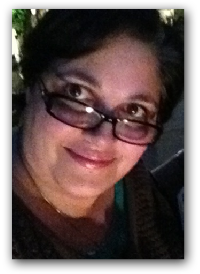 Megan Oliphant
An editor at The X, Megan Oliphant has studied creative writing since college, taking classes from the founder of LTUE, Marion K. “Doc” Smith at Brigham Young University, and attended Orson Scott Card’s Literary Boot Camp in June of 2014. Her primary interests are in fantasy, ranging from dark urban to high epic, but she’s a sucker for a good mystery that she can’t guess the ending to before she gets there. She divides her time between reading, writing, and “familying” with her husband and five children in North Carolina.
1. Please share how you came up with the concept for your story?
Winged Hope came out desperation. I had been struggling with a steampunk version of The Scarlet Letter by Nathaniel Hawthorne, but got nowhere. For months. It was my desperate search for new inspiration that led me back to one of my favorite poets, Emily Dickinson. I’ve always loved her spare, punctuationally challenging poetry. Who knew you could read so much into a dash? I think some of that desperation leached into the story and Bea’s search for salvation for both her and her daughter.
2. Please name some of your other published works?
This is my first published work!
3. What is your preferred writing genre?
Modern day fairy tales, where unexplainable magic changes the course of ordinary lives. Not necessarily rewritten fairy tales, though I do have some of those in a drawer somewhere, but that moment when a life becomes…more.
4. And preferred reading genre?
Fantasy, mystery, thrillers, sci-fi, epic family sagas, romance…um…do I have to name them all? If a story blurb sounds interesting, I’ll pick it up.
5. What are your top 3 favorite books?
That’s a tough question, because I’m not sure which direction to go to find the answer. I have books that are my favorite for “rereadability”, ones that I’ve read several times and will probably read again. Then there are those that change me profoundly, but I know I could never go voluntarily into that world again. But off the top of my head, I would have to say anything by Robin McKinley. Her Blue Sword and The Hero and the Crown, not to mention Beauty (both versions of it) were some of the most lyrical prose I have ever read. So there you go. Three books by one author, lol.
6. Do you have any particular writing habits?
I don’t think so. My chair has to be comfy. Does that count?
7. Do you have a playlist that you created while writing your story?
I’ve run through a lot of types of music, but most recently I’ve settled on a Pandora station based off Rachel Portman, the film music composer. I’ve found I really love the stories film scores tell without words. They help flesh out the world I’m trying to get on paper.
8. Panster or plotter?
I’m a light plotter. I can envision the big scenes, but I need to plan out those connecting scenes that will help build tension and take the story to the next level.
9. Advice for writers?
Be brave. Write the hard thing, the thing that makes you question your ability to tackle it. And it may be too hard for you right now. If it is, put it away and write other things for a while. Then when you come back to the project you thought you could never write, you’ll have developed a new set of tools that will help you write the hard stuff.
10. What’s up next for you?
I’m currently working on one of those modern day fairy tales, set in Paris. It’s a story somewhere between “Sabrina” and “Chocolat”, if you’re familiar with those movies.
We’re gonna be having a big release party Saturday evening on Facebook. There will be free prizes and Q&A with the authors. Please come and visit. In the meantime, you can pre-order the eBook on Amazon here:
Mechanized Masterpieces 2: An American Anthology
The paperback will also be available on Saturday, if you prefer that (I kinda do, personally, as much as I love being able to store a ton of books on my tablet…)
I promised you a contest. Here it is!
As always, have fun!
Filed Under: Books, Interviews - Comments: Read the First Comment
RPG Design: The Dungeon as Simulation
Posted by Rampant Coyote on February 20, 2015
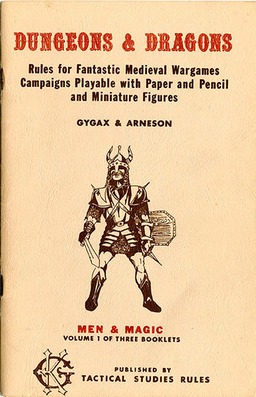 I kinda missed the earliest days of “0e” Dungeons & Dragons (meaning the original, pre-1st edition game) and similar role-playing games. By the time I got into D&D, 1st edition was The Thing, but it – and the community, such as it was back then – still contained vestiges of that old style of play that refused to completely fade. You couldn’t read through the original books and modules, or especially older copies of Dragon Magazine or Judges Guild supplements, without getting a feel for that older style of play.
It was that classic, original style that inspired the earliest computer role-playing games (CRPGs), on which our hobby is based today. Sure, things have changed a lot since then – CRPGs have become their own thing and followed their own path independent of their dice & paper cousins, although the two styles still continue to borrow ideas from each other.
What I’ve tried to do with the Frayed Knights series is to get in tune with the old style, and try to borrow – wherever feasible – the flavor and ideas of not only classic western-style computer RPGs, but the dice-and-paper gaming that inspired them. In fact, a lot of the character dialog in the game is inspired by “table talk” of players around a table joking around with each other as they play.
But delving into the old-school gaming culture reveals a lot of things that might seem strange or even alarming to modern players. Even the idea of “role-playing” is something of somewhat more modern origin. It was applied to the game style after-the-fact, and wasn’t perfectly appropriate (which is why I reject categorization of the genre based on how well they fit some definition of “role-playing”). One aspect that really struck home to me is the idea of the game being more of a simulation. This isn’t the same as it being fair or realistic – not even close. The dungeons in the old D&D games were in some ways pretty actively hostile towards the players in somewhat arbitrary ways.
But it was fun.
In the old days, this simulation was done with charts and random percentages and some standard rules defining the behavior of an adventuring area. It wasn’t something that required a ton of number-crunching. What made it “fair” was the consistency of the rules, I suppose. Navigating the environment was always half the battle. Doors would automatically close (and in some cases, re-lock or re-stick) a round or two after the players went through it. Slippery angled floors didn’t require coefficients of friction, exact angle, speed of crossing… you just required a Dexterity roll.
 This was something I was kind of hand-waving around to someone when we were discussing the differences between Ultima Underword and its spiritual descendants, Oblivion and Skyrim. In the Elder Scrolls’ dungeons, there is dynamically generated content, and some pretty decent AI and physics. From a purely technical standpoint, it is far superior to what the 1992 game could provide, and theoretically a better “simulation.” But that’s not the focus, and that’s not the feel.
Just like how the simple charts and tables in D&D provided some simulation-esque feel to the dungeons, the simple rules and calculations in Underworld worked with the dungeon design to provide some semblance of a complete, self-contained world with its own ecology and purpose. You had the warring factions, you had food and water sources, and you had navigational challenges. And – maybe most importantly of all – you had a sense of history. This wasn’t just some set of tiles stocked with bad guys for you to take down. You were (especially in the original Ultima Underworld) an interloper who was bringing about massive change to this world. You weren’t the first, but in a major way, you would be the last.
But you had to start by simply learning how to survive, which meant a lot more than simply optimizing your combat actions to beat your foes into a bloody pulp. The idea of a simulated dungeon means – in concept if not so much in practice – a lot of interaction, with those interactions being connected; having consequences. In the Ultima Underworld dungeons, you had to make allies. You had to negotiate. Otherwise, you’d be incapable of winning.
This is entirely possible with dynamic content – Minecraft has a little bit of that feeling, as well as some roguelikes (Dwarf Fortress & the like taking this to extremes). But really the only required “dynamic content” is a flexible system that can handle a wide range of interactions and have the world things respond accordingly. And of course, a design that really emphasizes and takes advantage of it. And that might be the most challenging part, in a world where game design is increasingly focused on hand-delivering cinematic ‘experiences’ to the player.
Filed Under: Design - Comments: 4 Comments to Read
Lessons learned from 22 years of making indie RPGs
Posted by Rampant Coyote on February 19, 2015
 Jeff Vogel is something of a personal hero of mine. Nope, I’ve never met him (just know a lot of people who have), though we’ve exchanged a couple of emails and forum posts over the years. I can’t even say I’m a giant fan of his games, although they are quite good. But the guy is a poster dude for indie persistence. He’s been at this since the early 90s – longer than I have been in the industry, even – doing it his own way. He’s been an indie since before that was a term, and managing to do okay for himself.
And making RPGs. That’s what he does. Little niche RPGs. Nothing that would ever overwhelm a fan of Bioware or Bethesda for their graphical awesomeness or anything. But deep, fun RPGs nonetheless.
He’s a practical, working-man’s indie.
And he has some practical, down-to-earth advice (and, in his usual style, it’s not particularly encouraging) about being an indie and making RPGs, learned from over two decades in the trenches. Very very much worth reading:
The original indie dev: How one man made 22 games in 22 years, mostly from his basement
An excerpt I am finding to be more & more true as I go forward:
“It’s not good design, from a contemporary game design perspective, which is why I think that contemporary game design is actually kind of bad. I think a lot of game designers are so tight-assed and want everything to be so balanced and so super under control — I think that’s a bad instinct. We’re making games. We should allow them to go crazy sometimes.”
I’m gonna count that as my indie game dev quote of the week, too. Because it’s totally awesome.
This is something I’m actively trying to reconcile in my brain while working on the Frayed Knights series. I’m trying to embrace some of the ethos of the true “old school” role-playing from the pre-1st edition AD&D days – which was actually before my time (at least before I was old enough to play) – which was simultaneously far more ‘simulationist’ and yet also more off-the-wall and arbitrary. But dang it, it’s cool. Sometimes bizarre, but cool, and fun.
Filed Under: Design, Interviews, Quote of the Week - Comments: 2 Comments to Read
Frayed Knights: improvement by constraint. Or: bypassing the hat and going straight to the rabbit
Posted by Rampant Coyote on February 18, 2015
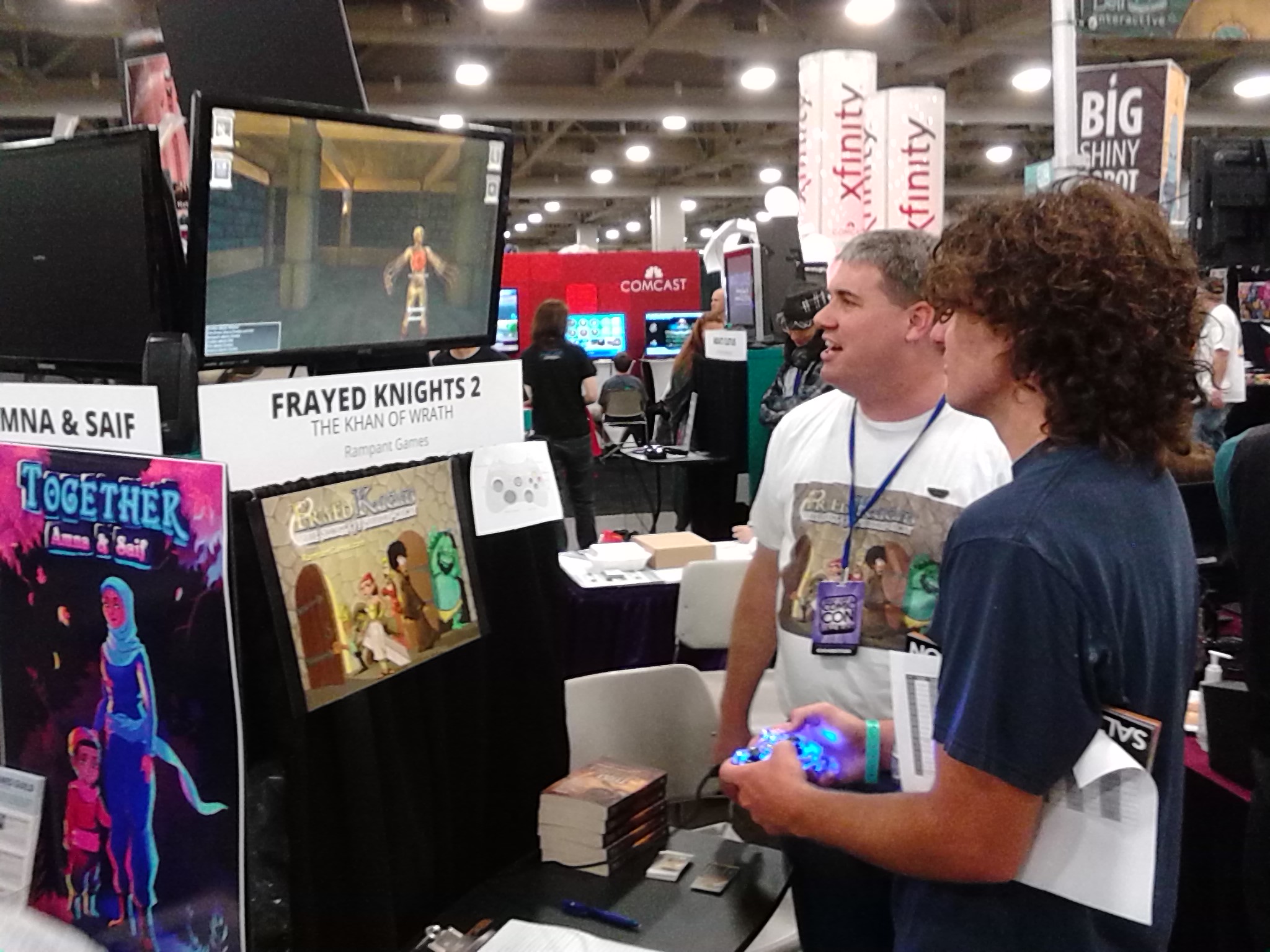 It’s funny. Right before Salt Lake Comic Con last fall, I was pretty sure that I’d settled on “it” for the UI for Frayed Knights 2: The Khan of Wrath. And to be fair, as far as keeping things simple enough for strangers to pick up and play the game, I did okay. Not great, but okay. But that was because I’d limited the menus and pre-assigned “slots.” As I started to have to worry about how the player would actually modify or set up those slots on their own, I realized that what was simple to work with on one end was becoming a bear on the other.
So I’m re-doing things again – although it’s really more of a refinement of the Comic Con interface rather than a complete overhaul. I’m glad I got that feedback.
The issue was – and is – overwhelming the player with choices. It sounds like it shouldn’t be a problem, but it is. Too many choices means it takes too much time – and too many button clicks or scrolling or whatever – to pick an action. What it really means – through hard experience learned in Frayed Knights: The Skull of S’makh-Daon – is that players tend to settle on a few (possibly sub-optimal) choices and ignore the rest, and it’s unnecessarily complicated to choose something from their self-imposed subset of choices. “Analysis paralysis” can occur in gaming as well as real-life, and when that option-tree gets to be too wide or too deep in the UI, it… gets ugly.
I’m loathe to pare down options too much, because for me, that’s what makes an RPG fun – the variety of interactions with the world. I love having gazillions of options, assuming I am relatively familiar with the system. But I have redefined how some of those interactions work to make things cleaner. A lot of it comes by simply reorganizing things in the game so they have a more clear-cut role. A lot of it, too, is coming into play by forcing the player to make the hard decisions beforehand about what to prune out.
An example of the first is in the equipment. I’ve already talked before about how the equipment in Frayed Knights 2 is a lot more single-purpose. There’s no more potential for fireball-shooting bow-ties, for example. Not that I had any in the first game (that I remember), but the potential was always there, which meant organizing the player’s potential actions was a lot harder. In the sequel(s), worn equipment is restricted to passive effects. Weapons are used for direct attacks, and any special effects are strictly limited to things that happen when they score a hit. Scrolls are only for casting “friendly” spells. Wands are only for casting offensive spells. Spellbooks are for learning new spells. Potions and bombs have a limited number of varieties.
This allowed actions to be grouped together. So if the player needs a character to drink a healing potion, instead of simply going to the inventory and hunting down which of dozens of items was a healing potion and then using the item, they can go immediately to a potion list. They can still do it the hard way (outside of combat), too, but it’s a helpful way to guide the player to possible actions.
Spells are a more recent change, and an example of the second approach. After a whole lot of gyrations trying to allow the player to organize a large spell list for ease-of-access, I decided to get rid of the large spell list. I mean the character’s personal spell list, not the game, where the potential spells available is near infinite. But here’s the thing: in a game with nearly infinite spells, it doesn’t make sense to keep a whole ton of old, crappy spells hanging around in your personal spell book anyway. So now, spellcasters start with the potential for only nine spells – three per action tier – in their active library. There’s also a small ‘reserve’ list to allow you to temporarily swap spells without permanently removing them from your library. (Note: There’s a skill in FK2 that allows you to increase that starting spell capacity).
I’ve also removed the idea of real-time decisions* to augment spells or not. It was one more choice to make before getting on with the spellcasting. I love the concept, but again – in a world with nearly infinite spells, it’s not hard to find a new, higher-level spell to do approximately what you want. Again, the idea of keeping some lower-level spells around forever no longer makes sense. The player still has access to a million times more spells than even Frayed Knights 1 offered. He or she just has to make the hard decision of what to keep and what to lose in advance, rather than playing a pack-rat.
The changes feels like the “it” thing with the design and UI. Like I’ve narrowed down to “it” – the right thing. But just like after Salt Lake Comic Con and more feedback, it’s all subject to change. But it does feel like the right direction. I just wish I’d figured that out before I’d written all that code and done all that testing to make it work the other, more complicated, ways.
Yes, ways, plural. Sheesh. Some days I feel like what John Carmack reportedly said to Michael Abrash after over a year of false starts experimenting with the graphics engine: “If we knew what we were making before we started working on it, we would have been done in a month.”
(* UPDATE – Currently, there’s still a skill for augmenting spells, but it does so automatically within limits. It’s good to extend the value of spells for a couple of levels, but we’ll have to see how things work as the whole game comes together. It may simply be that there’s so much upgrade potential in the game that it’s really not a useful ability)
Filed Under: Design, Frayed Knights - Comments: 3 Comments to Read
RPG Development: What Inspires Me
Posted by Rampant Coyote on February 17, 2015
 Making indie games is, simply put, awesome. So is making RPGs. Making indie RPGs – man, if only it paid well, it’d be one of the greatest gigs on the planet. As it is, it’s an awesome hobby.
But it’s also very hard – at least the way I do it. Maybe I’m just bad at it. But anyway – working on big projects (exactly the way I warn aspiring indie developers not to…) that take a long time to complete can be very difficult at times. Even as much as I love it, sometimes I need some inspiration to remind me what I’m doing and why I’m doing it. I need a little help to reconnect with the passion I feel for the genre. Or – particularly in the case of Frayed Knights – I need to re-connect with the sense of wonder of the old games I used to play, and the wild half-formed imaginations of adventure that went through my head as I read through the old D&D books or started up a new RPG on my Commodore 64.
I’ve surrounded myself with some things that – if I get too frustrated and feel like I’d rather be watching Netflix than debugging the spell list code which randomly, rarely, ends up with some uninitialized values. If I find myself wondering, “Why am I bothering,” these things around my office quickly answer my question:
* An original cloth map from Ultima V, framed and hanging on the wall next to my desk chair.
* The map from Zork 1, from an old boxed set of the entire series given to me by Curtis Mirci of Califer Games
* An original promotional poster from Everquest, given to me by a Sony producer at GDC in either 1998 (before it was released) or in 1999.
* The first edition Advanced Dungeons & Dragons books, particularly the Player’s Handbook and Dungeon Master’s Guide.
* The paper manual from Wizardry 6: Crusaders of the Dark Savant (the manual was written by Brenda Romero). I remember thumbing through it while installing the game the first time, trying to figure out how I was going to set up my party.
* A booklet of journal entries from the Gold Box games – compiled into a single book in a boxed set of the series I picked up in the early 90s.
* The Official Book of Ultima, by Shay Addams. Lots of going back over Richard Garriott’s history and methodology.
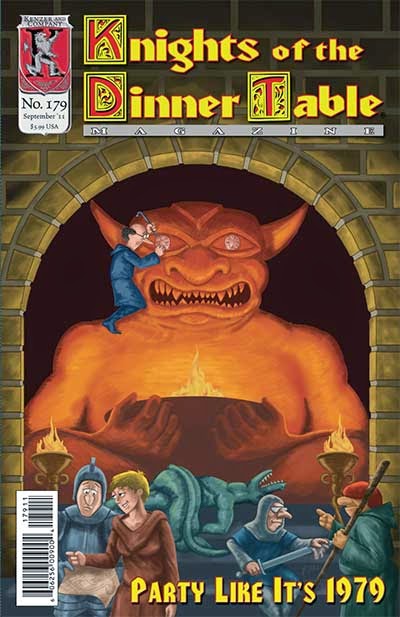 * Lots of issues of Knights of the Dinner Table.
* The GIMLET evaluation criteria from The CRPG Addict. He’s done a pretty good job of breaking down the most appealing factors of classic RPGs. Actually, one of the best parts of the GIMLET system is how it allows games from radically different eras to be compared directly to each other without providing a heavy weighting on technological factors.
* Soundtracks – especially from classic games (a good reason to get games from GOG.COM – they do try to include soundtracks). I have a playlist specifically for developing fantasy games that is 4.5 days in length. And still the same songs seem to repeat… but anyway, some favorites that work well for me are mainly from favorite games: Re-orchestrated or remixed music from Ultima 7, Ultima Underworld, and Daggerfall, the soundtracks from Vampire the Masquerade: Redemption, the Diablo and Torchlight series, Final Fantasy VII, Baldur’s Gate, Icewind Dale, Might & Magic 6 – 8, Wizardry 8, Neverwinter Nights, and many others. (As an amusing aside, I have some music in my playlist from games I haven’t actually played. It’s weird when I finally get around to playing the game and immediately recognize the soundtrack…)
* And of course, the games themselves. That’s actually a dangerous thing, as it can be very easy to loose hours of productivity to an old game you are looking over for “research.”
Those are the big ones. Of course, 99% of the time I’m oblivious to them all (except sometimes the soundtracks). But every once in a while, it doesn’t hurt to thumb through an old manual or look at an old map and remember what it was like to explore those worlds.
Filed Under: Game Development - Comments: Read the First Comment
Copyright © 2026 Rampant Games | Privacy Policy
Powered by WordPress.
